 listicle
Book Residential Pest Control Today: 7 Top Providers
Table of Contents
- Quick Comparison: Residential Pest Control Providers
- How to Prepare for Pest Control Service
- Residential Pest Control Cost: What Drives Your Quote
- Safe Pest Control for Pets and Kids: What to Ask
- Local Choice Pest &Landscape Nutrition: Arizona-Focused Service
- DIY vs. Professional Pest Control: Cost and Results
- What to Expect on Service Day
- Frequently Asked Questions
Last Updated: September 24, 2026
Quick Comparison: Residential Pest Control Providers
Booking residential pest control means choosing between national chains, regional specialists, and local experts. For Arizona homeowners dealing with scorpions, rodents, and year-round desert pests, the right provider matters more than the biggest name. This guide from Local Choice Pest &Landscape Nutrition helps you understand your options.
| Provider | Best For | Service Model | Standout Feature |
|---|---|---|---|
| Local Choice Pest &Landscape Nutrition | Arizona desert homes, pet-safe treatments | Customized quote | Pest control plus landscape nutrition |
| Orkin | Nationwide coverage | Customized quote | Online quote tool |
| Terminix | Long-term prevention | Service agreement | Termite specialization |
| Aptive Environmental | Eco-conscious homeowners | Quarterly subscription | Eco-friendly applications |
| Rentokil | Complex infestations | Customized quote | Science-based monitoring |
| TruGreen | Outdoor and lawn pests | Subscription | Lawn-integrated pest management |
| Fox Pest Control | Budget-conscious homeowners | Quarterly subscription | Competitive monthly pricing |
How to Prepare for Pest Control Service
Preparing for pest control service takes about 30 minutes and makes treatment more effective, since a licensed technician needs clear access to baseboards, cabinets, and entry points.
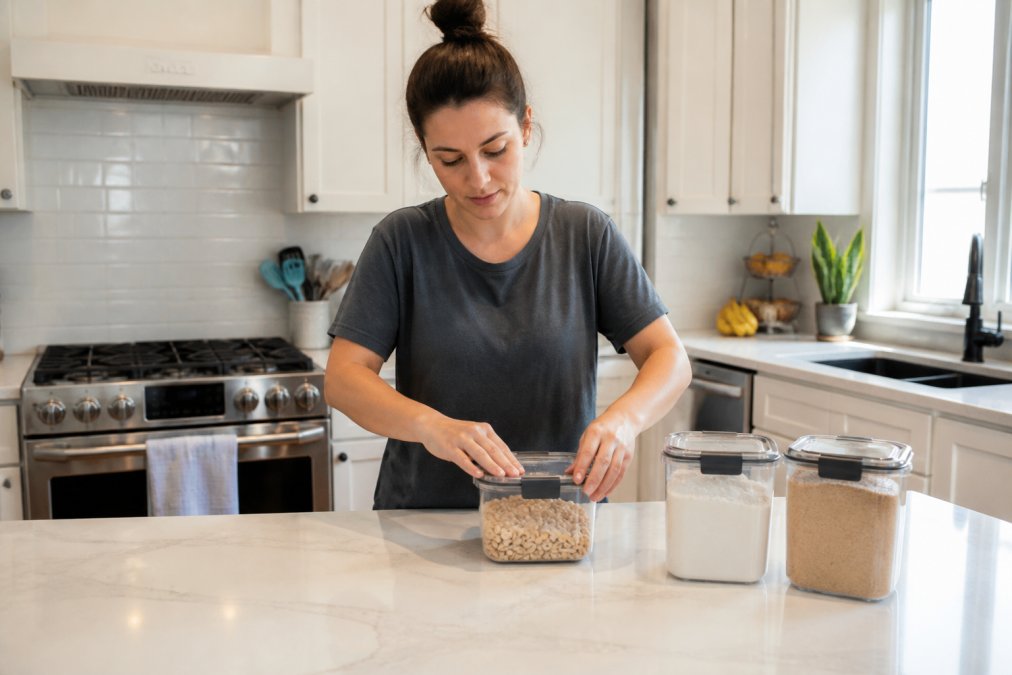
Follow this checklist before your appointment:
- Clear kitchen counters and store food in sealed containers
- Move pets and their bowls to a separate room or outside
- Pull furniture away from walls where possible
- Vacuum floors and wipe down surfaces to remove crumbs
- Close windows and turn off ceiling fans
- Note any pest activity you've seen and share it with your technician
- Cover fish tanks and remove bird cages from treated rooms
Residential Pest Control Cost: What Drives Your Quote
Residential pest control cost depends on home size, infestation type, treatment plan, and whether you buy a single visit or a recurring contract. Most providers offer a free estimate, but quotes for the same house vary widely, so it helps to know what moves the number.
Several factors shape your personalized quote:
- Home size and layout: Larger, multi-story homes take longer to treat; a 1,500-square-foot single-story is a very different job than a 4,000-square-foot two-story with a crawlspace.
- Pest type: Scorpion and rodent control require specialized methods beyond general spraying, and termites need separate, pricier protocols.
- Infestation severity: A single ant trail costs less than a full rodent infestation with entry points across the roofline.
- Treatment frequency: One-time visits cost more per service than annual contracts, since recurring customers spread the labor across visits.
- Exclusion work: Sealing entry points adds labor but prevents repeat problems, usually paying for itself within a year.
- Service area: Rural or hard-to-reach properties may carry a trip charge urban addresses don't.
Typical Price Ranges You'll See
Exact pricing varies by market and provider, but most homeowners encounter a few common structures:
- One-time general pest treatment: Usually the highest per-visit price, since the provider absorbs the full trip cost in one invoice.
- Monthly recurring plan: The lowest per-visit price, billed monthly, typically covering exterior barrier treatment and free re-treatments.
- Quarterly recurring plan: A middle ground, fewer visits, but each is more thorough and often includes interior treatment on request.
- Specialty treatments (termites, bed bugs, wildlife exclusion): Priced separately and usually quoted after inspection, since scope varies enormously.
The DIY vs. Professional Cost-Benefit Math
Most pest control pages push you straight to a booking button. It's worth running the actual numbers, because DIY and professional service fail in different ways.
- Repeat purchases: Most DIY attempts require multiple products before something works, and failures add up.
- Time: Research, application, and reapplication can consume several weekends per season.
- Property damage: Rodents chew wiring and insulation; termites compromise structural wood. Repairs dwarf treatment costs.
- Health risk: Misapplied pesticides are a real hazard, especially with kids or pets in the home.
Questions That Reveal the Real Price
The cheapest quote isn't always the best value. A low upfront price with monthly return visits adds up fast. Ask every provider:
- What's included in the quoted price, interior, exterior, or both?
- How many follow-up visits are covered if pests return?
- Is exclusion work (sealing entry points) included or billed separately?
- Are there cancellation fees or contract minimums?
- Does the price change after the initial service period?
Safe Pest Control for Pets and Kids: What to Ask
Safe pest control for pets and kids starts with understanding what's actually being applied and how long it stays active. The EPA's guidance on pesticide safety recommends keeping children and pets away from treated areas until applications have dried completely, but "dried" means different things for different products, and that's where most homeowners get caught off guard.
The Re-Entry Interval: The Number That Matters Most
Every EPA-registered pesticide carries a label with a re-entry interval, the minimum time before people and pets can safely return. For most residential treatments, that window is hours, not days, but it varies by product and method.
How Application Method Changes the Risk Profile
The same active ingredient can be low-risk or higher-risk depending on application:
- Crack-and-crevice applications place product inside walls and gaps pets and kids can't reach, generally the lowest-exposure indoor method.
- Spot treatments target baseboards or behind appliances and require keeping pets out of those zones until dry.
- Broadcast sprays cover larger surface areas and carry longer re-entry windows.
- Baits and traps sit in enclosed stations, containing the active ingredient, but you need to know where every station is so pets don't find them.
- Exterior barrier treatments are usually the lowest concern for indoor pets, but keep animals off treated lawns until dry.
How IPM Reduces Chemical Exposure
Integrated pest management (IPM) solves pest problems with the least chemical intervention necessary, starting with sanitation, exclusion, and monitoring before pesticides. For homes with pets or young children, IPM is often the most important thing to ask about, because it reduces how much product gets applied indoors.
A provider using IPM will typically:
- Identify the pest species before treating, so the right product is used at the right dose.
- Seal entry points first, so pests can't return and require repeated spraying.
- Use targeted applications instead of blanket spraying.
- Monitor results and adjust rather than automatically re-treating on a fixed schedule.
Questions to Ask Before Anyone Sprays
- What active ingredients will you use, and are they registered with the EPA?
- What is the re-entry interval for each product, and when exactly can pets and children return?
- Do you offer non-toxic or low-toxicity options for indoor treatments?
- Are your technicians trained in pet-safe application methods?
- Where will bait stations and traps be placed, and can you show me the locations?
- What's your protocol if a pet comes into contact with a treated surface?
A reputable company will answer all of these without hesitation.
Local Choice Pest &Landscape Nutrition: Arizona-Focused Service
Local Choice Pest &Landscape Nutrition treats the pests that thrive in desert environments. Scorpions, pack rats, and roof rats behave differently here than in wetter climates, and generic treatments often miss them.
What sets this family-owned company apart:
- Arizona-specific products formulated for local pests
- Treatments designed to be safe for kids, pets, and desert wildlife
- Landscape nutrition services for citrus trees and desert plants struggling in alkaline soil
- Background-checked technicians
- A guarantee that brings them back if pests return
DIY vs. Professional Pest Control: Cost and Results
DIY pest control works for minor, isolated problems. Professional extermination wins when pests keep returning or the infestation involves scorpions, rodents, or termites requiring specialized knowledge.
Here's an honest comparison:
| Factor | DIY Approach | Professional Service |
|---|---|---|
| Upfront cost | Lower per product | Higher per visit |
| Time investment | Hours of research and application | Minimal |
| Pest identification | Often guesswork | Licensed technician assessment |
| Recurrence risk | High without exclusion work | Lower with barrier treatment |
| Safety | Risk of misuse or over-application | Safe application protocols |
| Guarantee | None | Service guarantee included |
What to Expect on Service Day
Service day follows a predictable sequence. Most visits take 30 to 90 minutes depending on home size and treatment type.
Here's the typical flow:
- Arrival and walkthrough: Your technician inspects the property and confirms the treatment plan
- Interior treatment: Targeted application along baseboards, in cracks, and at entry points
- Exterior barrier: Treatment around the foundation, eaves, and perimeter
- Exclusion work: Sealing gaps, cracks, and openings that let pests inside
- Debrief: Your technician explains what was applied and when it's safe to return
Frequently Asked Questions
What is the average cost of residential pest control?
Residential pest control cost depends on your home's size, the type of pest, infestation severity, and whether you choose one-time or recurring service. Most providers offer a free estimate or personalized quote before you commit. Monthly subscription plans generally cost less per visit than one-time treatments, but the total depends on your specific situation. Always ask what's included, how many visits you get, and whether follow-up treatments cost extra.
How should I prepare for pest control service?
Clear kitchen counters and floors, seal food in airtight containers, and pick up pet bowls and toys before your technician arrives. Remove clutter near baseboards so they can apply barrier treatment. If you have pets or kids, ask your provider which products they use and how long to keep everyone off treated surfaces. Most companies send a prep checklist when you book, so follow that closely for the best results.
Are professional pest control products safe for pets and children?
Safe pest control for pets and kids depends on the products and application methods used. Ask your provider for the safety data sheet and specific re-entry times. Many companies offer eco-friendly solutions and low-toxicity options. Local Choice Pest & Landscape Nutrition uses products designed to be safe for kids, pets, and desert wildlife when applied correctly. Always confirm what will be used and follow the technician's instructions on when it's safe to return.
How quickly can a professional exterminator address an active infestation?
Many providers offer same-day service or next-day scheduling for active infestations. When you book residential pest control today, ask about emergency response availability. A licensed technician will typically inspect first, identify the pest, and apply targeted treatment during the same visit. For severe infestations like bed bugs or termites, you may need a follow-up visit. Local Choice Pest offers fast scheduling and a guarantee: if pests come back, so do they.
What should I look for when hiring a local pest control company?
Look for licensed technicians, background checks, and a clear service guarantee. Ask whether they use integrated pest management, which combines prevention, monitoring, and targeted treatment instead of blanket spraying. Check reviews and ratings, and confirm they offer a free inspection before quoting. A family-owned local company often knows regional pests better than a national chain. Get everything in writing, including what happens if the problem returns.
Pests don't wait, and neither should your protection plan. Local Choice Pest &Landscape Nutrition offers fast scheduling, Arizona-specific treatments that are safe for kids and pets, and a guarantee that brings them back if pests return. With 5-star ratings from more than 2,700 homeowners, the team handles everything from scorpion control to citrus tree nutrition. Get started with Local Choice Pest &Landscape Nutrition and schedule your free in-home estimate today.