 ultimate-guide
Scorpions in Home Year Round: A Complete 2026 Guide
Table of Contents
- Why Scorpions Stay in Your Home Year Round
- Signs of Scorpion Infestation Every Homeowner Should Know
- How to Seal Your Home Against Scorpions: A Step-by-Step Guide
- How to Get Rid of Scorpions Permanently
- Year-Round Scorpion Prevention: A Month-by-Month Schedule
- Pet and Child Safety During Scorpion Treatment
- Frequently Asked Questions
Last Updated: September 22, 2026
Why Scorpions Stay in Your Home Year Round
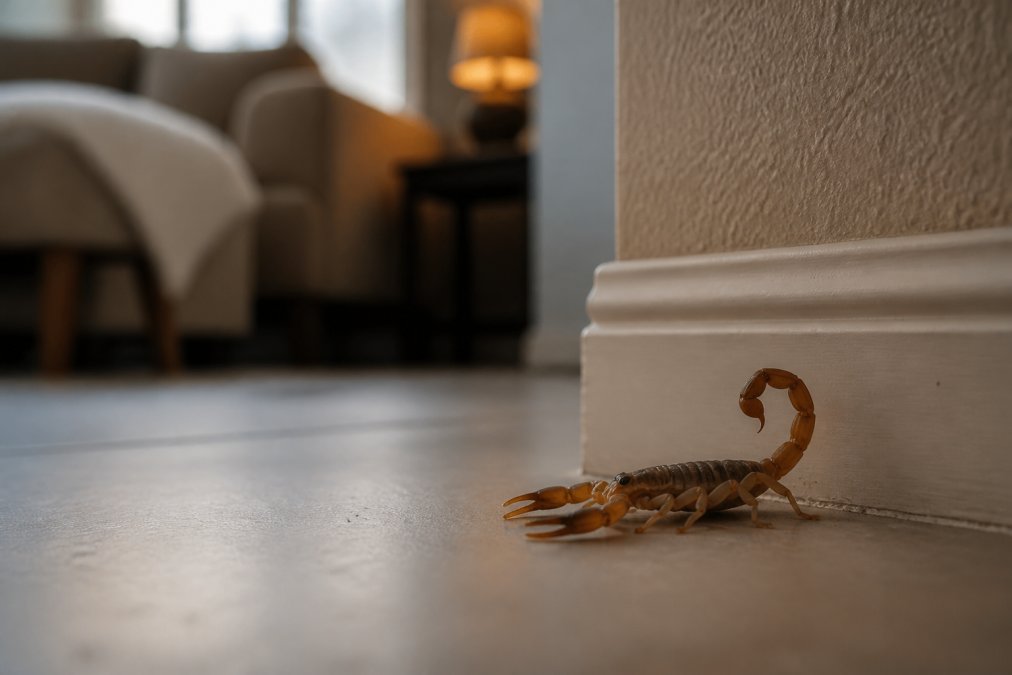
Most homeowners assume scorpions disappear when summer ends. They don't. The scorpions in home year round problem is a structural issue, not a seasonal one. This guide from Local Choice Pest &Landscape Nutrition breaks down exactly why they stay, how they get in, and how to remove them permanently.
The reason is simple: your home is warmer than the desert at night, holds moisture better than any wash or arroyo, and offers thousands of dark crevices that mimic the rock piles scorpions evolved to live in. A scorpion doesn't need a reason to move in. It needs an opening.
The Year-Round Biological Cycle of Desert Scorpions
Desert scorpions don't follow the calendar the way most pests do. They follow temperature and moisture.
In practice, that means activity shifts rather than stops. Bark scorpions become less visible in winter, but they don't die off or leave. They move deeper into wall voids, under insulation, and into crawl spaces where temperatures stay above freezing. When spring warms the soil, they re-emerge hungry and ready to breed.
This is why a treatment that works in July often fails by February. A single seasonal application only addresses the scorpions you can see. The ones tucked into your structural cavities survive, breed, and repopulate the perimeter by the next warm spell.
Signs of Scorpion Infestation Every Homeowner Should Know
A scorpion infestation rarely announces itself the way a rodent problem does. There's no scratching in the walls, no droppings in the pantry. Most homeowners discover scorpions the hard way: barefoot at 2 a.m. on a tile floor.
The reliable signs of scorpion infestation are subtler than most people expect:
- Live sightings at night, especially near baseboards, thresholds, and bathroom fixtures
- Shed exoskeletons in closets, garages, or under sinks
- Small, uniform droppings that look like tiny dark specks with a white tip
- Scorpions appearing in the same rooms repeatedly, which signals an interior harborage rather than random entry
That last point matters most. One scorpion near a door is an entry problem. Scorpions showing up in the same interior rooms week after week means they're already living inside your walls.
How to Seal Your Home Against Scorpions: A Step-by-Step Guide
Sealing is the highest-impact action a homeowner can take, and it's the foundation of any permanent solution. How to seal home against scorpions comes down to closing every gap a flat-bodied arachnid can squeeze through. A bark scorpion needs only a gap the thickness of a credit card, roughly the width of a nickel's edge, which is why most homes have dozens of usable entry points that never show up on a visual scan.
This section walks through a structural vulnerability audit: a room-by-room, wall-by-wall checklist for finding and closing the openings scorpions actually use.
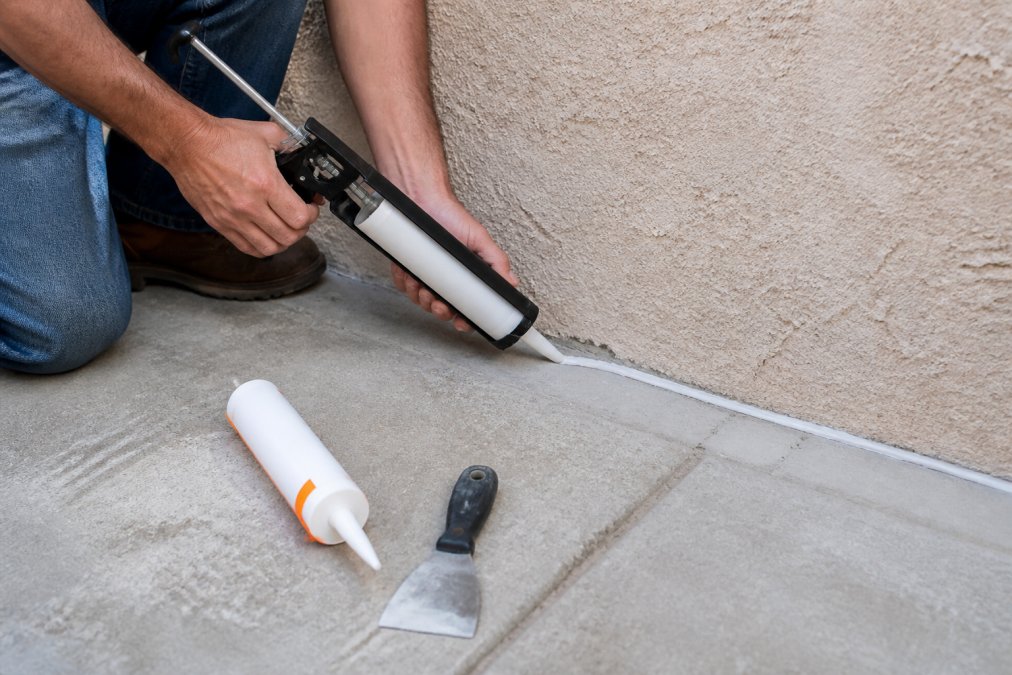
Tools and Materials You'll Need
Gather these before you start, because stopping mid-job leaves the most vulnerable gaps open:
- Exterior-grade silicone or polyurethane sealant and a caulking gun
- Copper mesh or steel wool for larger voids around pipes and utility lines
- Door sweeps for every exterior door, including the garage
- Weather stripping for ground-level windows
- A foam sealant for deep foundation cracks
- Work gloves and a bright flashlight
- A blacklight (UV flashlight) for spotting scorpions and their shed exoskeletons during the audit
The Structural Vulnerability Audit
Work from the outside in, and treat this as a checklist rather than a single pass. The gaps below are the ones most homes share, and the ones most DIY sealing jobs miss.
1. The slab-to-stucco joint. Where a stucco or siding wall meets the foundation slab, there's often a continuous gap hidden behind landscaping rock, mulch, or a decorative trim board. Run your hand along the base of every exterior wall. If you can feel air or a lip, seal it with exterior-grade sealant.
2. Utility penetrations. Every pipe, conduit, gas line, A/C refrigerant line, and electrical service entry that passes through an exterior wall is a potential opening. The hole is usually larger than the pipe, and the gap is often stuffed with nothing or with material that has degraded. Pack these with copper mesh first, then seal over the mesh with exterior sealant. Copper mesh is preferred over steel wool because it doesn't rust and holds up to moisture.
3. Weep holes. Brick veneer and some stucco systems have intentional weep holes at the base of the wall to let moisture escape. These are necessary, don't seal them shut. Instead, install weep hole screens or mesh inserts that allow drainage but block scorpions.
4. Door thresholds and sweeps. Check every exterior door, including the one from the garage into the house. Look for daylight under the door and gaps at the corners. Install or replace door sweeps and adjust thresholds so the gap is gone.
5. Window tracks and frames. Ground-floor and basement windows are the priority. Check the track for gaps at the corners and where the frame meets the wall. Weather stripping handles most of it; sealant handles the rest.
6. Foundation cracks and control joints. Hairline cracks in a slab or foundation wall widen with temperature swings. Foam sealant works for deep cracks; exterior sealant works for surface ones. Re-check these each fall, because they reopen.
7. Attic and crawl space access panels. These are interior, but they're a common pathway between the structure and the living space. Weather-strip the perimeter of the panel and make sure it seats fully.
**8.
Using a Blacklight to Verify the Job
A UV flashlight makes scorpions fluoresce, and it also reveals shed exoskeletons, which persist long after the scorpion has moved on. Use it during the audit, not just for hunting. A sweep of the exterior foundation line, garage corners, and interior baseboards at night will show you where activity is concentrated, which tells you which gaps to prioritize. Re-check the same spots after sealing to confirm the activity has dropped.
What Sealing Won't Fix
Sealing closes the doors, but it doesn't remove scorpions already inside. If you're finding scorpions in the same interior rooms repeatedly, the harborage is inside the structure, and sealing alone will trap the population rather than exclude it. Pair the audit with the removal and prevention steps in the sections below.
How to Get Rid of Scorpions Permanently
Permanent removal requires breaking the cycle, not just killing what you see. If you want to know how to get rid of scorpions permanently, the answer is a combination of exclusion, habitat modification, and targeted treatment, repeated on a schedule.
Year-Round Scorpion Prevention: A Month-by-Month Schedule
Prevention fails when it's treated as a one-time project. Scorpions in home year round require a schedule that shifts with the seasons.
| Season | Primary Focus | Key Action |
|---|---|---|
| Spring | Breeding prevention | Seal cracks, clear winter debris, apply perimeter treatment |
| Summer | Peak activity | Repeat perimeter treatment, check door sweeps, reduce moisture |
| Fall | Entry prevention | Re-seal gaps, trim vegetation back from walls, remove leaf litter |
| Winter | Interior harborage | Inspect crawl spaces and wall voids, maintain barrier treatment |
Pet and Child Safety During Scorpion Treatment
Safety concerns are legitimate, and they deserve a direct answer. The chemicals used in scorpion control vary widely in how they're formulated and how long they remain active on surfaces.
- Keep children and pets off treated surfaces until the application has fully dried
- Remove food and water bowls, pet toys, and chew items from the treatment area beforehand
- Ask exactly which products will be used and how they're applied before the technician starts
- Store any leftover product out of reach and follow the label instructions precisely
Frequently Asked Questions
Is it normal to find scorpions in your house?
Finding an occasional scorpion indoors is common in desert regions, but regular sightings suggest an entry point or a nearby harborage. Scorpions in home year round is not normal and often points to gaps around doors, windows, or utility lines. If you see more than one per month, treat it as an active infestation and seal all possible entry points.
What kills a scorpion in your house?
A residual insecticide labeled for scorpions, applied to cracks, baseboards, and entry points, is the most effective indoor treatment. For immediate contact, a direct spray of insecticidal soap or a physical crush works. For long-term control, combine sealing with perimeter treatment. Always follow label directions and keep pets and children away until dry.
How long can scorpions live in your house?
Scorpions can survive indoors for several months, sometimes up to a year, because they have low metabolic rates and can go weeks without food. They hide in dark, moist areas like closets, crawl spaces, and behind baseboards. Without treatment and exclusion, they may breed and remain indefinitely.
What are the best exclusion methods to stop scorpions from entering?
Seal gaps under doors with door sweeps, repair foundation cracks, and install weather stripping around windows. Check utility lines and plumbing gaps, and use copper mesh or sealant. Remove debris and vegetation touching the house. These steps, combined with a year-round pest management plan, keep scorpions out permanently.
Scorpions in home year round is a structural problem, and it stays solved only when exclusion, habitat modification, and timed treatment work together. Local Choice Pest &Landscape Nutrition handles all three: family-owned service, products built for Arizona pests, treatments safe for kids and pets, and a guarantee that if pests come back, so do we. Schedule a free in-home estimate and get a plan matched to your property's actual vulnerabilities.