 how-to
Treating Alkaline Soil for Citrus: A 2026 How-To Guide
Table of Contents
- Why Alkaline Soil Locks Citrus Out of Its Own Food
- Testing Soil pH at Home Before You Treat Anything
- Reading the Symptoms: Yellow Leaves and Citrus Iron Chlorosis Treatment
- Elemental Sulfur: The Slow, Safe Way to Lower pH
- Best Soil Amendments for Citrus in Alkaline Ground
- Managing Irrigation Water Alkalinity and Drainage
- A Seasonal Schedule for Treating Alkaline Soil for Citrus
- Common Mistakes That Keep Citrus Yellow
- Frequently Asked Questions
Last Updated: September 29, 2026
Why Alkaline Soil Locks Citrus Out of Its Own Food
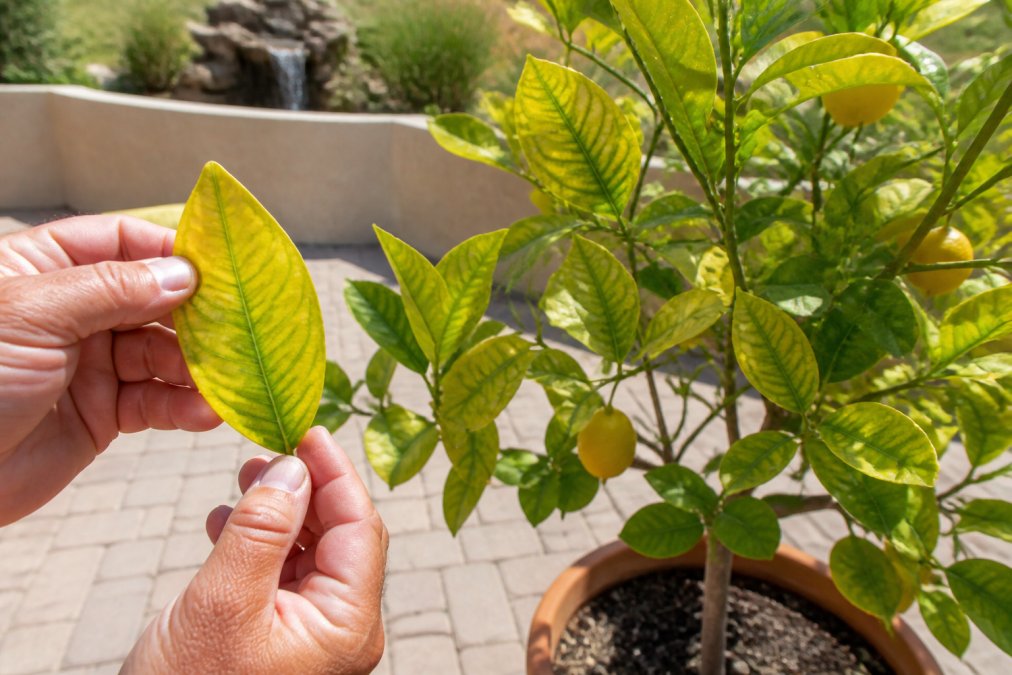
If your citrus leaves are turning yellow while the veins stay green, your tree is starving in plain sight. The culprit is often high soil pH. When soil pH climbs above 7.0, key nutrients like iron, zinc, and manganese stop dissolving in water. That means the roots cannot pull them up, no matter how much fertilizer you add.
This guide from Local Choice Pest & Landscape Nutrition explains how treating alkaline soil for citrus works, step by step. We have helped Arizona homeowners care for citrus and desert trees for years.
Soil pH is a measure of how acidic or alkaline your soil is, on a scale from 0 to 14, where 7.0 is neutral. Citrus trees grow best between 5.5 and 6.5. Above 7.0, iron and other micronutrients become locked in the soil.
Testing Soil pH at Home Before You Treat Anything
Never treat alkaline soil without testing first. Guessing leads to wasted money and stressed trees. A basic home test takes about 15 minutes and tells you whether you even have a problem.
Here is the simple process:
- Dig 6 inches down near the drip line of your tree, where the feeder roots actually live
- Collect soil from 3-4 spots around the canopy edge and mix them together in a clean bucket
- Let the sample air-dry on newspaper for a few hours; damp soil skews many kits
- Follow your test kit instructions exactly, using distilled water if the kit calls for water
- Record the number, the date, and which tree the sample came from
Test in spring and again in fall. Soil pH shifts with irrigation, fertilizer, and rainfall, and a single reading is a snapshot, not a verdict.
Home Test Kits vs. Professional Lab Results
Home test kits fall into three rough categories, and they are not equally useful for citrus:
- Color-comparison dye kits: Cheapest option. Read pH in 0.5 increments, which is too coarse to distinguish 6.5 from 7.0. Fine for a yes/no check on whether you have a problem.
- Digital pen meters: Faster and more precise on paper, but the inexpensive models drift and need calibration with buffer solutions. A $20 pen that has not been calibrated can be off by a full point.
- Capsule or tablet kits: Middle ground. More consistent than dye strips, still limited to roughly 0.5 increments.
For a single backyard tree, a capsule kit plus a re-test is usually enough to decide whether to act. For a whole yard, a row of trees, or a tree that has been yellow for more than one season, a professional lab test is worth the cost.
Schedule a Free In-Home Estimate →
- pH first. Citrus wants 5.5 to 6.5. A reading of 7.5 or higher means lockout is likely; 7.0 to 7.4 is borderline and worth watching.
- Micronutrients second. Low iron, zinc, or manganese on the report confirms the leaf symptoms you are seeing.
- Salts third. High electrical conductivity in desert soils often accompanies high pH and can mimic nutrient deficiency on its own.
- Texture last. Sandy soil buffers pH weakly and responds to sulfur fast; clay buffers strongly and needs smaller, more frequent applications.
Reading the Symptoms: Yellow Leaves and Citrus Iron Chlorosis Treatment
Citrus iron chlorosis treatment starts with recognizing the pattern: yellow leaves with green veins. This is the classic sign of iron deficiency caused by high pH. The yellowing shows up first on new leaves, then spreads.
Iron Sulfate, Chelates, and Foliar Sprays Compared
Three common fixes exist for iron chlorosis, and each works differently:
- Iron sulfate: Fast soil reaction, but it can burn roots if overused
- Chelated iron: Stable in alkaline soil and easier on roots
- Foliar sprays: Quick green-up on leaves, but only a temporary fix
| Treatment | Speed | Lasts | Best For |
|---|---|---|---|
| Iron sulfate | Fast | Weeks | Quick soil correction |
| Chelated iron | Moderate | Months | Long-term soil health |
| Foliar spray | Very fast | Days to weeks | Emergency green-up |
Elemental Sulfur: The Slow, Safe Way to Lower pH
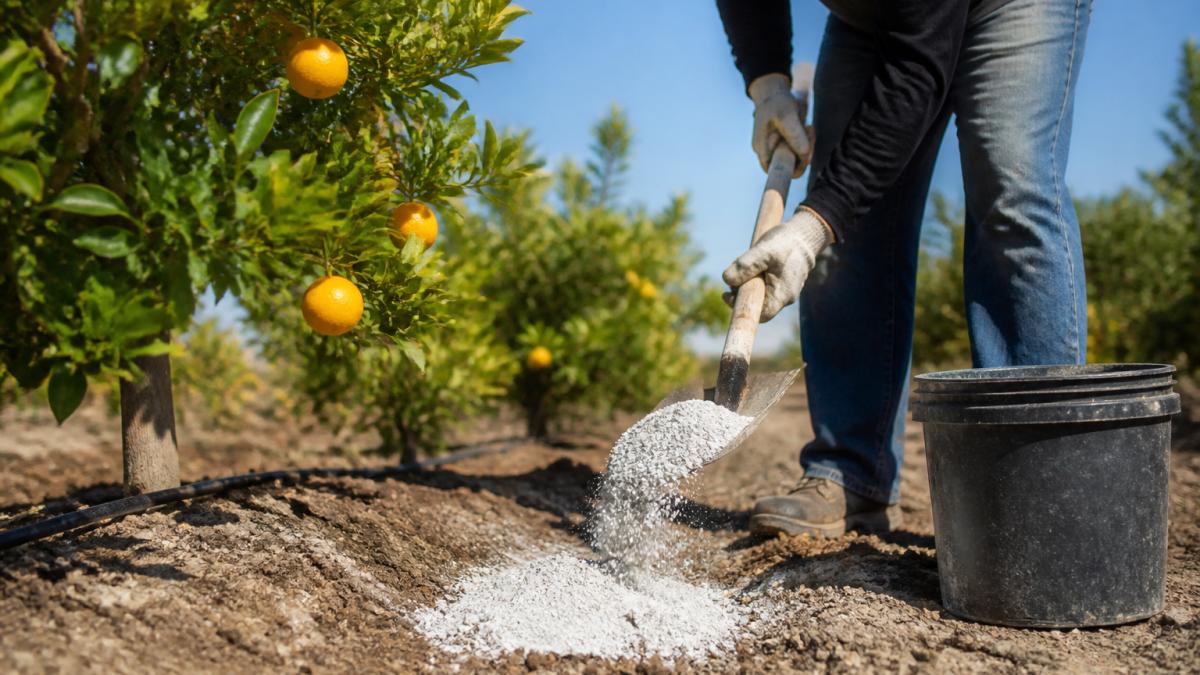
Elemental sulfur is the most reliable long-term fix for alkaline soil. Soil bacteria slowly convert it into acid, which lowers pH over time. This process takes months, not days, so patience matters.
Best Soil Amendments for Citrus in Alkaline Ground
The best soil amendments for citrus do two jobs: they feed the tree and they improve soil structure. Compost, aged manure, and leaf mulch top the list. These add organic matter, which helps soil hold nutrients and water.
What to Add and What to Skip (Gypsum and Lime)
Not every amendment helps. Some make the problem worse.
- Add: compost, aged manure, leaf mulch, pine bark
- Skip: lime, wood ash, and most "garden gypsum" blends
Gypsum adds calcium but does not change pH. Lime raises pH, which is the opposite of what alkaline soil needs. Wood ash is highly alkaline and should stay out of citrus beds.
Managing Irrigation Water Alkalinity and Drainage
Your water may be undoing your soil work. Many desert water sources run alkaline, and every watering pushes pH back up. Test your irrigation water once a year.
Schedule a Free In-Home Estimate →
A Seasonal Schedule for Treating Alkaline Soil for Citrus
Timing separates a fix that lasts from one that fades. The single biggest variable is soil temperature: the bacteria that convert elemental sulfur into acid are active when soil is roughly 55°F to 85°F at 6 inches deep. Apply sulfur outside that window and you are paying for product the microbes will not use.
| Season | Action | Frequency | Notes |
|---|---|---|---|
| Late winter | Test pH; plan the year | Once | Baseline reading before spring growth |
| Early spring | Apply chelated iron if symptoms are active | Once | Soil is warming; roots are waking |
| Late spring | Light sulfur application if pH is above 7.5 | Once | Only if soil is above 55°F |
| Summer | Foliar spray for emergency green-up | As needed | Do not apply sulfur in peak heat |
| Early fall | Main elemental sulfur application; add compost | Once | Best window: warm soil, cooling air |
| Late fall | Re-test pH; adjust next year's plan | Once | Compare against the spring baseline |
| Winter | Dormant; no sulfur | , | Bacteria are largely inactive |
In-Ground Trees vs. Container Citrus
Most guides treat these as the same job. They are not.
- Use a potting mix formulated for citrus rather than native soil, which is usually the source of the alkalinity in the first place
- Repot or top-dress with fresh mix every 1 to 2 years rather than trying to acidify old mix
- Choose chelated iron over elemental sulfur; sulfur needs microbial activity that is inconsistent in pots
- Flush the pot thoroughly every few months to push accumulated salts out the drainage holes
- Test the runoff water, not just the mix, to see what the roots are actually sitting in
Treating alkaline soil for citrus is a system, not a single product. Soil, water, and drainage all affect pH, and the schedule that works for an orchard tree will damage a potted one. Match the protocol to the planting, and re-test every fall.
Common Mistakes That Keep Citrus Yellow
Most failed fixes trace back to a few repeat errors:
- Treating without testing pH first
- Using lime or wood ash by mistake
- Applying sulfur in peak summer heat
- Ignoring alkaline irrigation water
- Skipping organic matter
Frequently Asked Questions
What do I add to alkaline soil to make it acidic for citrus?
Elemental sulfur is the standard choice. It feeds soil bacteria that produce acid as they break it down, which lowers pH over several months. For faster greening, pair it with iron sulfate or a chelated iron product. Organic matter such as compost and aged manure also helps by improving soil structure and slowly acidifying the root zone. Skip lime and wood ash, since both raise pH and make the problem worse.
How do I know if my citrus tree is suffering from high soil pH?
The clearest sign is interveinal chlorosis: yellowing leaves with veins that stay green, usually on new growth first. Trees may also show stunted growth, poor fruit set, and leaf drop. A soil pH test above 7.0 confirms the cause. Because alkaline soil citrus problems mimic nitrogen deficiency, test before treating so you fix the actual issue rather than guessing.
Does Epsom salt lower pH in soil?
No. Epsom salt is magnesium sulfate, and it does not shift soil pH in either direction. It can help if a soil test shows magnesium deficiency, but it will not correct alkaline soil. Many gardeners apply it for yellow leaves and see no change because the real culprit is high pH locking out iron. Spend that effort on a pH test and a sulfur or chelate plan instead.
How often should I test my soil pH for citrus?
Test at least once a year, ideally in early spring before you fertilize or amend. If you are actively lowering pH with sulfur, retest every three to four months, since elemental sulfur takes time to work and you do not want to overshoot into acidic territory. Keep a simple log of readings so you can see the trend rather than reacting to one number.