 how-to
Protecting Desert Landscaping From Heat: 7 Steps
Table of Contents
- Step 1: Know the Heat-Stress Warning Signs
- Step 2: Build a Desert Plant Watering Schedule for Summer
- Step 3: Troubleshoot Irrigation and Drip Systems
- Step 4: Choose the Right Mulch for Desert Landscaping
- Step 5: Use Shade Cloth for Plants in Hot Weather
- Step 6: Prep Before a Heat Wave and Recover After
- Step 7: What Not to Do When Protecting Desert Landscaping
- Frequently Asked Questions
Last Updated: October 15, 2026
Step 1: Know the Heat-Stress Warning Signs
Protecting desert landscaping from heat starts with reading the plants, not the thermometer. Heat stress shows up as leaf scorch, curling, color fade, and stalled growth, and catching those signals early decides whether a plant recovers. At Local Choice Pest & Landscape Nutrition, we see the same pattern every June: homeowners water more, and the plant gets worse. The fix is telling four similar-looking problems apart, because they demand opposite responses.
Leaf, Color, and Growth Signals to Check
Walk your landscape in the late afternoon and look for these markers:
- Leaf scorch: brown, crisp edges on leaves while the center stays green
- Curling or cupping: leaves rolling inward to reduce sun exposure
- Color fade: normally deep green foliage turning pale, yellow, or bronze
Symptom-to-Action Triage
Match what you see to what you should actually do. The wrong response here is worse than no response.
| What you see | Most likely cause | What to do | What NOT to do |
|---|---|---|---|
| Wilting in afternoon, perked up by morning | Temporary midday wilt from heat, normal for many desert plants | Nothing. This is the plant conserving water. | Don't add water on top of an already-moist root zone. |
| Wilting that persists overnight, soil dry 6 inches down | Root-zone drought stress | Deep soak at the drip line, then recheck in 24 hours. | Don't sprinkle lightly, it won't reach the roots. |
| Wilting that persists overnight, soil wet 6 inches down | Overwatering / root rot | Stop watering. Let the soil dry. Check drainage. | Don't water again 'just in case.' |
| Brown, crisp leaf edges with green centers | Leaf scorch from sun and heat | Leave it. New growth will replace it when temperatures ease. | Don't prune scorched tissue in peak heat, it exposes interior leaves. |
| Bleached, papery patches on the southwest side | Sunburn on bark or leaves | Shade the exposed side; avoid removing bark. | Don't wrap or seal the trunk. |
| Pale, yellow, or bronze foliage with slow growth | Heat stall, nutrient lockup, or both | Wait for cooler weather, then reassess. | Don't fertilize during the heat, it forces growth the plant can't support. |
Heat Stress vs. Overwatering: How to Tell Them Apart
Both problems produce wilting, which is why so many homeowners misdiagnose them. Heat-stressed plants wilt in the afternoon and perk up by morning; overwatered plants stay wilted around the clock, with soggy soil days after irrigation. If the soil is wet and the plant still droops, stop watering. The most useful diagnostic tool is a soil probe or long screwdriver pushed 6 inches down, that reading decides your next move.
When It's Not Heat at All
A few look-alikes get blamed on heat every summer:
- Salt burn from poor-quality irrigation water shows up as scorched leaf tips, similar to heat scorch but appearing even on shaded foliage.
- Spider mites thrive in hot, dry conditions and cause stippled, bronzed leaves that look like heat fade. Tap a branch over a white sheet of paper, if tiny specks move, it's mites, not heat.
- Herbicide drift produces twisted, cupped new growth that mimics heat curling but appears on only one side of the plant, facing the source.
If symptoms appear on shaded leaves, on only one side of a plant, or on plants that were fine the day before, suspect something other than heat.
Step 2: Build a Desert Plant Watering Schedule for Summer
Desert plant watering in summer follows one rule: water deeply and infrequently, not lightly and often. A deep soak pushes moisture to the root zone, where it counts; shallow sprinkling wets only the top inch or two, encouraging shallow roots that bake when temperatures climb. The hard part is translating the rule into minutes on a timer for your soil, emitters, and plants' age, that's where most schedules fail.
When to Water: Morning vs. Evening
Water between 5 and 8 a.m. Morning watering lets plants take up moisture before the heat peaks and reduces evaporation loss. Evening watering leaves foliage wet overnight, inviting fungal problems in humid monsoon weeks. If morning isn't possible, water at dusk and keep spray off the leaves.
Set Frequency and Runtime by Soil Type
Soil texture drives how often and how long you run each zone. Use these as starting points for established desert trees and shrubs in peak summer, then adjust based on what a soil probe tells you:
| Soil type | Water-holding behavior | Typical frequency | Typical deep-soak runtime |
|---|---|---|---|
| Sandy / decomposed granite | Drains fast, low holding capacity | Every 5-7 days | 2-3 hours, may need a second short cycle |
| Sandy loam | Moderate | Every 7-10 days | 3-4 hours |
| Clay / caliche-heavy | Holds water, slow to absorb | Every 10-14 days | 4-6 hours, split into two cycles to avoid runoff |
Split cycles matter on clay and caliche: run half the time, wait an hour for the water to soak in, then run the second half. Otherwise water sheets off the surface and never reaches the root zone.
Adjust for Plant Age, Not Just Plant Type
A newly planted shrub has a root ball measured in inches; an established mesquite or palo verde has roots reaching many feet out and down. Water them the same way and you'll drown one and drought-stress the other.
Schedule a Free In-Home Estimate →
- Newly planted (first 1-2 summers): small, frequent cycles, often every 2-3 days in extreme heat, applied directly over the root ball, tapering as roots establish.
- Establishing (years 2-3): widen the watered area outward each season and stretch the interval.
- Non-native ornamentals and citrus: higher water demand and less heat tolerance; these are the plants most likely to need a mid-summer supplemental cycle.
Translate Emitter Output into Runtime
Runtime is meaningless without knowing emitter output. A 2-gallon-per-hour emitter and a 0.5-gallon-per-hour emitter on the same zone deliver four times different volumes in the same window. Add up the emitters serving a plant, multiply by their rated gallons per hour, then by runtime, to estimate gallons delivered. Check the manufacturer's stamp on the emitter or the drip tubing spec sheet, guessing here is how zones get chronically under- or over-watered.
Factor In Local Watering Rules
Many desert municipalities and water districts restrict outdoor watering to certain days or hours during summer, and some offer rebates for converting turf to drip or xeriscape. Check your water provider's current schedule before programming the timer, violations mean citations and wasted effort. If allowed days are limited, prioritize deep soaks on trees and shrubs over frequent shallow cycles on less critical plantings.
A desert watering schedule is three numbers, how often, how long, and how much per emitter, adjusted for soil, plant age, and local rules. If you can't answer all three for a zone, that zone is guessing.
Push a soil probe or a long screwdriver into the ground after watering; if it slides in easily to 12 inches, you've watered deeply enough. If it stops at 3 inches, you're watering the surface, not the roots. Consistent deep irrigation also helps maintain soil integrity and moisture levels that discourage pests, which is essential when you take steps to prevent termites in gardens.
Step 3: Troubleshoot Irrigation and Drip Systems
Irrigation failures cause more summer plant death than heat itself. Before peak season, run every zone and check for these problems:
| Symptom | Likely Cause | Fix |
|---|---|---|
| Dry spots in one area | Clogged emitter | Replace or clean the emitter |
| Puddling at plant base | Broken line or wrong emitter size | Repair line, resize emitter |
| Entire zone dry | Failed valve or timer | Test valve, reset schedule |
| Plants dry despite runtime | Emitters buried or pushed aside | Reposition emitters at root zone |
A common mistake is setting the timer in April and never touching it again. As temperatures climb, runtimes need to increase, and heat waves may require a second cycle. Check emitters quarterly and flush drip lines at the start of summer.
Step 4: Choose the Right Mulch for Desert Landscaping
Mulch for desert landscaping does two jobs: it slows water loss from the soil surface and regulates soil temperature around the root zone.
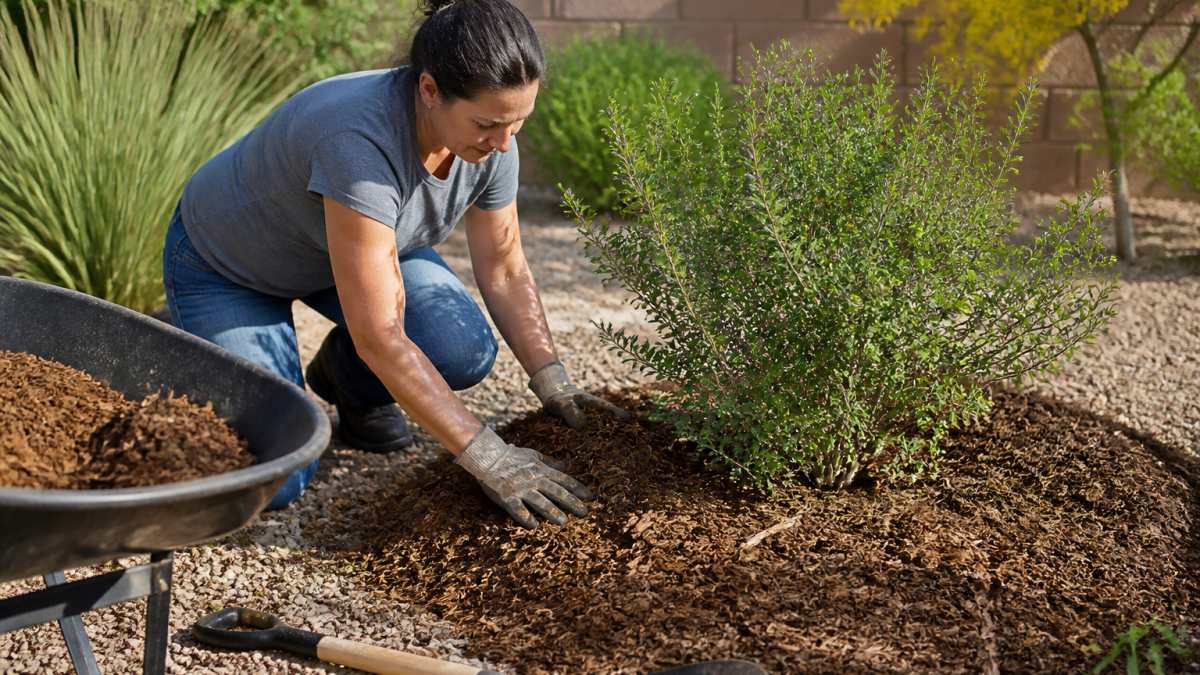
Keep mulch a few inches away from trunks and stems; piling it against the plant traps moisture against the bark and invites rot and pests.
Step 5: Use Shade Cloth for Plants in Hot Weather
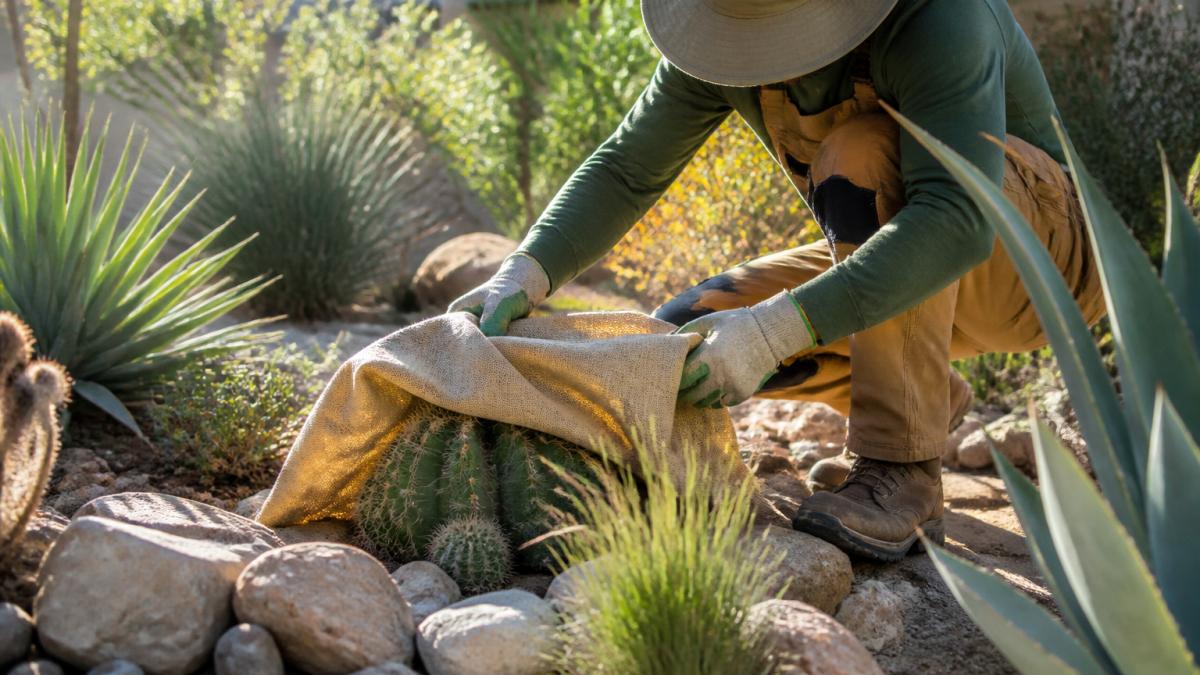
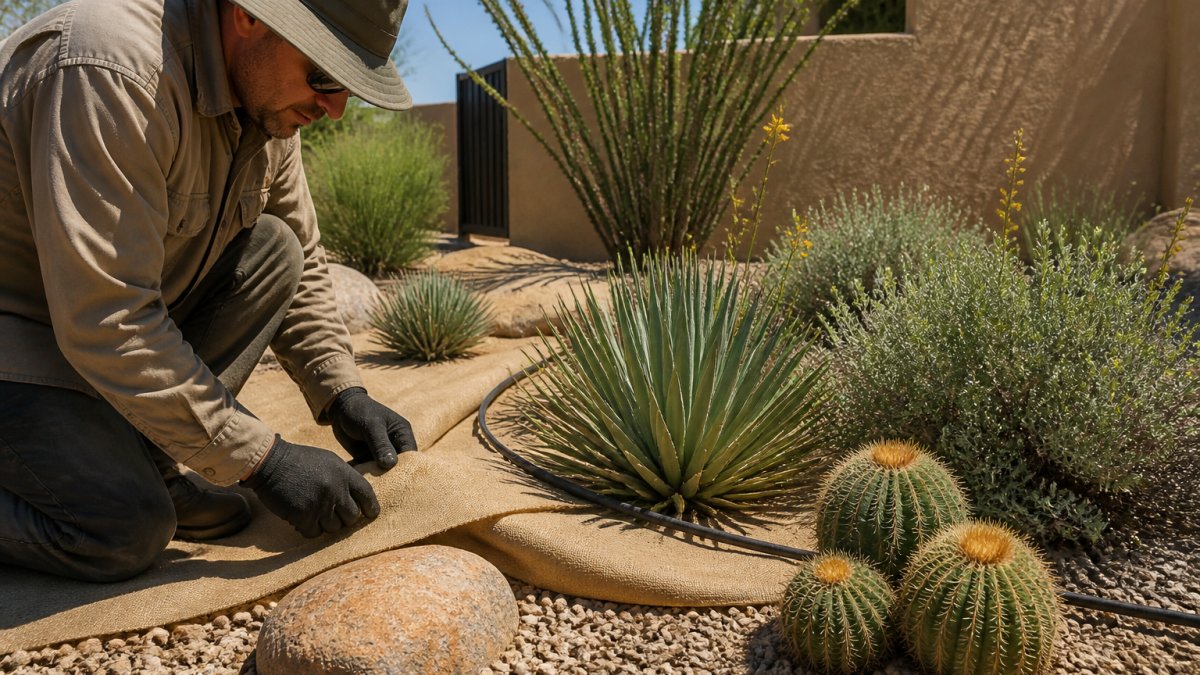
Shade cloth for plants in hot weather is the fastest way to drop leaf temperature without moving the plant. A 30% to 50% shade cloth blocks the harshest afternoon sun while letting enough light through for photosynthesis.
Young transplants, citrus, and shade-loving understory plants benefit most. For guidance on heat safety thresholds that affect outdoor work and plant care timing, the OSHA heat illness prevention guidance is a useful reference for scheduling strenuous yard work.
Schedule a Free In-Home Estimate →
Step 6: Prep Before a Heat Wave and Recover After
Preparation beats reaction. Two days before extreme heat, deep-water every zone, check that drip emitters flow, and set up shade cloth on vulnerable plants. Hold off on fertilizing, pruning, and transplanting during the heat; all three push new growth that can't survive the stress.
Recovery follows a simple timeline:
- Days 1-3 after the heat breaks: inspect for scorch, wilt, and sunburn; water only if the soil is dry at depth
- Days 4-10: remove dead foliage, but leave damaged stems until you see new growth
- Weeks 2-4: resume normal watering and watch for pests moving into stressed plants
Stressed plants attract pests. That's when a landscape nutrition specialist pays off, because a plant fed and watered correctly fights off infestations on its own.
Step 7: What Not to Do When Protecting Desert Landscaping
The fastest way to lose a plant in summer is to over-correct. Skip these mistakes:
- Don't water daily. It trains shallow roots and wastes water.
- Don't fertilize during extreme heat. It forces growth the plant can't support.
- Don't prune heavily in summer. Exposed tissue sunburns.
Water conservation and plant health aren't in conflict. A landscape watered deeply, mulched properly, and shaded where needed uses less water and looks better doing it.
Heat waves expose every weak point in a landscape at once: tired irrigation, thin mulch, and plants never right for the site. Local Choice Pest & Landscape Nutrition helps homeowners and property managers build landscapes that hold up through the worst of summer, with landscape nutrition services that strengthen soil and plants, targeted pest and rodent control when stressed plants attract invaders, and treatments safe for kids, pets, and desert wildlife.
Frequently Asked Questions
How often should desert landscaping be watered during extreme heat?
During extreme heat, established desert plants usually need deep watering every 7 to 14 days, while young or newly planted specimens may need water every 2 to 3 days. Always check soil moisture at a 6-inch depth before watering. If the soil is still damp, wait. Deep, infrequent watering encourages roots to grow downward, which makes plants more resilient. Adjust your schedule based on plant type, soil, and local conditions.
Does mulch help protect desert plants from heat?
Yes. A 2- to 3-inch layer of organic mulch around plant roots slows water evaporation, keeps soil temperatures lower, and reduces heat stress. Keep mulch a few inches away from trunks and stems to prevent rot. Reapply as needed, especially after monsoon winds. Mulch is one of the simplest ways to help your desert landscaping survive summer.
Should I prune or fertilize plants during extreme summer heat?
Avoid heavy pruning and fertilizing during extreme heat. Pruning stimulates new growth that is vulnerable to sunburn and water loss. Fertilizing can push tender growth when plants are trying to conserve resources. Wait until temperatures cool in late summer or early fall. If you must remove dead or broken branches for safety, do it early in the morning and water the plant deeply afterward.
How can I tell if a desert plant is heat-stressed or overwatered?
Heat-stressed plants often have drooping or scorched leaves, especially on the side facing the afternoon sun, and may drop leaves to conserve water. Overwatered plants typically show yellowing leaves, mushy stems, and root rot. Check soil moisture before watering. If the soil is soggy, hold off. If it is dry several inches down, the plant likely needs a deep soak.