 how-to
How to Protect Desert Plants: A Year-Round Guide
Table of Contents
- Protecting Desert Plants From Frost: A Step-by-Step Plan
- How Often to Water Desert Plants in Summer
- Desert Plant Mulch and Soil Care for Moisture Retention
- Protecting Citrus Trees From Heat and Cold
- Protecting Desert Plants From Extreme Heat and Sun Exposure
- Pest, Wildlife, and Physical Damage Protection for Desert Plants
- How to Protect Desert Plants: Diagnosing and Recovering From Damage
- Conclusion
- Frequently Asked Questions
Last Updated: October 9, 2026
Protecting Desert Plants From Frost: A Step-by-Step Plan
Frost is the sneakiest threat in the desert garden. Clear winter nights drop temperatures fast, and radiational cooling can push a backyard below freezing while the afternoon felt warm (Atmospheric Controllers Of Local Nighttime Temperature). Learning how to protect desert plants from frost comes down to three moves: know which plants are at risk, cover them before dark, and keep the root zone warm and moist. This guide from Local Choice Pest & Landscape Nutrition walks through each step, then covers the summer threats that matter just as much.
Cold-hardy desert natives like jojoba and ironwood shrug off a light freeze. Tender plants do not.
Identify Frost-Sensitive Plants and Tender New Growth
Frost-sensitive plants are the ones that suffer when temperatures dip to freezing: young citrus, bougainvillea, lantana, and any plant pushing tender new growth late in the season. New leaves and soft stems hold more water than mature tissue, so ice crystals form inside them first and rupture the cells. Check your yard the evening before a freeze forecast and flag anything with fresh growth, thin leaves, or a tropical look. Those plants get priority. Established brittlebush and other native plants usually need nothing at all.
Cover Plants With Frost Cloth, Sheets, or Blankets
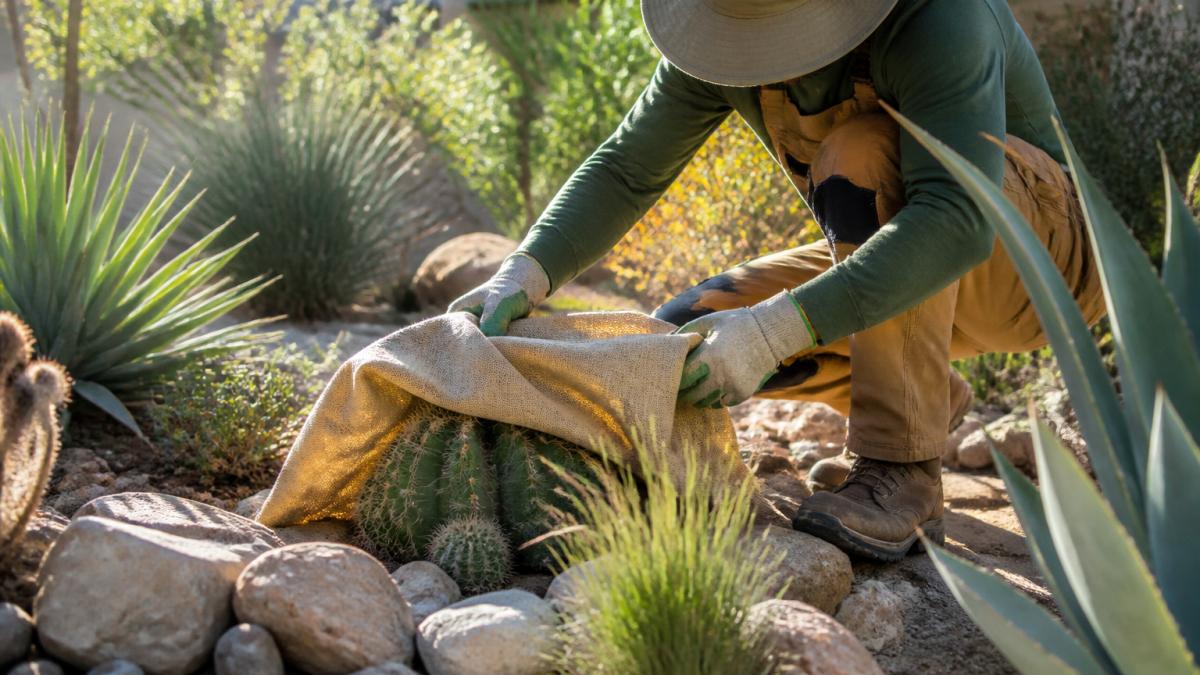
Covering plants is the fastest way to hold heat in. Drape frost cloth, old sheets, or blankets over the plant and let the fabric reach the ground. That traps warmth rising from the soil, which is the whole point. Never let plastic film touch the leaves; plastic conducts cold and can freeze foliage on contact. Clothespins or stakes keep fabric off the tips of branches. Remove covers in the morning once temperatures climb, or trapped moisture can invite rot.
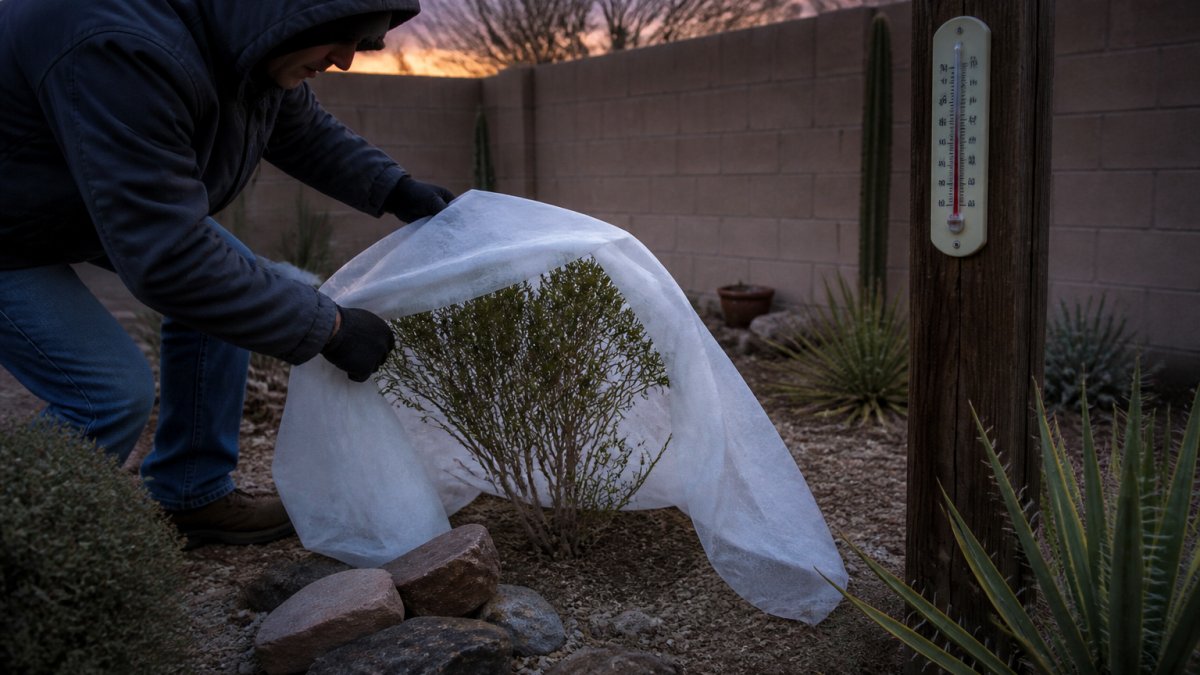
Water Before a Freeze and Insulate the Root Zone
Moist soil holds heat better than dry soil, so water before a freeze arrives. Wet ground releases warmth slowly overnight and lifts the temperature around the plant by a few degrees. Water deeply in the morning, not at dusk, so leaves have time to dry before the cold hits. Then add insulation around the root zone with mulch or garden straw. Pull mulch back an inch or two from the trunk to keep rodents from nesting against the bark. For container plants, move pots into a garage or another sheltered location, or wrap the pot itself.
How Often to Water Desert Plants in Summer
Most desert plants need deep watering every two to four weeks in summer, not a light sprinkle every few days. Shallow, frequent watering trains roots to stay near the surface, where heat dries soil fastest. Deep watering pushes roots down where moisture lasts.
That rule of thumb breaks down the moment you look at soil texture. A sandy wash can drain 2 inches of water per hour, while a caliche layer or heavy clay might take in less than a quarter inch per hour before it runs off.
Desert-adapted species also change their behavior in summer. Many native shrubs and trees go semi-dormant in the hottest weeks, slowing growth and using less water than the calendar suggests.
Deep Watering Schedules by Plant Type
Watering needs vary by plant, so match the schedule to what you grow. The table below is a starting point, not a rule. Check soil moisture before every session.
| Plant Type | Watering Depth | Summer Frequency |
|---|---|---|
| Established native shrubs | 60-90 cm (24-36 in) | Every 3-4 weeks |
| Young trees (first 2 years) | 45-60 cm (18-24 in) | Every 10-14 days |
| Citrus trees | 60 cm (24 in) | Every 7-10 days |
| Container plants | Until water runs through | Every 2-4 days |
| Cacti and succulents | 30-45 cm (12-18 in) | Every 4-6 weeks, or after monsoon rain |
If you are on a municipal or irrigation district schedule, check local watering restrictions before you set a timer. Many desert utilities limit outdoor watering to certain days or hours during drought conditions, and following those rules is part of keeping a landscape alive long term.
Schedule a Free In-Home Estimate →
Desert Plant Mulch and Soil Care for Moisture Retention
Mulch is the cheapest moisture insurance you can buy. A 2-3 inch layer of organic mulch or garden straw slows evaporation, keeps soil temperature steadier, and feeds the microbes that keep desert soil alive. Keep mulch a few inches away from trunks and stems. Piled against bark, it holds moisture where fungus grows.
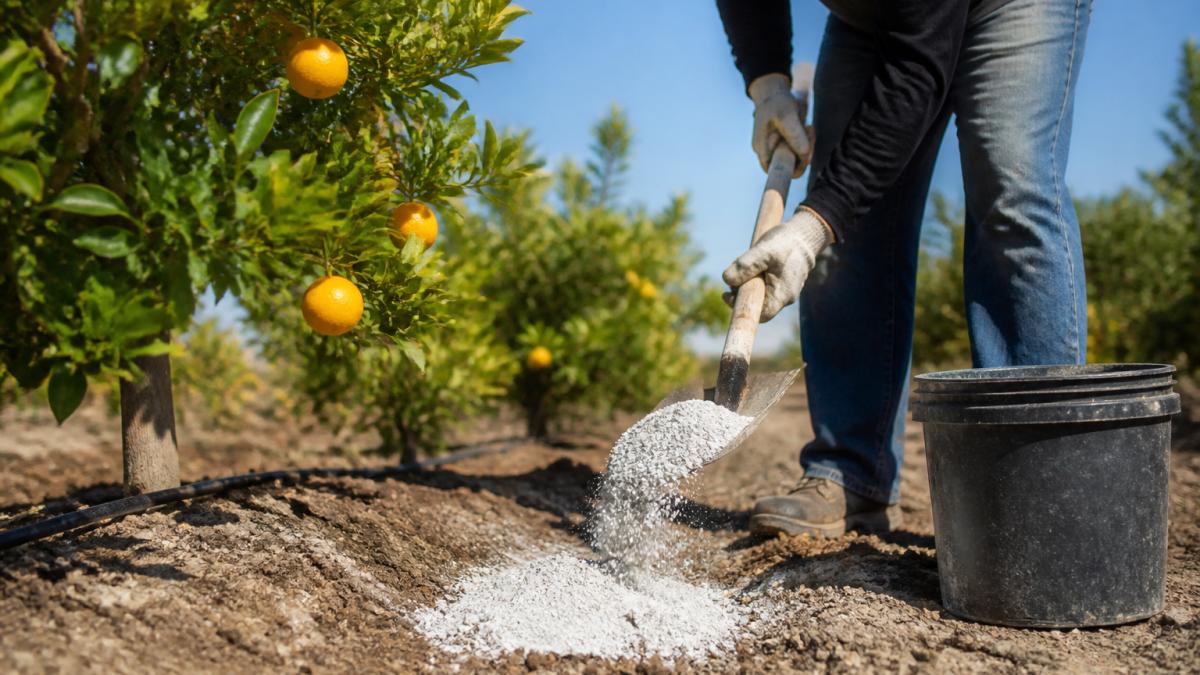
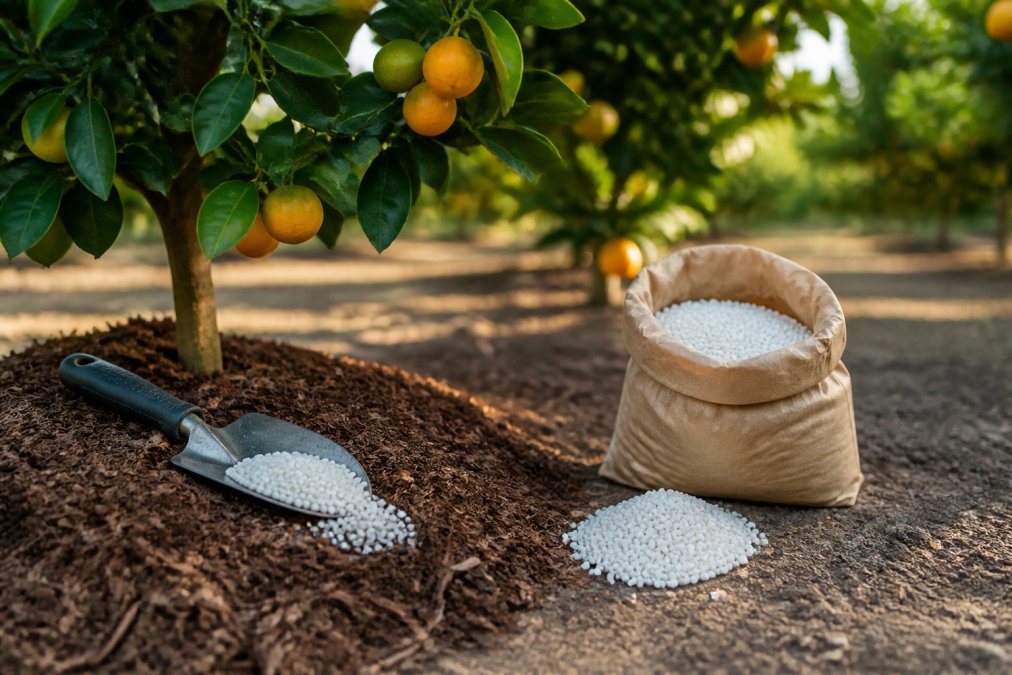
Soil care matters just as much. Desert soil is often alkaline and low in organic matter, which limits how well plants take up nutrients. Mixing compost into the top few inches before planting helps, and a slow-release fertilizer in spring supports new growth without forcing a flush that cold snaps will kill. If your plants look yellow or stunted despite regular watering, the soil is the place to look first.
Protecting Citrus Trees From Heat and Cold
Citrus trees in the desert face a double threat: scorching summer sun and winter freezes. A young citrus tree can lose its canopy to a hard freeze and still recover from the rootstock, but sunburn on exposed bark can kill it outright. Paint exposed trunks with a diluted white latex wrap or use commercial tree wrap to reflect heat. In winter, string old-fashioned incandescent lights (not LEDs) through the canopy and cover the tree with frost cloth on freeze nights. The lights add just enough warmth to matter.
Shade Cloth and Sun Protection for Citrus
Shade cloth rated for 30-50% light reduction protects citrus from sunburn without starving it of light. Drape it over the south and west sides of the tree during the hottest months. Keep the cloth off the leaves with stakes or a simple frame. Water deeply before a heat wave, and check soil moisture every few days during triple-digit stretches.
Protecting Desert Plants From Extreme Heat and Sun Exposure
Extreme heat is the desert's other killer, and it works slowly. Plants lose moisture through their leaves all day, and when the soil is dry, they cannot replace it fast enough. Leaves curl, edges turn brown, and growth stalls.
Heat stress and drought stress look similar but are not the same problem. A plant can be well watered and still scorch if it is suddenly moved into full afternoon sun, because its leaves were not built for that intensity. The fix is acclimation, not more water.
Shade timing matters more than shade amount. In the low desert, the harshest window runs from about 11 a.m. to 4 p.m. from May through September.
Species-level tolerance varies widely. Here is how common desert garden plants tend to rank:
- High heat tolerance: palo verde, mesquite, jojoba, brittlebush, creosote, most native cacti
- Moderate tolerance: desert willow, Texas sage, lantana, bougainvillea (with afternoon shade)
- Low tolerance: most citrus, young fruit trees, leafy vegetables, ferns, and any plant with large, thin leaves
Your job is to reduce sun exposure and moisture loss:
Schedule a Free In-Home Estimate →
- Water deeply in the early morning so roots drink before the heat peaks
- Add shade cloth over tender plants during heat waves
- Group container plants so they shade each other
- Skip fertilizing during extreme heat; it pushes growth the plant cannot support
- Avoid pruning in midsummer; exposed inner branches sunburn easily
- Keep bare soil covered with mulch or rock to reduce radiant heat at the root zone
Pest, Wildlife, and Physical Damage Protection for Desert Plants
Pests and wildlife do their own kind of damage, and stressed plants attract more of it. Drought-stressed trees send out signals that borers and other pests pick up on. Rodents gnaw bark and girdle young trees. Rabbits and javelina strip new growth overnight. Protecting desert plants means dealing with all of it.
- Wrap young tree trunks with hardware cloth to stop rodent damage
- Use fencing or netting around new plantings to deter wildlife
- Keep mulch pulled back from trunks so rodents have no cover
- Inspect plants monthly for pests, especially after a stress event
- Remove dead or damaged limbs promptly; they invite borers
This is where a landscape nutrition plan pays off. Healthy soil grows stronger plants, and stronger plants resist pests on their own. Local Choice Pest & Landscape Nutrition builds year-round care plans that pair targeted pest control with tree and shrub nutrition, using products safe for kids, pets, and desert wildlife.
How to Protect Desert Plants: Diagnosing and Recovering From Damage
Frost damage shows up as blackened, mushy leaves and split bark. Heat damage looks different: scorched leaf edges, sunburned bark, and dropped leaves in midsummer. Diagnose before you act, because the fix is not the same.
For frost damage, wait. Do not prune frozen branches until new growth appears in spring. The dead tissue insulates what is still alive underneath. For heat damage, shade the plant, water deeply, and hold off on fertilizer until it recovers. For both, check the root zone. If the soil is bone dry or soggy, that is your real problem.
Conclusion
Desert gardening means preparing for both ends of the thermometer, and that is a lot to manage on your own. Local Choice Pest & Landscape Nutrition handles the hard parts: targeted pest and rodent control, tree and shrub nutrition, and year-round protection plans built for desert conditions. Our family-owned team uses premium products safe for kids, pets, and desert wildlife, and we back the work with a guarantee. If pests come back, so do we. Schedule a free in-home estimate and get a plan that keeps your landscape healthy through every season.
Frequently Asked Questions
Should I water my desert plants every day during a heatwave?
No. Daily light watering encourages shallow roots that dry out fast. Instead, water deeply two to three times per week in summer, letting the top inch of soil dry between sessions. For established native plants like jojoba or ironwood, once a week may be enough. Always check soil moisture at a 3-inch depth before watering. Deep soakings push roots down where soil stays cooler and holds moisture longer.
How do you protect desert plants from frost?
Start by identifying frost-sensitive plants such as young citrus, bougainvillea, and tender succulents. Water the soil thoroughly the day before a freeze because moist soil holds heat better than dry soil. Cover plants with frost cloth, sheets, or blankets, draping them to the ground to trap warmth. Avoid plastic film directly on leaves. For container plants, move them into a garage or other sheltered location. Remove covers in the morning once temperatures rise above freezing.
How can mulch help protect desert plants?
Mulch insulates the root zone, slowing both heat gain in summer and heat loss in winter. A 2- to 3-inch layer of garden straw or wood chips reduces evaporation from the soil surface, keeping moisture available to roots. Keep mulch a few inches away from trunks and stems to prevent rot. In sandy desert soil, mulch also adds organic matter over time, improving water retention. Reapply mulch each spring and fall for year-round protection.
What reduces water loss in desert plants?
Desert plants naturally reduce water loss through waxy coatings and leaf hairs, but you can help. Water deeply and infrequently to encourage deep roots. Apply mulch around the root zone to shade the soil. Use shade cloth during extreme heat to lower leaf temperatures and slow transpiration. Group container plants together to create a humid microclimate. Avoid fertilizing during heat waves, which pushes tender new growth that loses water quickly.