 listicle
Best Pest Control for Scorpions: 7 Proven Options
Table of Contents
- How to Get Rid of Scorpions: A Step-by-Step Plan
- Scorpion Spray and Residual Insecticides Compared
- Dusts, Baits, and Glue Boards: What Actually Works
- Professional Scorpion Control: When DIY Stops Working
- Scorpion Prevention: Seal, Clear, and Starve Them Out
- Safety First: Protecting Kids, Pets, and Beneficial Wildlife
- Building a Year-Round Scorpion Control Plan
- Frequently Asked Questions
Last Updated: October 18, 2026
How to Get Rid of Scorpions: A Step-by-Step Plan
Finding the best pest control for scorpions starts with a simple truth: no single spray solves the problem. Scorpions are hunters, not scavengers, so they come inside chasing prey and shelter. At Local Choice Pest & Landscape Nutrition, we treat scorpion control as a layered plan, not a one-time spray. Here is the sequence we recommend to homeowners.
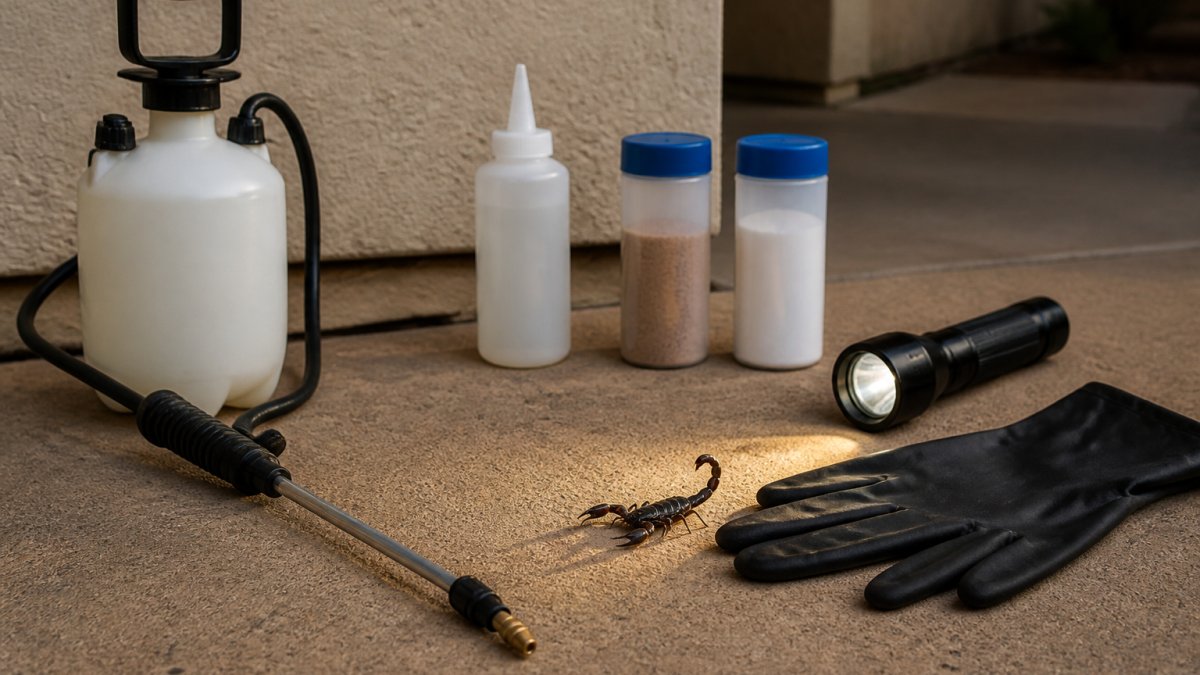
- Inspect at night with a UV flashlight. Scorpions glow under ultraviolet light, which makes evening checks far more accurate than daytime searches.
- Identify the species and the entry points. Note gaps under doors, weep holes, and cracks in stucco or block walls.
- Clear the perimeter. Remove debris, stacked wood, and loose rock where scorpions shelter.
- Apply a residual treatment to the exterior foundation and entry points, following the product label exactly.
- Place monitors or glue boards in garages and along walls to measure activity.
- Re-treat on the label's interval and recheck monthly through warm months.
The order matters. Spraying before you seal gaps and clear debris wastes product, because scorpions simply move back in through the same openings. Below, we break down each option so you can match the method to your infestation severity.
Scorpion Spray and Residual Insecticides Compared
Residual insecticides are the backbone of most scorpion spray programs, but they work slowly and only where the scorpion walks. Scorpions pick up residue through their legs as they cross a treated surface, so coverage along foundation walls and entry points matters more than volume.
Two active ingredients appear often in scorpion products: deltamethrin and bifenthrin. Both are synthetic pyrethroids labeled for perimeter use. Encapsulated formulations release the active ingredient over a longer window, which helps in hot, sunny conditions where standard sprays break down faster. A ready-to-use product like Harris Scorpion Killer is described as odorless and non-staining, with results beginning after the spray dries.
The honest limitation: sprays reduce populations but rarely eliminate them alone. Treat residual insecticide as one layer, not the whole plan.
Dusts, Baits, and Glue Boards: What Actually Works
Dusts and traps handle the places sprays cannot reach, which is why they belong in the same plan. But "what works" depends on where the scorpion is, how dry the spot stays, and whether you are trying to kill scorpions or simply prove they are there. Here is how the main options compare on mechanism, best use, realistic timeline, and failure mode.
| Method | Best For | How It Works | Realistic Timeline | Main Limitation |
|---|---|---|---|---|
| Insecticide dust | Cracks, crevices, wall voids, weep holes | Coats hiding spaces so scorpions contact treated surfaces | Days to a couple of weeks as scorpions move through | Needs precise placement; broadcast dust is wasted and off-label |
| Diatomaceous earth | Dry perimeter gaps, garage corners | Abrasive dust damages the waxy exoskeleton, causing dehydration | Slow; only in consistently dry spots | Loses effect when wet from rain, irrigation, or humidity |
| Granular insecticide | Yard edges, gravel, mulch lines | Creates a treated barrier band scorpions cross | Days to weeks, refreshed per label | Rain and irrigation degrade it; not for indoor use |
| Glue boards | Monitoring and light trapping | Catches scorpions crossing a surface | Immediate catch data; no population reduction | Does not reduce a large population on its own |
| Baits | Limited, situational use | Scorpions are active hunters, not reliable bait feeders | Unpredictable | Unreliable as a primary method |
How to choose between them. Think in terms of the scorpion's path, not the product's label. If the scorpion is moving through a crack or wall void, a dust placed correctly reaches it where a spray cannot. If it is crossing an open foundation edge, a residual spray or granular band is the better fit.
Diatomaceous earth, honestly. It gets heavy attention online, and it does work, but only in dry conditions. Monsoon moisture, sprinkler overspray, and even high humidity quickly ruin it. Reapply after any wetting and keep it in covered, dry gaps rather than broadcasting it across the yard.
Glue boards are the most underrated tool on this list. They tell you whether your treatment is working. Place them flat along walls, in garage corners, and near entry points, and check them weekly. A falling catch count is your first real evidence the plan is working; a flat count means you are missing a harbor area.
Baits: do not build your plan around them. Scorpions hunt live prey and do not reliably take bait stations the way ants or roaches do. A bait may catch a few, but it will not carry a control program.
Realistic expectations. No dust, bait, or trap clears a scorpion population overnight. Expect sightings to continue for a week or two after treatment as scorpions move through treated areas, and judge the plan by the trend in your glue-board catches over a month, not by a single sighting.
Professional Scorpion Control: When DIY Stops Working
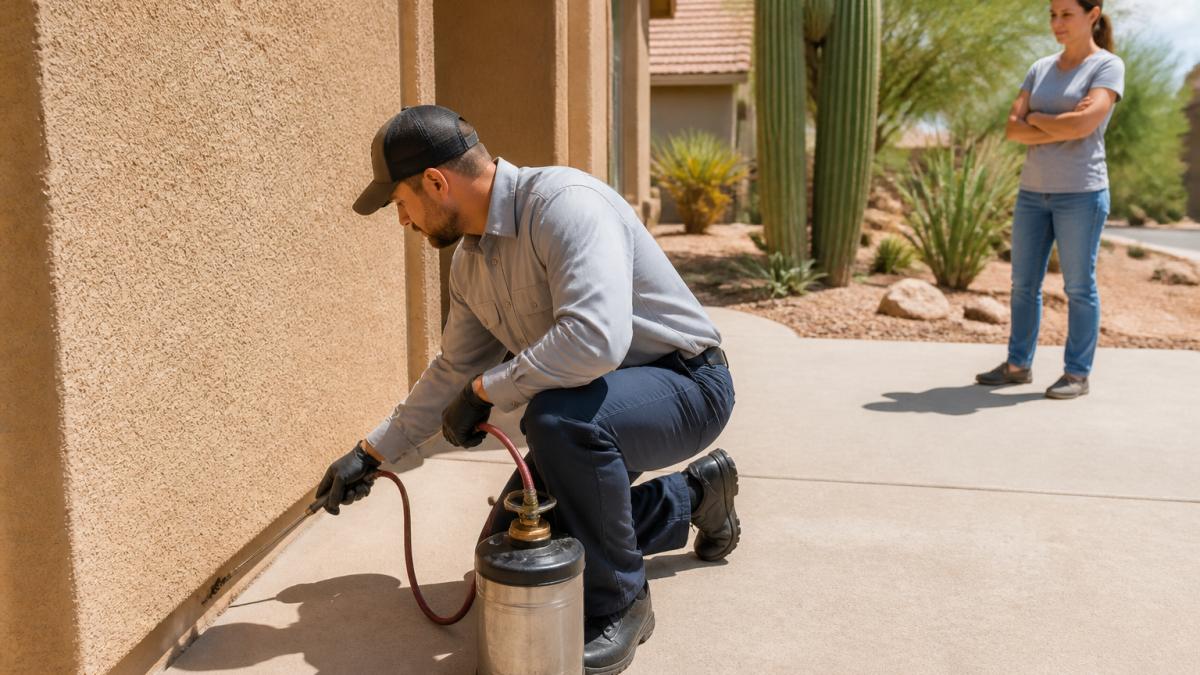
Call a professional when you find scorpions indoors repeatedly, when there are infants or pets in the home, or when you have treated for weeks with no drop in sightings. Those are signs of an established infestation rather than occasional invaders.
What professional service actually includes. A real scorpion program is more than a spray-and-leave visit. Expect a provider to inspect at night or with UV light, identify likely entry points and harbor areas, treat exterior foundation and entry zones with a labeled residual, dust voids and cracks where appropriate, place monitors, and schedule a return visit on the product's label interval. Ask for the scope in writing so you can compare providers on the same terms.
Cost factors to compare. Pricing varies by home size, lot size, infestation severity, number of stories, and how many return visits are included, so treat any single quote as one data point. When comparing, ask:
- Is the price per visit or per program, and how many visits are included?
- What active ingredients are used, and are they labeled for scorpions?
- Is interior treatment included, or exterior only?
- Is there a callback or guarantee if scorpions return between visits?
- Are monitoring devices and re-treatment included or billed separately?
DIY versus professional, side by side. DIY costs less up front but shifts the burden of product selection, correct placement, re-treatment timing, and safety compliance onto you. Professional service costs more but brings species-appropriate product choice, consistent timing, and a documented plan you can hold someone to. For a light, occasional-invader situation, a careful DIY plan with glue-board monitoring can be enough. For repeated indoor sightings, infants or pets in the home, or a treatment that has not moved the catch count, professional service is the more reliable path.
Schedule a Free In-Home Estimate →
Local Choice Pest & Landscape Nutrition is family-owned, uses products formulated for regional pests, and backs service with a guarantee: if pests come back, we do too. Our technicians are background-checked, and we schedule quickly.
When to reassess. If sightings have not dropped after a full label interval plus a return visit, the plan is missing a harbor area or an entry point. That is the moment to ask for a re-inspection rather than simply adding more product.
Scorpion Prevention: Seal, Clear, and Starve Them Out
Scorpion prevention comes down to three jobs: seal gaps, clear shelter, and remove the insects scorpions eat. Exclusion is the highest-value step in the entire plan, because a scorpion that cannot get in never needs a treatment.
- Seal cracks in stucco, block walls, and expansion joints with a suitable sealant.
- Install door sweeps and weather stripping on exterior doors and garage doors.
- Cap or screen weep holes without blocking drainage.
- Move woodpiles, pallets, and stored boxes away from the foundation.
- Trim vegetation back from the walls and roofline.
- Switch exterior lighting to yellow bug bulbs, which attract fewer insects and therefore fewer scorpions.
- Fix leaky faucets and irrigation overspray that create damp shelter.
That last point about prey is the one most homeowners skip. A porch light packed with beetles is a scorpion dinner invitation.
Safety First: Protecting Kids, Pets, and Beneficial Wildlife
Treatment safety starts with the label, not with the sales pitch. Every insecticide label lists required protective gear, re-entry intervals, and restrictions for children and pets. Read it before you open the container, and follow it exactly.
Practical safety rules we give every customer:
- Store all products in original labeled containers, locked away from children and pets.
- Keep kids and pets off treated surfaces until the product is fully dry and the label's re-entry time has passed.
- Wear gloves and eye protection during application, and wash up afterward.
- Never mix products or apply a stronger concentration than the label states.
- Protect beneficial wildlife by treating targeted cracks and edges rather than broadcasting over the whole yard.
For households with allergies or asthma, ask for the active ingredient and the safety data sheet before service. Any reputable provider will supply both.
Building a Year-Round Scorpion Control Plan
Scorpion activity shifts with the seasons, so a plan built for July fails in January. Use this schedule as a starting framework and adjust to what your monitoring shows.
| Season | Focus | Key Action |
|---|---|---|
| Spring | Exclusion and first barrier | Seal gaps, clear debris, apply perimeter residual |
| Summer | Peak activity | Re-treat on label interval, check glue boards weekly |
| Fall | Entry pressure | Re-seal openings, reduce exterior lighting |
| Winter | Monitoring | Inspect garages and wall voids, plan spring service |
Measure results instead of guessing. Count scorpion sightings and glue board catches each month. A falling count means the plan is working; a flat count means you are missing a harbor area. This is the core of integrated pest management: monitor, treat, and verify.
Frequently Asked Questions
What pest control kills scorpions?
Products labeled for scorpions include residual sprays with deltamethrin or bifenthrin, insecticide dusts for cracks and crevices, and granular insecticides for the yard. Diatomaceous earth can help in dry, sheltered spots. Always follow the label directions for indoor or outdoor use. For an active infestation, a professional scorpion control plan that combines a perimeter treatment with exclusion work tends to deliver the most consistent results.
Do scorpion sprays actually work?
Yes, but how well depends on the product and where you apply it. Residual sprays work best when applied to entry points, cracks, and the perimeter where scorpions travel. Encapsulated formulas can last longer outdoors. Sprays alone won't solve an indoor infestation, so pair them with dust in voids, glue boards for monitoring, and sealing gaps. Reapply according to the label, and expect to keep monitoring for weeks.
How do I get rid of scorpions permanently in my house?
Permanent removal means cutting off entry and food. Seal gaps around doors, windows, pipes, and the foundation. Remove debris, clutter, and leaf litter near the walls. Switch exterior lights to yellow bug bulbs to attract fewer insects. Use glue boards to track activity, treat cracks with insecticide dust, and keep a residual barrier around the perimeter. If sightings continue after a few weeks, call a professional for a full inspection.
When should I call a professional for scorpion control?
Call a professional if you find scorpions indoors more than once a week, see them in bedrooms or bathrooms, have young children or pets, or have tried DIY sprays and traps for a month without a drop in sightings. A technician can identify entry points, apply labeled products safely, and set up a monitoring plan. Ask about guarantees and what happens if scorpions return.
Scorpions are persistent, and a single spray will not settle the problem for good. If you want a plan built around your property instead of a generic route schedule, Local Choice Pest & Landscape Nutrition offers fast scheduling, background-checked technicians, products chosen for regional pests, and a guarantee that brings us back if scorpions return. Schedule a free in-home estimate and get a treatment plan matched to your home.