 ultimate-guide
Year Round Scorpion Control Schedule: Seasonal Guide
Table of Contents
- Why a Year Round Scorpion Control Schedule Matters
- Signs of a Scorpion Infestation to Watch For
- Scorpion Peak Activity Months and Seasonal Cycles
- How Often to Spray for Scorpions: Timing Your Barrier Treatment
- How to Get Rid of Scorpions Naturally
- Month-by-Month Scorpion Control Schedule
- Recurring vs. One-Time Scorpion Treatment: Cost and Safety Considerations
- Frequently Asked Questions
Last Updated: September 13, 2026
Why a Year Round Scorpion Control Schedule Matters
A year round scorpion control schedule matters because scorpions do not take a season off, they simply change where they hide and how active they become. This guide from Local Choice Pest &Landscape Nutrition breaks down what works month by month, from barrier treatments to structural exclusion, so you can stop reacting to sightings and start preventing them.
Scorpions slow down in cold weather rather than dying off, so a yard that had scorpions in August still has them in January, just deeper in the walls and soil.
The University of Arizona Cooperative Extension guide to scorpions notes that scorpions are nocturnal and seek cool, moist shelters during the day, which is why they cluster around irrigation lines, block walls, and foundation gaps.
Signs of a Scorpion Infestation to Watch For
The clearest sign of a scorpion infestation is repeated nighttime sightings, especially near exterior walls, garages, and bathrooms. Five in a month means a harborage problem, not a stray.
What One Sighting Actually Means
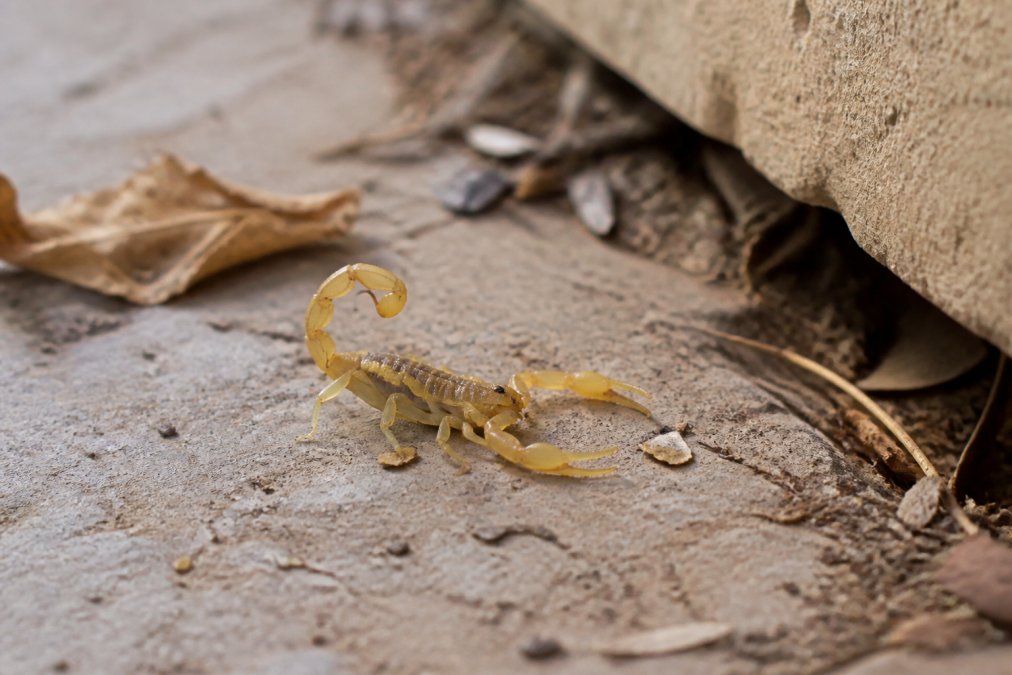
A single sighting usually means a scorpion wandered in from outside. It does not confirm an infestation, but it does confirm your exterior perimeter has gaps. Bark scorpions can fit through openings as thin as a credit card (extension.arizona.edu).
Where They Hide and How to Monitor
Scorpions hide in predictable places, and monitoring those spots tells you more than any spray schedule alone:
- Cracks in stucco and expansion joints
- Under rocks, pavers, and landscape timbers
- Inside block wall weep holes
- Behind baseboards and in attic insulation
- Around pool equipment and irrigation valve boxes
Check these areas with a blacklight after dark, since scorpions fluoresce under UV light, and log the locations and dates. That log becomes the basis for your pest control schedule.
Scorpion Peak Activity Months and Seasonal Cycles
Scorpion peak activity runs from late spring through early fall, with the heaviest pressure in the hottest, driest months. Activity does not stop in winter, it just moves underground and into wall voids.
How Temperature Fluctuations Drive Activity
Scorpions are ectothermic, so their body temperature follows their environment. When nights stay warm, they emerge to hunt; when temperatures drop, they enter a slowed state rather than true dormancy and can reactivate during any warm spell.
A warm week in February can trigger activity as surely as July, so rain, irrigation cycles, and temperature fluctuations matter more than the calendar month alone.
How Often to Spray for Scorpions: Timing Your Barrier Treatment
Most homes need a barrier treatment every 60 to 90 days during peak season and every 90 to 120 days in cooler months, though the right interval depends on your barrier integrity and local pest pressure.
A residual pesticide breaks down over time through sunlight, heat, and rain. In desert heat, that breakdown happens faster than product labels assume: a treatment that holds for 90 days in mild conditions may lose effectiveness in 45 days during a brutal summer (the EPA).
That is why a fixed "spray every three months" rule fails. The schedule should flex with the season:
| Season | Typical Interval | Primary Focus |
|---|---|---|
| Late spring to early fall | Every 60-90 days | Exterior perimeter and harborage |
| Late fall to winter | Every 90-120 days | Foundation, wall voids, exclusion |
How to Get Rid of Scorpions Naturally
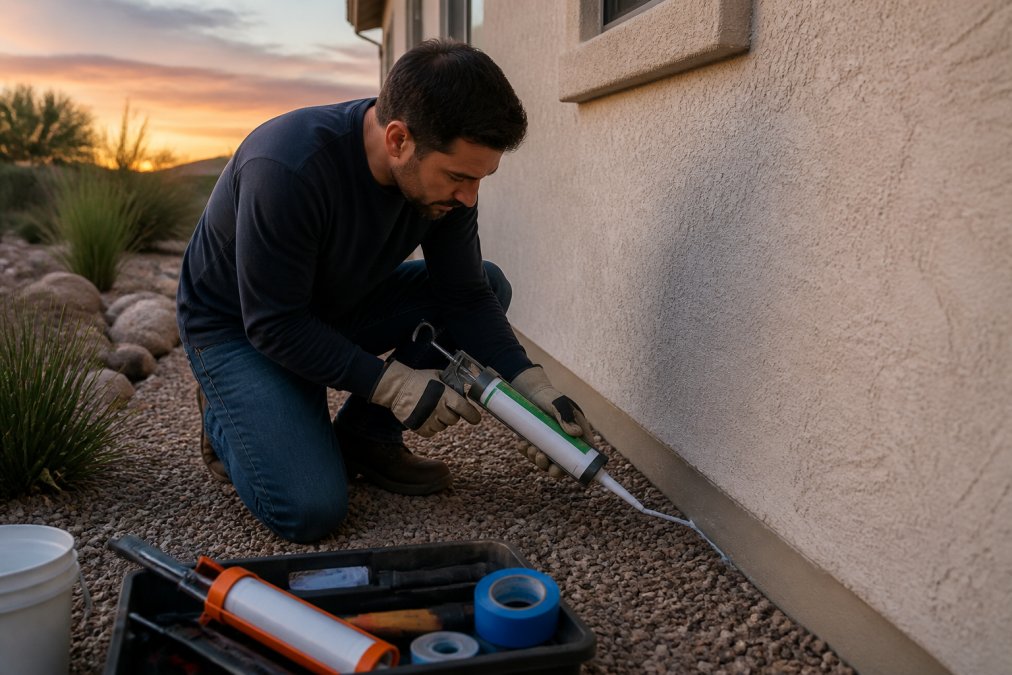
Natural scorpion control starts with removing the conditions scorpions need: moisture, shelter, and easy entry. Structural exclusion is not an alternative to a chemical schedule, it is a mandatory partner.
Why Exclusion Makes Every Treatment Last Longer
A residual barrier leaves a treated zone scorpions must cross to reach your home. It degrades their ability to survive over hours or days, so it only works if scorpions actually have to cross it.
A gap in the stucco, an unswept door, or an open weep hole is a bypass. Scorpions entering through a bypass never contact the treated zone, so the treatment does nothing. A sealed home with a modest barrier treatment outperforms an unsealed home with heavy spraying, every time.
Habitat Modification: Remove What They Need
Scorpions follow their food, and their food follows moisture. Remove the moisture and you remove the reason scorpions congregate near your foundation.
- Fix leaky irrigation lines and dripping hose bibs.
- Redirect sprinkler heads so they do not soak the slab or the base of the wall.
- Let the top inch of soil dry between irrigation cycles.
- Move woodpiles, rock stacks, and debris at least a few feet away from the foundation.
- Trim vegetation so it does not touch the house, shrubs touching stucco are a scorpion highway.
- Keep grass short near the foundation and clear leaf litter from corners and under decks.
Structural Exclusion: The Checklist That Does the Real Work
Do this once, maintain it seasonally, and you will need less pesticide over time.
- Caulk cracks in stucco and around windows and doors
- Install door sweeps on all exterior doors, including the garage-to-house door
- Screen weep holes in block walls with mesh
- Seal gaps around utility penetrations, pipes, and AC line sets
- Repair damaged weatherstripping on garage doors and exterior doors
- Seal gaps where the foundation meets the frame and where expansion joints open
- Screen attic vents and any other exterior openings larger than a credit card
Bark scorpions can fit through openings as thin as a credit card, so the standard is not "visible gap", it is "no gap a card can slide through."
Integrated Pest Management Beyond Spraying
Integrated pest management treats spraying as one tool, not the whole strategy, combining monitoring, habitat modification, structural exclusion, and targeted chemical use only where scorpions actually harbor. Fewer scorpions means less pesticide, which matters with pets or young children.
Addressing the Chemical-Fatigue Concern
If you are worried about year-round pesticide exposure for pets and kids, the right response is to spray less and seal more. Every gap you close is a treatment you do not need; every harborage you remove is a scorpion that never reaches your wall.
When chemical treatment is necessary, the safety question is not "toxic or non-toxic" but "applied correctly or not." Ask any provider for the product label and safety data sheet before treatment. A company that treats exclusion as optional is selling a schedule that will never fully work.
Month-by-Month Scorpion Control Schedule
A workable year round scorpion control schedule pairs heavy treatment with the warm months and preventative maintenance with the cool ones. But two homes in the same metro can run different schedules because of elevation, shade, and irrigation, so shift the plan below earlier or later for your micro-climate. Integrating these seasonal adjustments into a broader property maintenance schedule ensures that every structural vulnerability remains sealed against encroaching pests throughout the entire year.
First, Identify Your Micro-Climate
Scorpion pressure is not uniform across a desert metro. Elevation and nighttime temperature swing matter most.
- Low desert (valley floor, roughly under 2,000 feet): Hotter days, warmer nights, longer active season. Bark scorpions stay surface-active from roughly March into November, and warm spells can wake them in any winter month.
- High desert (foothills and plateaus, roughly 3,000 to 5,000 feet): Cooler nights and a shorter window. Peak activity compresses into roughly May through September, and winter dormancy is deeper and more reliable.
- Riparian and irrigated corridors: Golf courses, canal-adjacent neighborhoods, and heavily irrigated landscaping hold moisture that scorpions need. These areas behave like low desert even at moderate elevation because the moisture overrides the temperature effect.
A foothills homeowner who sprays on a valley schedule will wonder why spring still brings sightings. Shift the whole plan roughly three to four weeks later in spring and three to four weeks earlier in fall.
Spring (March to May): Wake-Up and Seal
Overwintering scorpions move back toward the surface and the first warm nights trigger hunting. Hit them before the population peaks and close the gaps they used all winter.
- Early spring: Walk the perimeter with a blacklight after dark. Log every scorpion and every harborage. This baseline tells you whether your winter exclusion work held.
- Mid spring: Apply the first exterior barrier treatment of the year, focused on the foundation line, weep holes, expansion joints, and the base of block walls, not open yard space.
- Late spring: Complete the structural exclusion checklist (door sweeps, caulk, weep-hole mesh, utility penetrations) before peak pressure arrives. Sealing now means every summer treatment lasts longer.
Summer (June to August): Peak Pressure
This is the heaviest pest pressure of the year. Scorpions are surface-active nightly and heat accelerates chemical breakdown, so intervals shorten.
- Treat the exterior perimeter every 60 to 90 days, and expect the shorter end of that range during the hottest, driest stretches.
- Reduce moisture around the foundation: fix irrigation leaks, redirect sprinkler heads away from the slab, and let the top inch of soil dry between cycles.
- Re-check exclusion points monthly. Heat and soil movement open new cracks in stucco and expansion joints.
- Keep monitoring with the blacklight. Summer is when you learn whether your schedule is actually working or just suppressing sightings.
Fall (September to November): Transition and Tighten
Activity tapers but does not stop. Scorpions still hunt on warm nights and begin moving toward wall voids and soil.
- Apply a barrier treatment in early fall, before nighttime temperatures drop enough to push scorpions into harborage.
- Shift treatment focus from open perimeter to foundation, weep holes, and entry points.
- Re-seal anything that opened over the summer. Fall is the last easy window to close gaps before scorpions settle in for winter.
- Trim vegetation back from the structure and move woodpiles, rock stacks, and debris away from the foundation.
Winter (December to February): The Season Most Homeowners Skip
Sightings drop, so people stop treating, but scorpions are still there, deeper in wall voids and soil, and spring populations start from the survivors you never treated.
- Treat every 90 to 120 days, targeting foundations, weep holes, and wall voids rather than open yard space.
- Use the quiet months for the structural work that is hard to do in summer heat: sealing cracks, installing door sweeps, screening weep holes, and repairing weatherstripping.
- Watch for warm spells. A stretch of unseasonably warm nights in January or February can trigger surface activity, and a treatment applied before that stretch pays off.
Recurring vs. One-Time Scorpion Treatment: Cost and Safety Considerations
Recurring service wins for scorpions because scorpions reinvade. A one-time treatment knocks down what is there today but does nothing about the next generation emerging from the wall void next month. If you see scorpions monthly, repeated emergency visits cost more over a year than a predictable schedule, so for a confirmed infestation recurring service is almost always the cheaper path.
Any pesticide carries some risk, and the real question is not "toxic or non-toxic" but "applied correctly or not." At Local Choice Pest &Landscape Nutrition, background-checked technicians apply products selected for Arizona pests, keeping kids, pets, and desert wildlife safe. If pests come back, so do we.
A good schedule is a plan, not a trap, and should flex with what monitoring shows.
Frequently Asked Questions
How often should I spray for scorpions to keep them away?
Most homes need exterior barrier treatments every 3 to 4 months, with more frequent service during peak activity in late spring and summer. Residual pesticide breaks down under intense sun and heat, so a single application rarely lasts a full season. A year round scorpion control schedule spaces treatments to match scorpion activity cycles, keeping barrier integrity intact when scorpions are most mobile.
What month are scorpions most active?
Scorpions are most active from May through September, when warm nighttime temperatures bring them out to hunt. Activity peaks in June and July, especially after monsoon rains push insects above ground. During winter, scorpions enter a slower dormancy but do not disappear entirely. This is why a year round scorpion control schedule matters: treating only in summer leaves your exterior perimeter exposed when scorpions re-emerge.
Does one scorpion mean I have an infestation?
Not necessarily. A single scorpion can wander in from outside, especially after heavy rain or a temperature swing. However, bark scorpions are social and often cluster, so repeated sightings, shed exoskeletons, or finding them in groups suggest a larger population nearby. Check cracks, weep holes, and wall voids. If you see multiple scorpions over several weeks, professional extermination and a full exterior perimeter treatment are worth scheduling.
Is professional pest control necessary during winter months?
Yes. Scorpions enter a slower dormancy in winter but remain alive inside wall voids and under rocks. Skipping winter service lets populations build quietly before spring. A preventative maintenance visit in winter focuses on foundation sealing, monitoring entry points, and applying a residual barrier that holds through cooler, wetter conditions. This head start reduces scorpion pressure when activity surges in spring.
What does scorpion control cost, and is a recurring contract worth it?
Pricing depends on your home's size, landscaping, and treatment frequency, so ask for a free in-home estimate. Recurring service spreads treatments across the year, matching scorpion life cycles. Compare what each plan includes, like foundation sealing and follow-up visits, before deciding.
Are year-round scorpion treatments safe for pets and children?
Safety depends on the products used and how they are applied. Ask your provider exactly which chemicals they use, where they apply them, and how long to keep pets and kids away from treated areas. Many modern treatments target exterior perimeters and cracks rather than living spaces. Reputable companies provide product labels and re-entry times, so you can plan around naps, playtime, and pet routines.
Scorpions in the desert are not a problem you solve once, they are a problem you manage continuously. Local Choice Pest &Landscape Nutrition builds year-round schedules around monitoring, structural exclusion, and targeted treatments that are safe for kids, pets, and desert wildlife, all backed by our guarantee that if pests come back, so do we. Schedule a free in-home estimate and get a plan built for your property, not a generic calendar.