 listicle
GreenkeeperAZ Alternatives for Desert Homes
Table of Contents
- Why Arizona Homeowners Are Moving Beyond GreenkeeperAZ
- Desert Lawn Replacement Cost: What to Expect in 2026
- Xeriscaping Ideas for Desert Homes That Save Water and Curb Appeal
- Artificial Turf vs. Native Groundcovers: Which Fits Your Yard?
- Organic Weed Control Methods That Work in Desert Soil
- DIY vs. Professional Installation: The Real Trade-Offs
- How to Keep Your New Desert Landscape Healthy Year-Round
- Conclusion
- Frequently Asked Questions
Last Updated: September 8, 2026
Why Arizona Homeowners Are Moving Beyond GreenkeeperAZ
The desert landscape is changing, and so is how homeowners care for it, which is why Greenkeeperaz alternatives for desert homes are gaining traction. GreenkeeperAZ alternatives for desert homes now go far beyond basic pest spraying, covering everything from turf removal to soil health and year-round property protection. Homeowners want solutions that fit the Sonoran Desert's realities.
The old model of frequent, chemical-heavy treatments is losing ground to integrated approaches that combine drought-tolerant planting, smarter irrigation, and preventive pest management that respects kids, pets, and local wildlife.
Below, we'll show you how to evaluate your options and which mistakes to avoid. The strategies covered can help homeowners trade thirsty grass for resilient, desert-friendly outdoor spaces.
But first, here's what most guides get wrong: they treat landscaping and pest control as separate problems. In the desert, your plant choices directly influence the pests you attract.
Desert Lawn Replacement Cost: What to Expect in 2026
Most guides list options without showing you the financial endgame. Here, we lay out the real cost-benefit trade-offs between gravel, artificial turf, and native groundcovers.
The 5-Year Cost Picture
The cheapest upfront option (gravel) is not always the cheapest over five years, and artificial turf rarely pays for itself unless it replaces a large, heavily irrigated lawn. Compare installation cost, annual water savings, and annual maintenance cost.
- Gravel + Boulders: Lowest upfront cost, typically $2 to $5 per square foot for materials and labor. Water savings are immediate if you remove turf, but you'll spend $50 to $150 per year on raking, edging, and spot weed control after monsoon storms. Over five years, a 1,000 sq ft yard runs roughly $2,500 to $6,500 total.
- Artificial Turf: Highest upfront cost, typically $8 to $15 per square foot installed, including base prep. Water savings are also immediate, but you'll spend $100 to $200 per year on infill top-ups, pet waste rinsing, and occasional seam repairs. Over five years, a 1,000 sq ft yard runs roughly $8,500 to $16,000 total.
- Native Groundcovers + Drip Irrigation: Mid-range upfront cost, typically $5 to $10 per square foot including soil prep, plants, and drip lines. Water use drops by 50-70% after the first year, but you'll spend $100 to $250 per year on pruning, mulching, and drip emitter checks. Over five years, a 1,000 sq ft yard runs roughly $5,500 to $12,500 total.
Where the Real Savings Hide
The EPA's WaterSense program notes that landscape irrigation accounts for nearly one-third of all residential water use nationwide. In the desert, that share is often higher. A typical 1,000 sq ft lawn in the Phoenix metro area uses a significant amount of water per year. At current municipal rates, that's a notable monthly cost just to keep grass alive.
Removing that lawn and replacing it with gravel cuts that bill to near zero. Native groundcovers on a drip system typically drop it significantly after the establishment year. Artificial turf also drops it to near zero, but you've paid a premium upfront.
The Hidden Cost of Skipping Soil Prep
A common mistake is skipping soil testing to save money. In the desert, caliche layers and high pH soils cause expensive plant failures later. A basic soil test runs $25 to $50 through University of Arizona Cooperative Extension and tells you exactly what amendments your soil needs before you spend hundreds on plants that may not survive.
Getting Accurate Quotes
No single number applies to every property. For accurate figures, get itemized quotes from at least three local providers. Ask each to break out removal, soil prep, materials, and labor separately. A quote that bundles everything into one lump sum is a red flag for hidden extras.
Xeriscaping Ideas for Desert Homes That Save Water and Curb Appeal
Xeriscaping reduces or eliminates the need for supplemental irrigation by using drought-tolerant, native, and climate-adapted plants. Done well, it delivers a clean, modern look that holds up through Arizona summers.
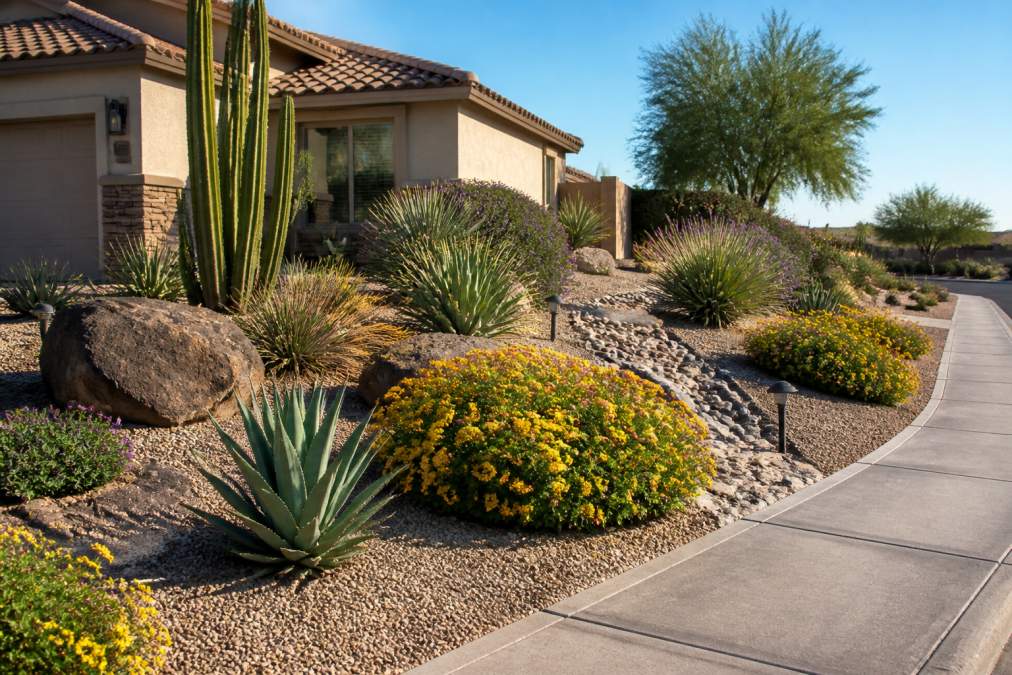
Start by zoning your yard based on sun exposure and water access. Group plants with similar needs together so you're not overwatering drought-tolerant species. Full-sun areas suit agave, red yucca, and lantana, while shaded spots handle different varieties.
Gravel and decomposed granite form the backbone of most desert-friendly designs. They suppress weeds when laid over landscape fabric, improve drainage, and reflect heat. Mix in larger boulders and hardscaping for visual structure without adding maintenance.
For texture and color, native groundcovers like prostrate rosemary or trailing lantana soften the gravel. These low-growing plants spread to fill gaps, reducing bare soil where weeds take hold.
Artificial Turf vs. Native Groundcovers: Which Fits Your Yard?
The choice between artificial turf and native groundcovers comes down to how you plan to use the space. Artificial turf works best for high-traffic play areas and pets; native groundcovers suit homeowners who want living texture and ecological benefits.
Artificial turf delivers an instant, no-mow surface that stays green year-round. It handles heavy foot traffic and eliminates mowing, fertilization, and most weed control. Downsides include heat retention and an upfront cost higher than simple gravel.
Native groundcovers cool the surrounding air through natural transpiration. They provide habitat for beneficial insects and birds and improve soil health. The trade-off is an establishment period where regular watering is essential.
| Option | Upfront Effort | Water Use | Maintenance | Best For |
|---|---|---|---|---|
| Artificial Turf | Moderate | None after install | Occasional rinsing | Play areas, pets, instant green |
| Native Groundcovers | High first season | Low after establishment | Seasonal pruning | Curb appeal, habitat, cooling |
| Gravel + Boulders | Low | None | Occasional raking | Minimalist, low-traffic yards |
Organic Weed Control Methods That Work in Desert Soil
Weed control in desert soil demands a different strategy than in wetter climates. The goal is prevention through soil preparation, not endless reactive pulling after monsoon rains. But there's a second layer most guides ignore: your HOA may have rules about what you can do in your yard. low water xeriscaping ideas.
Know Your HOA Rules Before You Dig
Many Arizona communities are governed by HOAs that enforce strict landscape guidelines. Before you rip out grass or lay down gravel, pull your community's CC&Rs and architectural review guidelines. Common restrictions may include:
- Minimum landscape coverage: Some HOAs require a certain percentage of your front yard to be living plant material, not just gravel or rock.
- Approved plant lists: Many communities maintain a list of approved species. Planting something not on the list can trigger a violation notice and fines.
- Turf removal restrictions: A few HOAs still require a minimum amount of turf, though many have updated rules to encourage desert-friendly landscaping.
- Weed control standards: HOAs typically require that weeds be kept under a certain height. If you let weeds go during monsoon season, you risk a violation.
Organic Methods That Pass HOA Scrutiny
Organic weed control starts with a physical barrier. Landscape fabric beneath gravel blocks most weeds, but it must be installed with proper overlap and pinning. Gaps at the edges let Bermuda grass through. Bury fabric edges under at least 2 inches of gravel or mulch, since visible edges get flagged by HOAs.
Schedule a Free In-Home Estimate →
Pre-emergent treatments applied before the summer and winter growing seasons stop weed seeds from sprouting. Timing matters: apply before the heat arrives, not after weeds have emerged. Corn gluten meal is a common organic pre-emergent, but it must be applied at the right time and watered in properly.
For existing weeds, horticultural vinegar and manual pulling remain the most reliable organic options. Pull weeds when the soil is slightly damp so roots come out cleanly. For taprooted weeds like goathead, use a weeding tool to get the entire root; breaking it off guarantees regrowth.
Mulch: Your HOA-Friendly Weed Barrier
A common mistake is neglecting organic mulch around planted beds. A 2- to 3-inch layer of wood mulch suppresses weeds, retains soil moisture, and breaks down into nutrients. Avoid piling mulch against plant stems, which encourages rot. Mulch also reads as "intentional landscaping" to HOAs.
The Monsoon Season Problem
Monsoon rains trigger a burst of weed germination. Many HOAs schedule extra inspections in July and August. Apply a pre-emergent in late June and schedule a weed-pulling session for the week after the first significant monsoon storm.
Skipping soil preparation is the fastest way to a weed-filled yard. Weeds thrive in disturbed, bare soil, so establish groundcovers or apply mulch immediately after any excavation. If your HOA requires minimum plant coverage, choose fast-spreading native groundcovers to fill bare areas quickly and outcompete weeds.
DIY vs. Professional Installation: The Real Trade-Offs
DIY projects save on labor but demand significant time, physical effort, and technical knowledge. Professional installation costs more upfront but delivers drainage, grading, and plant placement done correctly the first time.
For a small yard with simple grading, a motivated homeowner can handle gravel and plant installation over a few weekends. The learning curve shows up in calculating drip irrigation run times, amending soil properly, and ensuring drainage slopes away from the foundation.
Larger projects or those involving complex irrigation systems benefit from professional design. Errors in drainage can cause water pooling near the house, while poorly planned irrigation wastes water and stresses plants. The American Society of Landscape Architects directory can help homeowners find qualified design professionals for complex renovations.
Removing old grass, hauling material, and prepping soil is physically demanding work in desert heat. Many homeowners find the DIY route stalls midway through summer, leaving a half-finished yard exposed to monsoon erosion.
How to Keep Your New Desert Landscape Healthy Year-Round
A desert landscape is not zero-maintenance; it simply shifts the work to different seasons. Understanding the annual rhythm keeps plants vigorous and prevents pest problems.
Fertilization for desert plants follows a different schedule than turf. Most native and adapted species need feeding in early spring and fall. Over-fertilizing, especially with high-nitrogen products, produces soft growth that attracts pests. Soil testing every couple of years guides the right amendments.
Irrigation needs change across the seasons. Deep, infrequent watering encourages roots to grow downward, making plants more heat-resistant. In winter, most desert plants require far less water; overwatering during cool months causes root rot.
Seasonal pest pressure follows predictable patterns: scorpions and insects become more active as temperatures climb, while rodents seek shelter indoors during cooler months. A year-round preventive approach is more effective than reacting to problems after they appear.
Conclusion
Moving beyond a single-service provider to a holistic view of your property is the smartest investment you can make. The most successful desert yards combine thoughtful hardscaping, drought-tolerant plants, and preventive care that works with the climate.
That's where Local Choice Pest &Landscape Nutrition fits. We handle both sides of the equation: pest management that's safe for kids, pets, and desert wildlife, plus landscape nutrition that keeps your trees, shrubs, and soil healthy. Our family-owned and operated team uses premium, Arizona-specific products with guaranteed results: if pests come back, so do we.
Get started with a free in-home estimate and see how a healthier yard and a protected home go hand in hand.
Frequently Asked Questions
What are the best low-maintenance grass alternatives for desert climates?
For desert homes, the best low-maintenance lawn alternatives include artificial turf, native groundcovers like prostrate rosemary or lantana, and decorative gravel with drought-tolerant plants. Artificial turf offers a green look without any watering or mowing. Native groundcovers provide texture and color while attracting local pollinators. Gravel beds with succulents and cacti create a modern, no-mow landscape that thrives in full-sun conditions. Each option eliminates the weekly watering and mowing that traditional grass requires in the desert.
How can I manage weeds in my desert landscape without traditional chemical services?
Organic weed control methods for desert landscapes start with a thick layer of organic mulch, about 2 to 3 inches, which blocks sunlight and prevents seeds from germinating. Pulling weeds after monsoon rains, when the soil is soft, removes the entire root system. Corn gluten meal works as a preventive treatment in early spring to stop weed seeds from sprouting. A propane torch is effective for weeds growing between gravel or pavers. Consistent hand-pulling every few weeks keeps most desert weeds under control without chemicals.
What are the benefits of xeriscaping for residential properties?
Xeriscaping for desert homes reduces outdoor water use compared to traditional grass lawns. This water conservation approach lowers monthly utility bills and reduces the time spent on landscaping maintenance. A well-designed xeriscape with native plants and hardscaping also increases curb appeal and property value. Xeriscaping creates a heat-resistant landscape that stays comfortable during summer months.
How do I choose a landscape nutrition service that fits my desert yard?
Look for a landscape nutrition service that understands alkaline desert soil and the specific needs of native and adapted plants. The provider should offer soil testing before recommending any fertilization program. Ask about their experience with citrus trees and common desert shrubs, since these have different nutrient needs than turf. A local service will know the seasonal cycles, like when to apply iron for yellowing palo verde trees. Confirm they use products safe for kids and pets if that matters for your household.