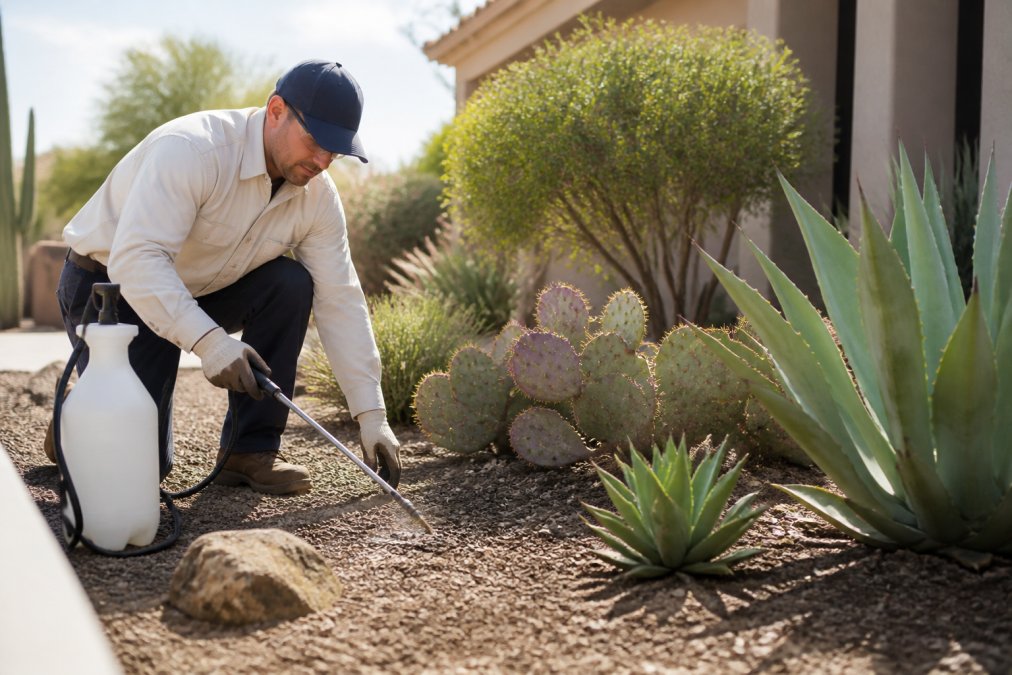
 ultimate-guide
Chemical-Free Pest Control for Desert Homes
Table of Contents
- Why Desert Homes Need Different Pest Control
- Integrated Pest Management for Arizona Homes
- Natural Scorpion Deterrents for Desert Homes
- Organic Pest Control in Cave Creek, AZ
- Non-Chemical Methods for Rodents and Other Desert Pests
- Landscape Nutrition as a Pest Prevention Tool
- Common Mistakes When Going Chemical-Free
- Frequently Asked Questions
Last Updated: September 11, 2026
Why Desert Homes Need Different Pest Control
A stucco house backing onto open desert in Cave Creek faces a desert pest control calendar that has nothing in common with a suburban home in a wetter climate. Scorpions, pack rats, and bark scorpions move in when the weather shifts, and the standard chemical spray routine many homeowners grew up with doesn't match how these pests actually behave.
That's the core problem with most alternatives to chemical pest control for desert homes: the advice is written for lawns and humid climates, not for gravel, caliche soil, and months of triple-digit heat. Chemical-only treatments knock down what's visible and leave the conditions that brought the pests in the first place.
Desert pest control is the practice of managing scorpions, rodents, and insects in arid climates by changing habitat, sealing entry points, and supporting plant health rather than relying on repeated chemical applications. It works because desert pests are driven by moisture, shelter, and food sources you can actually control.
This guide covers what genuinely works, what doesn't, and how to build a year-round approach that's safe for kids, pets, and desert wildlife.
Integrated Pest Management for Arizona Homes
Integrated pest management for Arizona homes is a layered strategy: exclusion first, habitat modification second, monitoring third, and targeted treatment only when the first three fail. The goal is fewer pests with less chemical input, not zero chemical use forever.
The Four Pillars of IPM
The framework most pest professionals follow rests on four repeatable steps:
- Exclusion, seal gaps, screen vents, and repair door sweeps so pests can't enter
- Habitat modification, remove the shelter and moisture that attract scorpions and rodents
- Monitoring, check glue boards, entry points, and activity zones on a set schedule
- Targeted treatment, apply the minimum intervention only where monitoring shows a real problem
A common mistake is starting at step four. Homeowners spray first, then wonder why scorpions return within weeks. The University of Arizona Cooperative Extension guidance on integrated pest management makes the same point: prevention and exclusion do the heavy lifting.
Natural Scorpion Deterrents for Desert Homes
Natural scorpion deterrents for desert homes work by removing access and shelter, not by repelling scorpions with scent. Bark scorpions don't respond to ultrasonic devices or most botanical sprays the way marketing suggests.
What Actually Works (and What Doesn't)
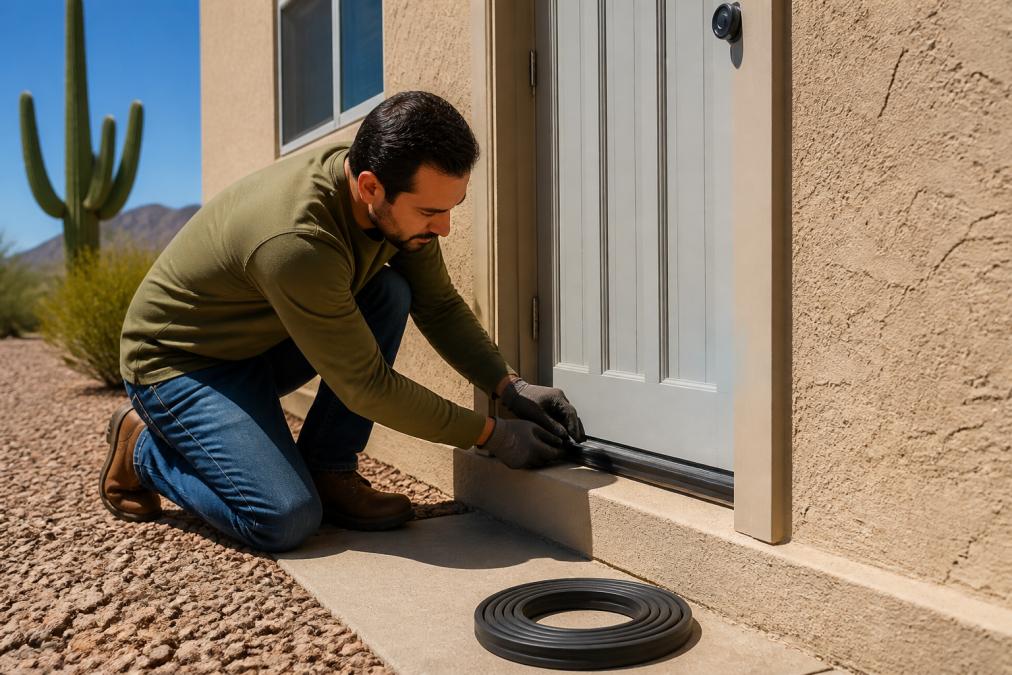
What works: sealing gaps under doors and around utility penetrations, clearing leaf litter and woodpiles against the foundation, switching exterior lighting to yellow bulbs, and keeping gravel pulled back from the slab. What doesn't: ultrasonic plug-ins, cedar or citrus sprays as a standalone barrier, and DIY diatomaceous earth dusted broadly across a yard.
Seals degrade in desert heat. Gravel migrates. A deterrent that worked in spring needs a recheck by monsoon season.
Method | Works? | Effort | Best For |
|---|---|---|---|
Door and vent sealing | Yes | Low | Every desert home |
Vegetation and debris clearing | Yes | Medium | Properties with dense landscaping |
Yellow exterior bulbs | Partially | Low | Reducing insect prey |
Ultrasonic devices | No | Low | Skip entirely |
Botanical sprays alone | No | Low | Skip entirely |
Organic Pest Control in Cave Creek, AZ
Organic pest control in Cave Creek, AZ centers on products and methods that break down without leaving persistent residue, paired with the exclusion work above. For families with young children or pets, the priority is knowing exactly what's applied and why.
A scorpion problem near a citrus tree is not the same as a rodent problem in a garage, and treating both with the same broad application wastes product and misses the source.
Non-Chemical Methods for Rodents and Other Desert Pests
Non-chemical rodent control for desert homes relies on exclusion and humane removal, because pack rats and mice follow the same entry points scorpions do. Seal the structure and you solve two problems at once.
Practical steps that hold up in practice:
- Inspect the roof line, attic vents, and garage door seals for gaps wider than a pencil
- Trim tree branches back at least a few feet from the roof
- Remove fallen fruit and seed pods that draw rodents
- Keep pet food and bird seed in sealed containers
- Set traps or exclusion devices at documented entry points, not randomly
Rodents in the Sonoran Desert also carry risk beyond nuisance, so humane, fast removal matters for household safety.
Landscape Nutrition as a Pest Prevention Tool
Healthy soil and strong plants are a pest prevention tool most homeowners overlook. Stressed trees and shrubs in alkaline desert soil attract more insects, and more insects mean more scorpions and rodents following the food chain.
This is where landscape nutrition connects directly to pest control. Citrus and desert shrubs struggling in high-pH soil are weaker, more prone to infestation, and less able to recover. Correcting soil nutrition supports the plant's own defenses, which reduces the pest pressure on your property over time.
The USDA Natural Resources Conservation Service guidance on soil health explains how soil condition affects plant resilience, and that principle applies directly to desert landscaping.
Common Mistakes When Going Chemical-Free
The biggest mistake when going chemical-free is treating it as a product swap instead of a process change. Switching from a chemical spray to a botanical one without addressing exclusion and habitat solves nothing.
Other recurring errors:
- Expecting one treatment to end a scorpion problem permanently
- Skipping monitoring, so new activity goes unnoticed for weeks
- Ignoring the landscape, then blaming the pest method when pressure continues
- Choosing the cheapest service without asking what's actually included
A CDC guidance on pest control and disease prevention reinforces that reducing pest access to the home is the foundation of any effective program, chemical or not.
Frequently Asked Questions
What are the most effective natural pest deterrents for Arizona homes?
The most effective natural deterrents combine physical exclusion with habitat modification. Seal cracks around doors and windows with weather stripping, install door sweeps, and remove debris piles near your foundation. Keep gravel clear of the house perimeter and trim tree branches away from the roofline. Diatomaceous earth can be dusted along entry points to deter crawling insects. These methods work best as part of an integrated pest management plan rather than as standalone fixes.
How can I keep scorpions out of my house without using harsh chemicals?
Focus on exclusion first: seal gaps under doors, around pipes, and in exterior walls. Scorpions enter through openings as small as a credit card. Remove stacked wood, rocks, and leaf litter within a few feet of your home. Switch exterior lighting to yellow bulbs, which attract fewer insects that scorpions feed on. Regular perimeter checks at night with a UV flashlight help you spot activity early. A professional can identify entry points specific to your property.
Is organic pest control safe for pets and desert wildlife?
Organic and non-chemical methods generally pose lower risk to pets and wildlife when applied correctly. Exclusion techniques, habitat modification, and trapping avoid chemical exposure entirely. If botanical products are used, they still require careful application and reading labels. Ask your provider exactly what products they use and where. At Local Choice Pest, treatments are designed to be safe for kids, pets, and desert wildlife when applied as directed.
How does landscape nutrition help reduce pest infestations in Cave Creek?
Healthy plants resist pests better. In alkaline desert soil, trees and shrubs often lack nutrients, making them stressed and more vulnerable to infestations. Proper fertilization and soil amendment strengthen root systems and foliage, reducing the appeal to sap-sucking insects and the pests that feed on them. Local Choice Pest & Landscape Nutrition offers specialized tree and shrub care designed for Arizona's soil conditions, which supports both plant health and long-term pest prevention.