 listicle
Best Tree Care for Scottsdale Homes: 7 Services Compared
Last Updated: October 22, 2026
Quick Summary
The best tree care for Scottsdale homes combines structural pruning, hazardous removal, arborist diagnosis, deep-root fertilization, and irrigation management timed to desert heat, drought, and monsoon wind. Hire providers who verify insurance, pull required permits, and put a certified arborist on site, not just a salesperson.
- Prune mesquite and palo verde in late winter or early spring, before the growth flush.
- Desert soil is alkaline and compacted, so deep-root injections beat broadcast granular fertilizer.
- Ask for a certificate of insurance and call the agent to confirm the policy is active.
- Get two or three written estimates and compare line items, not totals.
- Photograph cracks, leans, and deadwood before monsoon season and inspect again after storms.
Table of Contents
- Quick Comparison: Best Tree Care for Scottsdale Homes
- Tree Trimming in Scottsdale: What Homeowners Should Expect
- Tree Removal and Hazardous Tree Work
- Why a Scottsdale Arborist Beats a General Tree Service
- Tree Fertilization in Arizona: Feeding Desert Soil
- Low-Maintenance Trees for Arizona Yards
- Heat, Drought and Monsoon Prep: Desert Tree Care Calendar
- How to Vet Tree Care Providers: Insurance, Permits and Pricing
- Frequently Asked Questions
Quick Comparison: Best Tree Care for Scottsdale Homes
Finding the best tree care for Scottsdale homes starts with knowing what each type of provider actually does. At Local Choice Pest & Landscape Nutrition, we see the same pattern across the Valley: homeowners hire whoever answers the phone first, then pay twice when the work fails. Desert trees are not forgiving, and a crew trained on Midwest oaks will prune a palo verde into decline.
Tree care is the combination of pruning, removal, health treatment, and irrigation management that keeps desert-adapted trees alive through heat, drought, and monsoon wind. It is not the same as landscaping.
Here is how the main service categories stack up:
| Service | What It Covers | Typical Trigger | DIY or Pro |
|---|---|---|---|
| Tree trimming | Canopy shaping, deadwood removal, clearance | Before monsoon season | Pro for anything over 10 feet |
| Tree removal | Full takedown, stump grinding, haul-away | Hazardous or dead trees | Always pro |
| Arborist consultation | Risk assessment, health diagnosis | Before major work or purchase | Pro |
| Tree fertilization | Soil and nutrient correction | Spring and fall | Pro for injections |
| Low-maintenance planting | Right tree, right place | New landscape | DIY with guidance |
Below, we break down what each service involves, and how to tell a real arborist from a truck with a chainsaw.
Tree Trimming in Scottsdale: What Homeowners Should Expect
Tree trimming in Scottsdale is not seasonal decoration. It is structural work that decides whether a tree survives the next windstorm.
Expect a proper trim to remove deadwood, thin the canopy for wind passage, and lift low branches away from your roof and power lines. A crew that lops every branch to the same length is topping, and topping shortens a tree's life.
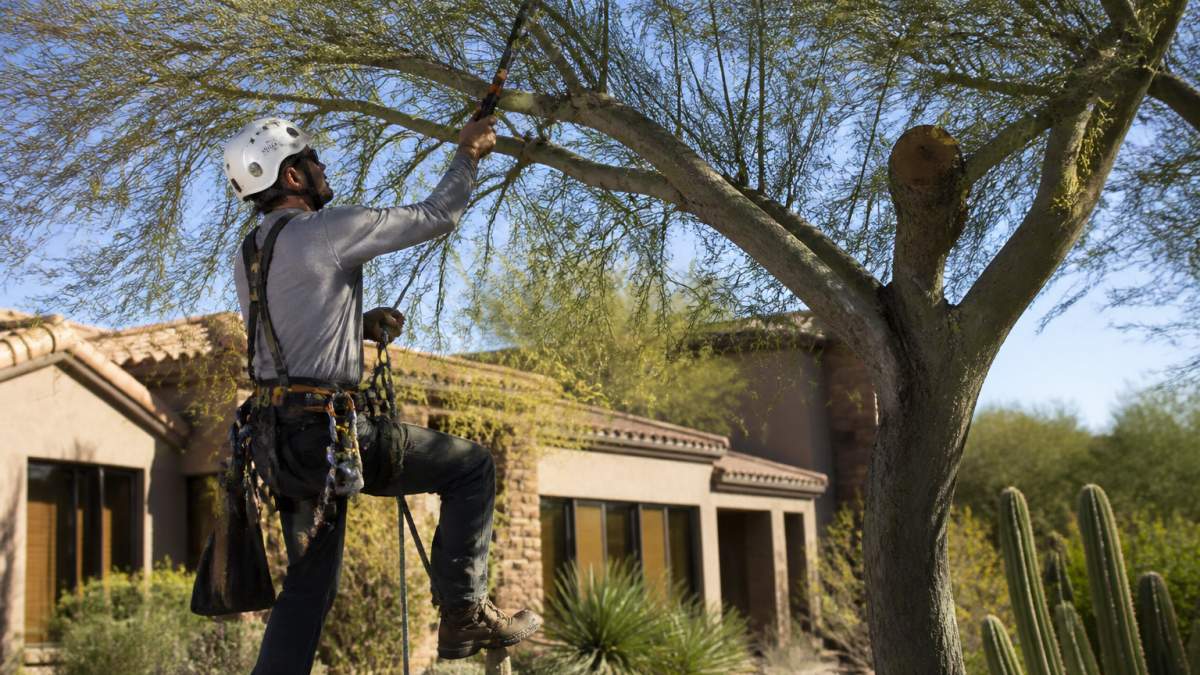
What most guides miss is timing. Desert species like mesquite and palo verde are best pruned in late winter or early spring, before the growth flush. Trimming in peak summer heat stresses an already taxed tree. Adhering to a consistent tree trimming guide ensures that your landscape remains resilient against the harsh fluctuations of the Sonoran climate.
Tree Removal and Hazardous Tree Work
Tree removal is the highest-risk service on this list, and it is the one place where cheap quotes cost the most. A hazardous tree near a structure, pool, or fence needs a written risk assessment before anyone climbs.
Ask three questions before you sign:
- Is the crew trained in crane-assisted removal, or will they free-climb a compromised trunk?
- Does the quote include stump grinding and haul-away, or just the cut?
- Who carries the liability if a limb hits the house?
For a genuinely hazardous tree, removal is not optional. A dead or leaning tree near a Scottsdale home is a property-protection decision, not a cosmetic one.
Why a Scottsdale Arborist Beats a General Tree Service
A certified arborist is a tree professional who has passed credentialing through the International Society of Arboriculture and maintains continuing education. A general tree service may have none of that.
Why does it matter? Because desert tree health problems rarely look like tree problems. Yellowing leaves, canopy dieback, and slow growth often trace back to irrigation, soil chemistry, or pest pressure, not the branch itself. An arborist diagnoses the cause. A trimmer treats the symptom.
Schedule a Free In-Home Estimate →
The International Society of Arboriculture's credentialing guidance explains what certification requires, and it is worth checking a provider's name against that standard before hiring.
When you compare providers, ask directly: are you a certified arborist, and will you be on site? Many companies send a salesperson to quote and a different crew to cut.
Tree Fertilization in Arizona: Feeding Desert Soil
Tree fertilization in Arizona works differently than in wet climates. Desert soil is alkaline, low in organic matter, and often compacted, so the usual broadcast fertilizer does little good.
What actually helps:
- Deep-root injections that deliver nutrients past the top inch of baked soil
- Chelated iron for chlorotic trees showing yellow leaves with green veins
- Organic matter worked into the root zone to improve water retention
- Seasonal timing tied to growth, not to a calendar from another state
A soil test first, then a targeted program, beats a truck dumping granular fertilizer on hard ground. This is where landscape nutrition and tree health overlap, and it is the service most homeowners skip until a tree is already failing.
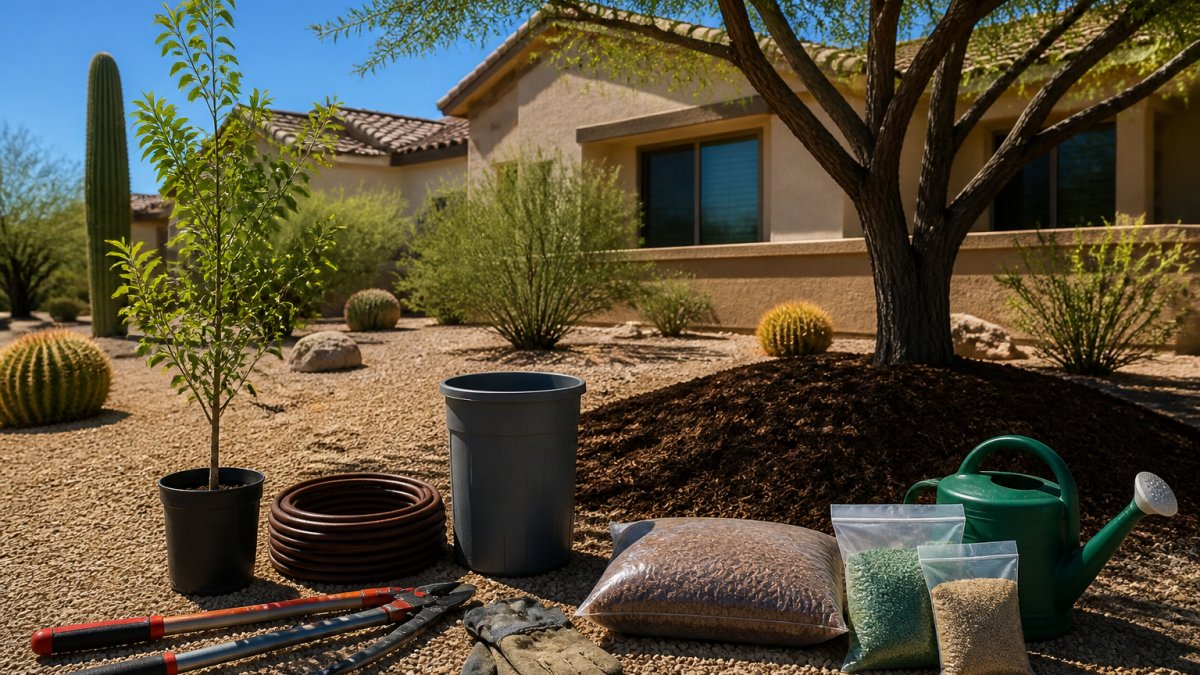
Low-Maintenance Trees for Arizona Yards
The lowest-maintenance tree is the one matched to your yard's sun, soil, and water. Choose badly and you will spend every summer fighting decline.
Reliable desert performers include mesquite, palo verde, desert willow, and Texas mountain laurel. Each tolerates heat and drought once established, and each needs far less water than a thirsty exotic.
What to avoid: trees that demand constant irrigation, drop heavy debris near pools, or grow brittle wood that fails in monsoon gusts. A fast-growing shade tree that snaps in wind is not low-maintenance, it is deferred expense.
Heat, Drought and Monsoon Prep: Desert Tree Care Calendar
Desert tree care follows the weather, not the seasons on a greeting card. Build your year around three stressors: summer heat, drought, and monsoon wind.
Late winter (before growth flush). Structural pruning for mesquite and palo verde is best done before new growth starts.
Spring (as growth starts). Fertilization and pest inspection. Desert soil is alkaline and often compacted, so deep-root injections and chelated iron for chlorotic trees are more effective than broadcast granular fertilizer.
Early summer (before peak heat). Deep irrigation checks. Verify emitters are delivering water to the root zone, not just wetting the surface.
Monsoon season (pre-storm). Pre-storm risk assessment and deadwood removal. Check for included bark, cracks, and leaning trunks. Remove dead limbs that can become projectiles. Confirm the tree is not leaning toward a structure, pool, or fence.
Post-monsoon (fall). Inspect for storm damage, soil erosion, and root exposure. Clean up broken limbs, amend soil, and schedule any corrective pruning. This is also the time to plan species replacement if a tree failed.
Species-specific notes. Mesquite and palo verde are best pruned in late winter or early spring. Desert willow tolerates heavier pruning but benefits from light shaping. Texas mountain laurel is slow-growing and needs minimal structural pruning.
Schedule a Free In-Home Estimate →
Heat and drought mechanics. Drought stress makes trees drop leaves and become vulnerable to pests. Heat stress shows as scorched foliage and sunburned bark. Both are managed with water and shade, not with more pruning.
Monsoon preparation. Before the season, walk the property and photograph any cracks, leans, or deadwood. After the storm, inspect for new cracks, root exposure, and broken limbs.
The University of Arizona Cooperative Extension's desert landscaping resources offer region-specific guidance on irrigation and species selection that beats generic advice.
How to Vet Tree Care Providers: Insurance, Permits and Pricing
Vetting comes down to three checks: insurance, permits, and a written scope of work. Skip any one and you carry the risk. Most homeowners never ask for the documents that actually transfer risk, so here is the verifiable version.
Insurance. Ask for a certificate of insurance (COI) showing general liability and workers' compensation, and call the agent listed on the certificate to confirm the policy is active, not just emailed. A common pattern is a COI that lists a policy expiration date in the past or a coverage limit too low for a large removal.
Permits. Some municipalities require permits before removing protected or large trees, and requirements change. Before work starts, ask the provider which permits apply, who pulls them, and whether the permit is posted on site. Get the permit responsibility in writing in the scope of work.
Credentials. Ask whether a certified arborist will be on site for the work, not just the estimate, and verify the name against the International Society of Arboriculture's credentialing guidance. Request proof of continuing education and ask how the crew is trained for desert species and crane-assisted removal.
Written scope and references. The scope should list specific cuts, stump grinding depth, haul-away, cleanup, and who is responsible for damage. Ask for two recent local references with similar trees and call them. A provider who cannot supply references for comparable work is a risk.
Pricing. Tree work is quote-based, and prices vary with tree size, access, risk, and whether a crane is needed. Get two or three written estimates and compare line items, not totals.
Frequently Asked Questions
How often should trees be trimmed in Scottsdale?
Most desert-adapted trees need pruning every one to three years, and fast growers like mesquite or palo verde may need annual attention. The best window is late winter to early spring, before the summer heat and monsoon season arrive. Remove dead, crossing or storm-damaged limbs any time, but avoid heavy structural cuts during extreme heat. A Scottsdale arborist can set a schedule based on your species, soil and irrigation setup rather than a generic calendar.
What's the difference between an arborist and a tree service?
A tree service handles the physical work of trimming, pruning and removal. An arborist is trained in tree biology, health and risk assessment, and a certified arborist holds ISA certification. Many crews have no certified arborist on staff, which matters when you need a diagnosis for disease, drought stress or a hazardous tree. For routine cleanup, a reputable tree service works. For tree health decisions or safety calls on large trees, ask whether a certified arborist will assess the job.
How much does tree care cost for a Scottsdale home?
Pricing for tree care depends on factors like tree size, access, and specific hazards. Get a written estimate that lists what is included, whether cleanup and haul-away are covered, and whether stump grinding costs extra.
Can I trim my own trees, or should I hire a professional?
You can safely handle small limbs on low-maintenance trees for Arizona yards using clean, sharp pruners. Hire a professional for anything near power lines, over a roof, above 10 feet, or on a tree that looks diseased or unstable. Desert trees like palo verde and mesquite are prone to sunburn and structural failure when pruned incorrectly, and monsoon season turns weak limbs into hazards. Improper cuts also open wounds that invite pests and disease.
How do I protect my trees from heat and monsoon damage?
Deep, infrequent irrigation encourages roots to grow downward instead of staying near the surface. Add a layer of mulch over the root zone, keep it a few inches away from the trunk, and avoid fertilizing during the hottest weeks. Before monsoon season, have a professional check for weak crotches, dead limbs and leaning trunks. After a storm, remove broken branches promptly so pests and disease do not move into open wounds, and get a risk assessment on any tree that shifted.