 how-to
Integrating Tree Care and Pest Management: 7 Steps
Table of Contents
- Step 1: Assess Tree Health and Identify Pests
- Step 2: Apply Integrated Pest Management for Trees
- Step 3: Implement Tree Pest Prevention
- Step 4: Choose Tree and Shrub Pest Control Methods
- Step 5: Time Treatments with the Seasonal Calendar
- Step 6: Measure Outcomes and Adjust Your Plan
- Step 7: Know When to Call a Professional
- Frequently Asked Questions
Last Updated: October 20, 2026
Step 1: Assess Tree Health and Identify Pests
Most tree problems start long before you see dead branches. A proper tree inspection for pests catches trouble early, when fixes are cheap. This guide from Local Choice Pest & Landscape Nutrition walks you through integrating tree care and pest management in seven practical steps. The core idea: healthy trees resist pests, and pest control protects tree health. Neither works alone.
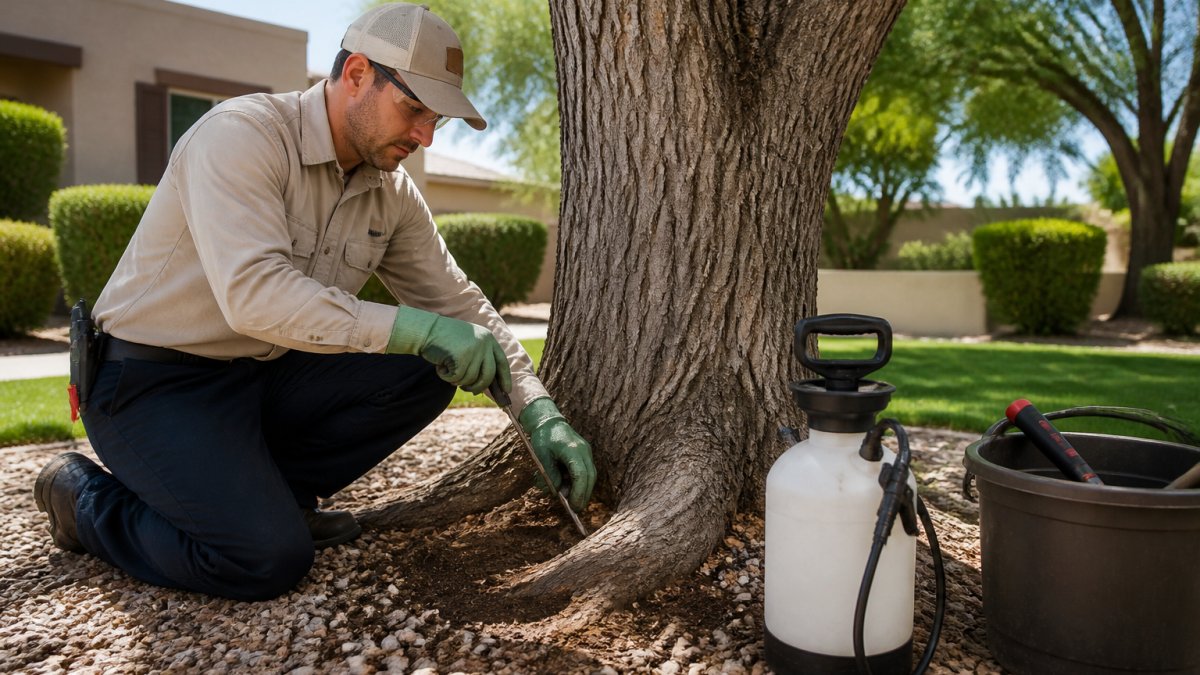
Start with a slow walk around each tree. Look up, look down, look at the trunk.
- Leaves: Check for yellowing, curling, sticky residue, or chewed edges
- Branches: Look for dieback, cankers, or sawdust-like frass
- Trunk: Inspect bark cracks, oozing sap, or entry holes
- Soil line: Watch for mushrooms, soft spots, or exposed roots
Conducting a Tree Inspection for Pests
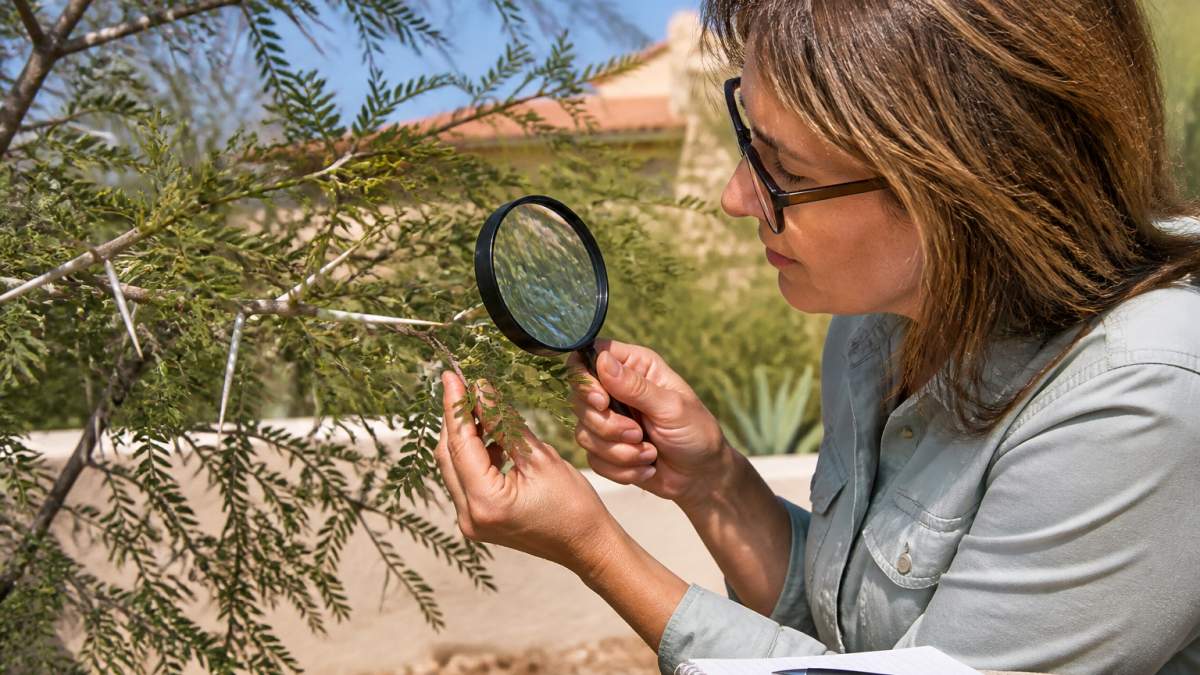
A good tree inspection for pests takes 10-15 minutes per tree. Bring a notebook and a magnifying glass. Check the undersides of leaves, where mites and scale insects hide. Look at new growth first, since pests target tender shoots.
Timing matters. Walk your property in early morning when insects are slow and visible. Repeat monthly during the growing season.
Distinguishing Stress from Pest Damage
Drought stress looks a lot like pest damage. Both cause yellowing leaves and branch dieback. The difference: stress shows up evenly across the canopy, while pest damage often clusters in patches.
Ask two questions:
- Did symptoms appear after a heat wave or missed watering?
- Do you see actual insects, webbing, or frass?
If you answer yes to the first and no to the second, your tree needs water and soil care, not pesticide.
Step 2: Apply Integrated Pest Management for Trees
Integrated pest management for trees is a decision framework that combines prevention, monitoring, and selective treatment instead of spraying on a schedule. IPM treats pesticides as a last resort, not a first move. The approach saves money and protects beneficial insects, pets, and wildlife.
Most IPM overviews stop at the definition. What they miss is the sequence: how a homeowner actually moves from inspection to action and back to monitoring. Here is that workflow.
The IPM Workflow, Step by Step
- Inspect. Walk each tree and record what you see: pest species if known, life stage, location on the tree, and severity. Note beneficial insects too.
- Identify. Confirm the pest or disease before acting. A county extension office or a diagnostic lab can confirm a sample. Misidentification is the most common reason treatments fail.
- Set a threshold. Decide in advance how much damage is tolerable for that tree. A mature shade tree can tolerate cosmetic feeding; a young fruit tree cannot.
- Choose the lowest-risk tactic. Start with cultural and biological controls. Move to selective chemicals only if monitoring shows the threshold has been crossed.
- Treat. Apply the chosen tactic at the correct life stage and rate, following the label exactly.
- Monitor and record. Return in two to four weeks and compare pest counts and new damage against your baseline.
- Adjust. If the tactic worked, continue monitoring. If not, revisit the diagnosis and timing before escalating.
Monitoring and Thresholds
Monitoring means checking trees regularly and recording what you find. Thresholds tell you when damage justifies action. A few aphids on a mature tree? No treatment needed. Heavy scale on a young citrus? Time to act.
Set simple thresholds:
- Cosmetic damage on established trees: monitor only
- Pest populations rising week over week: prepare a treatment plan
- New growth dying or trunk damage: treat now
Record the same way each visit so you can compare. Count pests on a fixed number of leaves or branch tips, note the percentage of affected new growth, and photograph damage so you can tell new from old.
The Treatment Ladder
Think of control options as a ladder. Climb only when monitoring says you must.
- Cultural controls first: proper watering, mulch, pruning, and sanitation.
- Biological controls next: conserve or release beneficial insects and nematodes.
- Selective chemicals next: horticultural oils, insecticidal soaps, and products targeted to the specific pest.
- Broad-spectrum chemicals last: only when the threshold is crossed and lower-risk options have failed.
The University of California Statewide IPM Program outlines this threshold-based approach in detail.
Step 3: Implement Tree Pest Prevention
Tree pest prevention starts with the soil and the shears, not the sprayer. Cultural controls build tree resilience so pests find fewer weak points. This is the cheapest pest control you'll ever do.
Cultural Controls That Build Resilience
- Water deeply and less often to encourage deep roots
- Mulch around the drip line to hold moisture and cool soil
- Prune dead and crossing branches to improve airflow
- Avoid over-fertilizing with nitrogen, which pushes soft growth pests love
- Keep weeds and grass clear from the trunk base
Pruning deserves special attention. Make clean cuts and never top a tree. Topping invites decay and weak regrowth.
Soil health drives everything above ground. Compacted, dry soil means stressed trees. Stressed trees send chemical signals that attract borers and other pests. Fix the soil and you fix half your pest problem.
Step 4: Choose Tree and Shrub Pest Control Methods
Tree and shrub pest control runs on a ladder of options. Start at the bottom and climb only when monitoring says you must. Biological controls come before chemical ones.
Schedule a Free In-Home Estimate →
Biological and Chemical Options
Biological control uses living organisms to suppress pests:
- Ladybugs and lacewings eat aphids and mites
- Beneficial nematodes target soil-dwelling larvae
- Birds and bats handle larger insects
Chemical control should be targeted and selective:
- Use horticultural oils and insecticidal soaps first
- Choose products labeled for your specific pest
- Never spray during bloom, when pollinators are active
Always read the label. In the United States, pesticide labels are legally binding under EPA pesticide regulations. The label tells you the rate, the timing, and the safety precautions.
Step 5: Time Treatments with the Seasonal Calendar
Timing separates effective treatment from wasted effort. Pests have life cycles, and the vulnerable stage is often short. Miss it and you'll spray twice for nothing.
Most seasonal guides list tasks by month but never connect them to pest life stages or tree growth stages. That connection is what makes timing work. The calendar below links each season to what the tree is doing and what the pest is doing, so you can target the vulnerable stage.
| Season | Tree Growth Stage | Pest Activity | Timing Window |
|---|---|---|---|
| Late winter | Dormant | Overwintering eggs and larvae | Dormant oil before bud break |
| Early spring | Bud break and new growth | Aphids, caterpillars, leafminers | Monitor new growth; treat only if threshold crossed |
| Late spring | Flowering and early fruit | Pollinators active; scale crawlers | Avoid sprays during bloom; target crawlers |
| Summer | Active growth and heat stress | Mites, borers, scale | Deep watering; avoid harsh sprays in heat |
| Early fall | Hardening off | Root weevils, fungal spores | Sanitation and mulch refresh |
| Late fall | Dormancy approaching | Overwintering stages | Structural pruning; remove debris |
Why the Vulnerable Stage Matters
Most pests are easiest to control at a specific point in their life cycle. Scale insects, for example, are protected by a waxy covering for most of their lives but are vulnerable as newly hatched crawlers. Aphids are soft-bodied and susceptible to insecticidal soap early, before populations build. Borers are most exposed during adult emergence. Dormant oil in late winter smothers overwintering eggs before they hatch, which is why it is one of the most effective, low-risk treatments available. Monitoring tree health through spectral analysis allows for early pest detection, ensuring that these targeted interventions occur precisely when the biological window for success is widest.
Adjusting for Your Region
The table above is a general template. Pest emergence and tree growth stages shift with local climate, so the same calendar week can mean different things in different regions. A county extension office publishes local pest emergence timing and growing-degree-day models that let you fine-tune the window. Track your own trees for a season or two and note when each pest appears; that local record is more useful than any national calendar.
Step 6: Measure Outcomes and Adjust Your Plan
A treatment plan without follow-up is guesswork. Measure results two to four weeks after each action. Return to the same trees with the same notebook.
Track three things:
- Pest counts on a set number of leaves or branches
- New damage versus old damage
- Beneficial insect presence after treatment
If pest numbers drop and new damage stops, your plan works. If damage continues, the diagnosis was wrong or the timing missed. Adjust one variable at a time so you know what changed.
Year-round care means revisiting the plan each season. Pests shift with the weather, and so should your approach.
Step 7: Know When to Call a Professional
Some problems outgrow DIY fixes. Call a professional when you see trunk damage, root rot, or pests across multiple trees. Large trees near structures also warrant expert help. Climbing and chainsaw work near power lines is not a homeowner job.
Professional help pays off when:
- You can't identify the pest with confidence
- Treatments haven't worked after two attempts
- The tree is large, valuable, or close to your home
- You need a property-wide assessment
At Local Choice Pest & Landscape Nutrition, our background-checked technicians handle both pest control and landscape nutrition in one visit. We use products designed for local pests that are safe for kids, pets, and desert wildlife. If pests come back, so do we.
Frequently Asked Questions
How do you integrate tree care and pest management?
Start by inspecting trees regularly for pests and stress symptoms. Use integrated pest management for trees, which combines cultural practices like proper watering and pruning with biological controls and, only when needed, targeted pesticides. Monitor populations and set damage thresholds to decide when to act. This approach keeps trees healthy and reduces chemical use.
What is integrated pest management for trees?
Integrated pest management for trees is a sustainable approach that focuses on long-term prevention. It involves identifying pests, monitoring their populations, and using a combination of cultural, biological, and chemical controls. The goal is to manage pests below damaging levels while protecting beneficial organisms and tree health. It's especially important in arid climates where trees are already stressed.
How can I tell whether a tree is stressed or has a pest problem?
Look for signs like wilting, yellowing leaves, dieback, or sticky residue. Stress often shows as uniform symptoms, while pest damage may be patchy or include visible insects, webbing, or holes. A tree inspection for pests should check under leaves and along branches. If uncertain, consult a professional for accurate diagnosis.
When should a tree pest problem be treated by a professional?
Call a professional if you see severe dieback, large pest infestations, or if the tree is valuable or structurally important. Also, if you're unsure about pesticide safety or proper application, a licensed expert can help. Professionals have the tools and knowledge to treat safely and effectively, especially for complex issues like wood-boring insects or diseases.
Tree pests rarely arrive alone. They follow drought, poor soil, and neglected pruning, which is why treating insects without fixing tree health only buys time. Local Choice Pest & Landscape Nutrition combines tree and shrub care with landscape nutrition so both sides of the problem get solved together. Our family-owned team offers fast scheduling, proactive seasonal protection, and healthy soil that builds stronger plants. Schedule a free in-home estimate and get a plan built for your property.