 comparison
Landscape Nutrition vs Fertilizer Services in Cave Creek
Last Updated: October 27, 2026
Quick Summary
Fertilizer services feed your lawn with scheduled nutrient applications, while landscape nutrition is a broader program that treats soil health plus trees, shrubs, and citrus. In Cave Creek's alkaline soil, landscape nutrition corrects pH and iron problems that extra nitrogen cannot fix.
- Fertilizer services typically include granular or liquid nitrogen applications timed to the growing season.
- Cave Creek's alkaline, rocky soil locks up iron and micronutrients, so plants yellow even when fed.
- Nutrition programs cost more than a single fertilizer visit and take a season or two to show full results.
- A complete local program includes deep-root feeding, soil conditioning, and iron and micronutrient correction.
- Ask which products will be applied and the re-entry interval for children and pets before booking.
Table of Contents
- Landscape Nutrition vs Fertilizer Services: What's the Real Difference
- Fertilizer Services: What They Cover
- Landscape Nutrition: The Broader Approach
- Side-by-Side Comparison: Cost, Scope, and Results
- When to Fertilize Trees in Arizona for Best Results
- Spotting Desert Plant Nutrient Deficiencies in Arizona Landscapes
- Tree and Shrub Fertilization in Cave Creek: What Local Programs Include
- Pet-Safe Landscape Treatments in Cave Creek: What to Ask Before You Book
- Which Service Fits Your Cave Creek Property
- Schedule a Free In-Home Estimate for Your Landscape
- Frequently Asked Questions
Landscape Nutrition vs Fertilizer Services: What's the Real Difference
The difference between landscape nutrition vs fertilizer services in Cave Creek comes down to scope: fertilizer services feed your lawn, while landscape nutrition treats the soil and the plants growing in it. One is a single input. The other is a program.
Here's what most guides get wrong: they treat these as competing products. They aren't. Think of fertilizer as one ingredient and landscape nutrition as the recipe.
Fertilizer services are scheduled applications of nutrient products, usually nitrogen-heavy blends, applied to turf or beds to push growth. Landscape nutrition is a broader approach that combines soil conditioning, deep-root feeding, and plant-specific programs so trees, shrubs, and citrus can actually absorb what's applied.
That second definition matters more in Cave Creek than almost anywhere. Our soil is alkaline, rocky, and low in organic matter. Arizona's cooperative extension guidance on desert soils has long noted that high pH locks up iron and other micronutrients, which is why plants yellow even when they're "fed." Pouring on more nitrogen doesn't fix that. Correcting the soil does.
Fertilizer Services: What They Cover
What you get in a typical lawn program:
Schedule a Free In-Home Estimate →
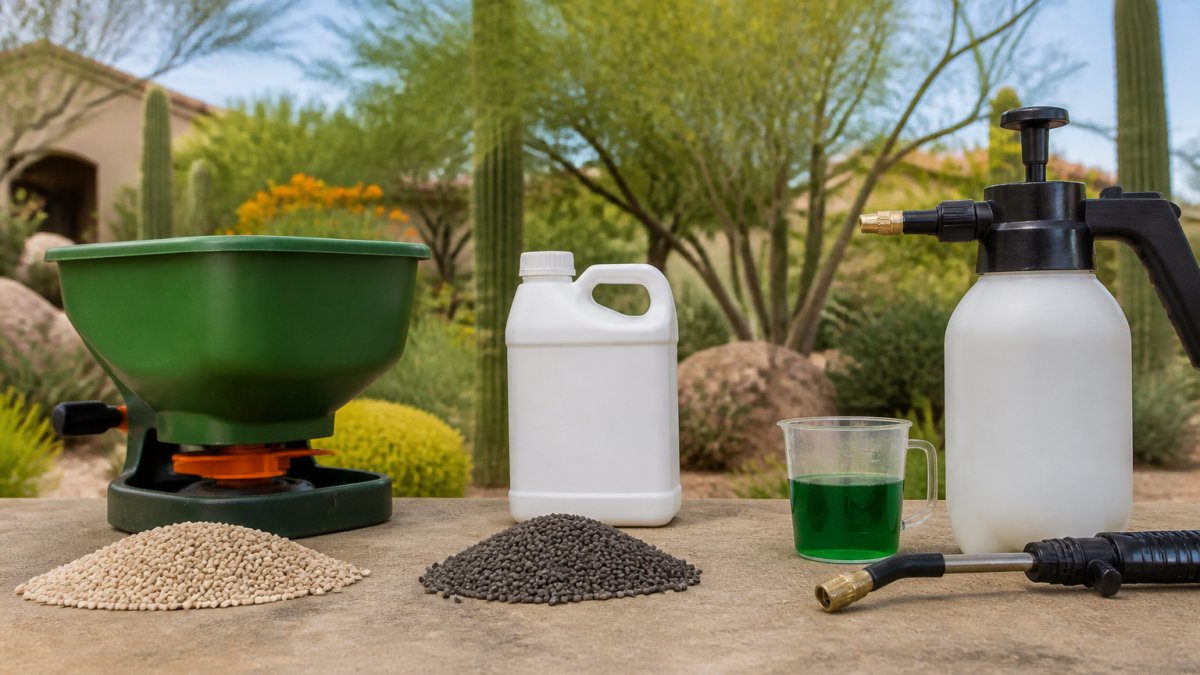
- Granular or liquid nitrogen applications timed to growing season
- Post-emergent weed treatment alongside feeding, in many packages
- Grass-type customization, since Bermuda, fescue, and rye feed differently
- Optional pest add-ons sold separately
Landscape Nutrition: The Broader Approach
We built our landscape nutrition service around exactly this gap, because the homeowners who call us usually have a mix of citrus, palo verde, oleander, and lawn, and one blanket application serves none of them well. The trade-off is honest: nutrition programs cost more than a single fertilizer visit and take a season or two to show full results. If you want a quick green-up before a party, fertilizer wins. If you want plants that hold up through July, nutrition does.
Side-by-Side Comparison: Cost, Scope, and Results
| Factor | Fertilizer Services | Landscape Nutrition |
|---|---|---|
| Primary target | Lawn and turf growth | Soil health plus trees, shrubs, citrus |
| Typical schedule | Spring and fall applications | Seasonal program, plant-specific timing |
| What's included | Nutrient product and application | Soil conditioning, deep-root feeding, deficiency correction |
| Pricing basis | Per application, per area | Per program, based on plant count and property |
| Speed of visible result | Fast, often within weeks | Slower, builds over a season |
| Best fit | Healthy soil, lawn-focused goals | Alkaline soil, mixed plantings, struggling trees |
When to Fertilize Trees in Arizona for Best Results
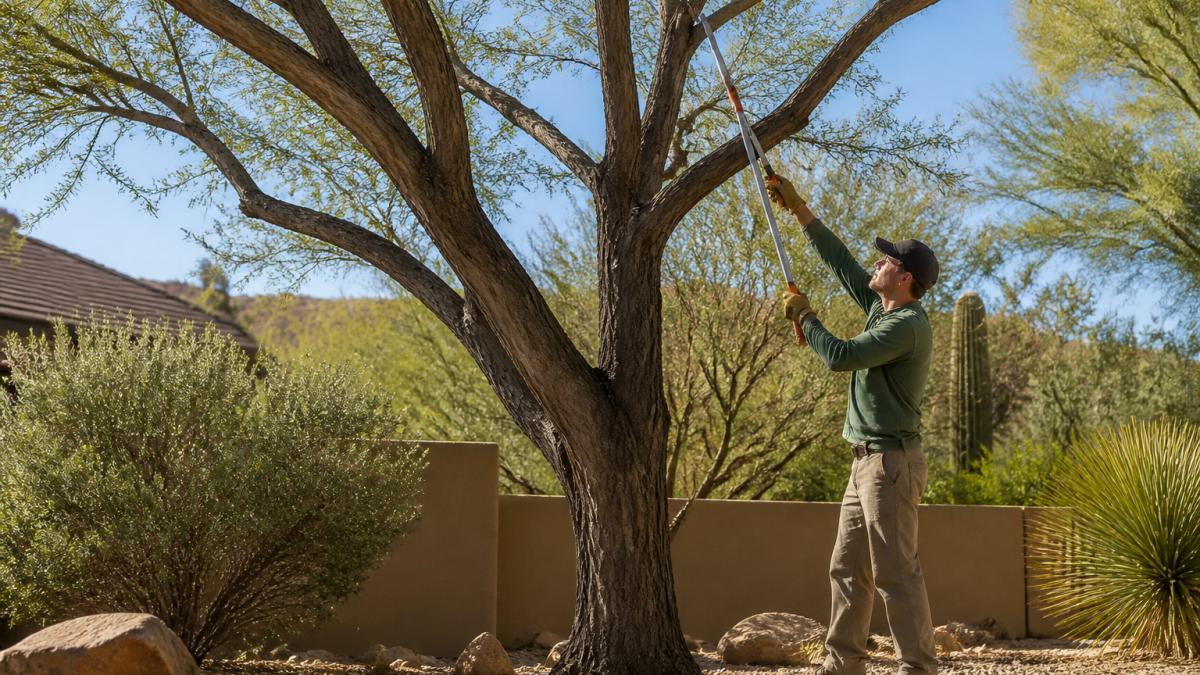
Watch out: the most common mistake we see is feeding on the calendar instead of on the plant. A tree that's yellowing in June usually has a pH or iron problem, not a nitrogen shortage, and another round of fertilizer makes it worse.
Spotting Desert Plant Nutrient Deficiencies in Arizona Landscapes
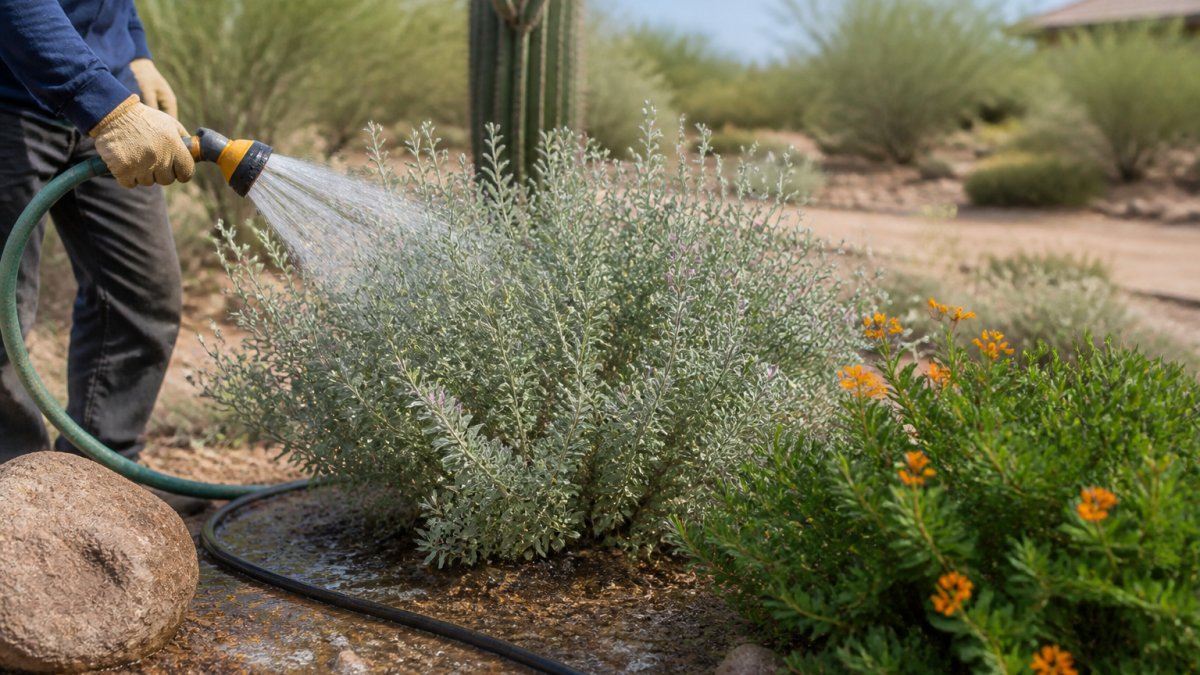
The fix differs completely by cause. Iron chlorosis in high-pH soil needs chelated iron or a soil-acidifying approach, not more nitrogen. If citrus is your concern, our citrus nutrition guidance covers the specific correction steps. Guessing wrong wastes a season.
Tree and Shrub Fertilization in Cave Creek: What Local Programs Include
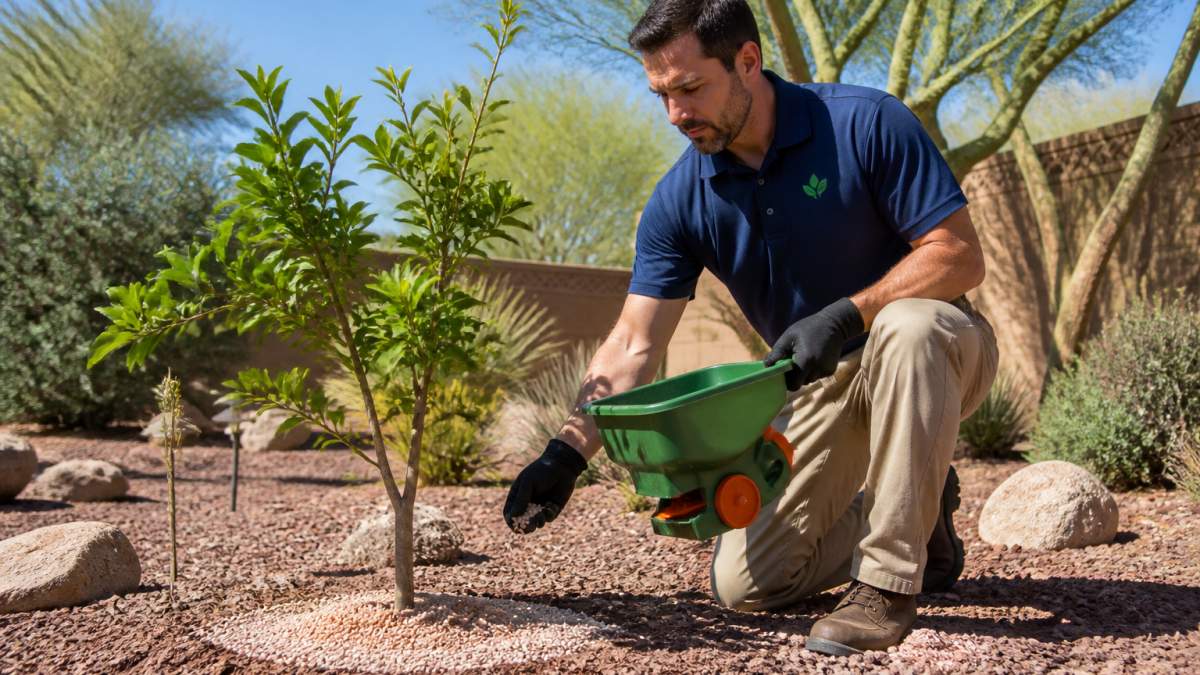
A complete local program should cover:
- Deep-root feeding that places nutrients below the surface where desert roots actually feed
- Soil conditioning to improve structure and water retention in rocky ground
- Iron and micronutrient correction for high-pH soil
- Separate timing for citrus, shrubs, and desert natives
Pet-Safe Landscape Treatments in Cave Creek: What to Ask Before You Book
Ask before you book:
- Which specific products will be applied, and can I see the label?
- What is the re-entry interval for children and pets after application?
- Are applications granular, liquid, or injected, and does that change the wait time?
- Who holds the applicator license, and is the technician background-checked?
For context on how regulators treat pesticide labeling and application in the U.S., the EPA's pesticide safety guidance explains what a label legally requires and what it doesn't. A company that can't answer these four questions plainly is telling you something.
Which Service Fits Your Cave Creek Property
A simple decision path:
Schedule a Free In-Home Estimate →
- Lawn-only goals, healthy soil: fertilizer service, twice a year
- Mixed trees, shrubs, and citrus: landscape nutrition program
- Yellow leaves with green veins: nutrition with iron correction, not more fertilizer
- New property, unknown soil: start with an assessment before any application
Schedule a Free In-Home Estimate for Your Landscape
We're family-owned, our technicians are background-checked, and our products are chosen for Arizona conditions and safe for kids, pets, and desert wildlife. If pests return, so do we. You can schedule a free in-home estimate for your landscape.
Frequently Asked Questions
What is the difference between landscape nutrition and fertilizer services?
Fertilizer services focus on applying nutrients, usually nitrogen-heavy blends, to lawns or plants on a set schedule. Landscape nutrition is broader: it starts with soil condition, drainage, and pH, then adds targeted nutrients like iron or sulfur where desert soil locks them up. A fertilizer visit treats the plant; a nutrition program treats the soil the plant lives in, which is why results tend to hold longer in Arizona's alkaline ground.
Does landscape nutrition include fertilizer?
Yes. A full landscape nutrition program still applies fertilizer, but it times applications to the plant's growth cycle and pairs them with soil conditioning, deep-root feeding, and correction of specific deficiencies. For a Cave Creek property, that might mean iron treatment for chlorotic citrus in spring and a lighter feeding schedule for native desert shrubs that dislike rich soil. Fertilizer is one tool inside the plan, not the whole plan.
When should I fertilize trees and shrubs in Cave Creek, Arizona?
Most desert-adapted trees and shrubs do best with feeding in early spring as growth resumes and again in early fall while soil is still warm. Citrus typically gets a spring application plus a lighter summer feeding. Avoid fertilizing in the peak of summer heat above 100 degrees, when roots take up nutrients poorly and new growth suffers. Local programs adjust timing to your specific species rather than following one calendar for every plant.
Are landscape nutrition treatments safe for pets and children?
Local Choice Pest & Landscape Nutrition uses products designed to be safe for kids, pets, and desert wildlife.
How can I tell if my landscape needs fertilizer or a broader nutrition plan?
Yellowing between leaf veins, stunted growth, and poor flowering usually point to a specific deficiency rather than general hunger. If your plants look tired despite regular watering and you have already fertilized, the soil is likely the problem: high pH, poor drainage, or depleted organic matter. A soil test or an on-site assessment separates a simple feeding issue from a nutrition plan that needs iron, sulfur, or soil conditioning.