 blog
7 Ways to Protect Desert Shrubs From Heat Stress
Last Updated: October 25, 2026
Quick Summary
Protect desert shrubs from heat stress by watering deeply in the early morning, adding two to three inches of mulch, and shading the west and southwest sides with 30% to 50% shade cloth. Limit summer pruning to dead or damaged wood, and call a professional if plants decline despite good watering.
- Water slowly so moisture reaches 12 to 18 inches down, and let the top few inches dry between waterings.
- Watering in the middle of a hot afternoon wastes most of the water to evaporation.
- Keep shade fabric off the leaves and stake it above the shrub so air can flow underneath.
- Pull mulch back a few inches from the trunk to prevent rot, and refresh it each spring.
- Heavy summer pruning pushes tender new growth that the sun will burn within days.
Table of Contents
- Why Desert Shrubs Struggle in Extreme Heat
- Spot the Signs of Heat Stress in Plants Before They Worsen
- Get Watering Desert Plants in Summer Right, Not Just Frequent
- Use Shade Cloth for Desert Plants to Cut Afternoon Sun
- Pruning Shrubs in Hot Weather: What to Cut and What to Leave
- Mulch and Soil: The Cooling Layer Desert Shrubs Need
- When to Call a Professional About a Heat-Stressed Shrub
- Frequently Asked Questions
Why Desert Shrubs Struggle in Extreme Heat
Desert shrubs are built for dry air, but they are not built for weeks of 110-degree afternoons. In Cave Creek and across the Valley, a plant that evolved for heat can still cook, wilt, and die when the soil bakes and the sun hits hard day after day.
Here's the part most guides get wrong: the danger is not the air temperature. It's the soil temperature and the water loss that come with it. A shrub sitting in full afternoon sun on bare gravel can lose water faster than its roots can pull it up. Once that happens, the plant shuts down. Leaves curl, edges scorch, and new growth stops.
Homeowners water more, the plant still looks worse, and nobody can explain why. The reason is usually one of seven fixable problems, and we cover each one below. Many of them cost little to nothing to correct. For a broader look at protecting plants through every season, see our guide on how to protect desert plants.
Spot the Signs of Heat Stress in Plants Before They Worsen
The first signs of heat stress in plants show up on the leaves long before the whole shrub declines. Catching them early is the difference between a plant that recovers in a week and one that never comes back.
Watch for these clues:
- Leaf scorch: brown, crispy edges while the center of the leaf stays green
- Curling or cupping: leaves rolling inward to reduce sun exposure
- Dropping leaves in summer: a stress response, not normal fall behavior
- Wilted new growth: soft tips that droop even after watering
- Color fade: a shrub that looks washed out or grayish instead of deep green
- Dry soil under the mulch: moisture is not reaching the root zone
One mistake we see often is mistaking heat stress for underwatering. Sometimes the soil is soaked and the plant still wilts, because hot, wet soil suffocates roots. Check the soil by hand before you reach for the hose. If it's damp two inches down, more water will hurt, not help.
Get Watering Desert Plants in Summer Right, Not Just Frequent
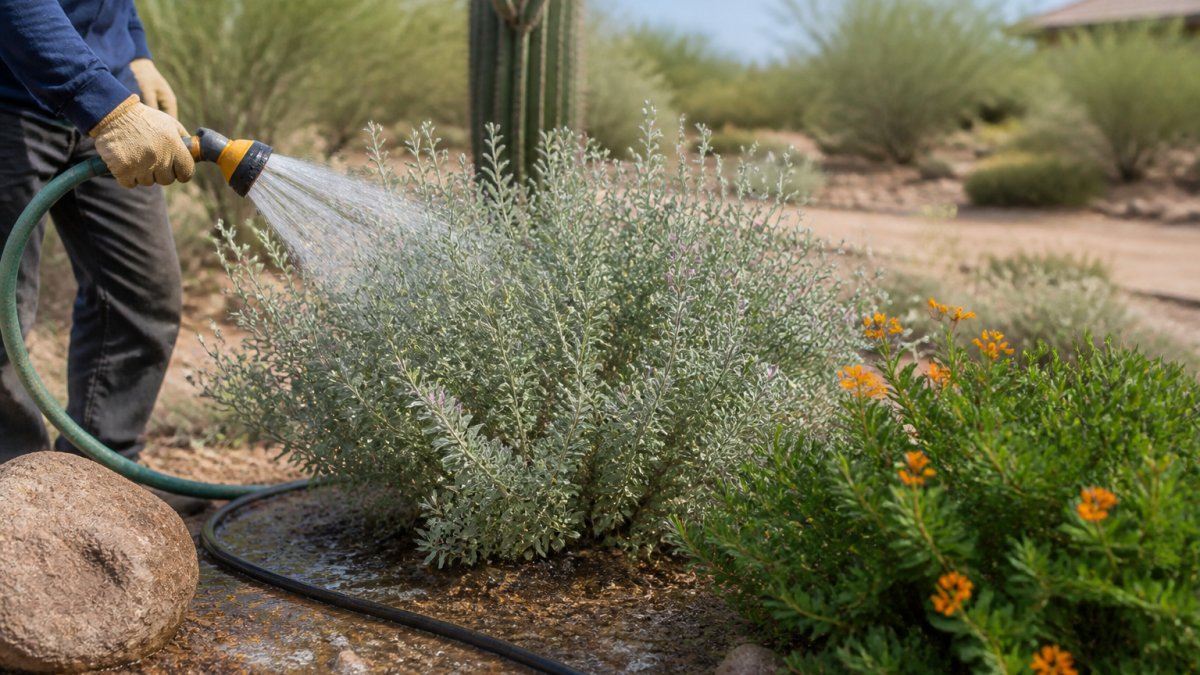
Watering desert plants in summer is about depth and timing, not volume. A deep soak once or twice a week beats a light daily sprinkle every time.
Shallow watering keeps roots near the surface, where the sun dries them fastest. Deep watering pushes roots down into cooler soil that holds moisture longer. Follow these rules:
Schedule a Free In-Home Estimate →
- Water in the early morning, before the sun climbs
- Soak slowly so water reaches 12 to 18 inches down
- Let the top few inches dry between waterings
- Water the root zone, not the trunk
- Cut back on frequency once the monsoon rains arrive
Watch out: watering in the middle of a hot afternoon wastes most of the water to evaporation and can shock a heat-stressed plant. If you're unsure whether your soil is holding moisture, a soil health and conditioning service can tell you a lot about what your ground actually needs. Proper irrigation management remains just as critical for maintaining lawn health as it is for preserving the resilience of native desert vegetation during periods of intense thermal exposure.
Use Shade Cloth for Desert Plants to Cut Afternoon Sun
Shade cloth for desert plants blocks the harshest afternoon sun while still letting air move. That one change can lower leaf temperatures enough to stop scorch from spreading.
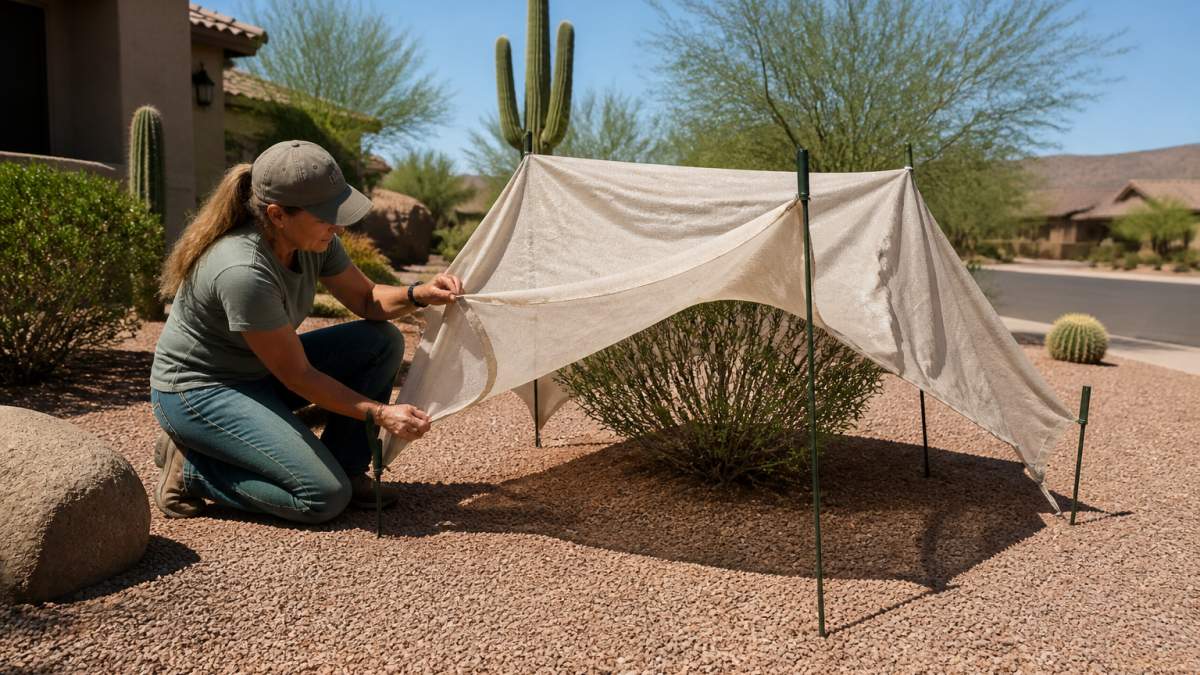
Use these guidelines:
- Choose 30% to 50% shade cloth, not heavy blackout fabric
- Set it on the west and southwest side, where afternoon sun hits hardest
- Keep fabric off the leaves so air can flow underneath
- Stake it above the shrub, not wrapped around it
- Remove it once the extreme heat passes
The goal is relief, not a cave. A shrub that stays shaded all day grows weak and leggy. For a step-by-step walkthrough, our article on protecting desert landscaping from heat covers the full routine.
Follow these shade cloth guidelines to block the worst afternoon sun without weakening the shrub.
| Item | Value | Note |
|---|---|---|
| Shade cloth density | 30% to 50% | Not heavy blackout fabric |
| Placement | West and southwest side | Where afternoon sun hits hardest |
| Fabric position | Off the leaves | Air can flow underneath |
| Installation | Staked above the shrub | Not wrapped around it |
| Removal | Once extreme heat passes | All-day shade grows weak, leggy shrubs |
Pruning Shrubs in Hot Weather: What to Cut and What to Leave
Pruning shrubs in hot weather should be light and limited. Heavy cutting in summer pushes tender new growth that the sun will burn within days.
Leave these alone until fall:
- Major structural cuts on large branches
- Anything that opens the canopy to direct sun on the trunk
- Deadheading that exposes bare stems
What you can do now:
- Remove dead, damaged, or diseased wood
- Snip off scorched leaf tips
- Clear weeds and overgrowth crowding the base
That last point matters more than people think. Weeds compete for the same shallow moisture your shrubs need. If your beds are overrun, a weed control service can clear the competition so your watering actually reaches the right roots. Local Choice Pest & Landscape Nutrition offers comprehensive solutions ranging from targeted pest and rodent control to specialized tree and shrub care, ensuring your property remains protected and healthy year-round. A common mistake is pruning to "tidy up" in July. Hold off. The plant needs its leaves for shade right now.
Mulch and Soil: The Cooling Layer Desert Shrubs Need
Mulch is the cheapest cooling tool you have. A two- to three-inch layer of organic mulch keeps soil temperatures down and slows evaporation, and it costs far less than replacing a dead shrub.
Schedule a Free In-Home Estimate →
Do it right with these steps:
- Keep mulch two to three inches deep
- Pull it back a few inches from the trunk to prevent rot
- Use coarse material that lets water through
- Refresh the layer each spring before the heat arrives
Soil matters just as much. Desert ground is often compacted and low in organic matter, so water runs off instead of soaking in. Improving soil structure helps roots reach deeper moisture. If your beds have never been conditioned, our soil health and conditioning page explains what that involves.
When to Call a Professional About a Heat-Stressed Shrub
Call a professional when a shrub shows heat stress despite good watering, or when several plants decline at once. Repeated decline usually points to a root, soil, or pest problem that more water will not fix.
Signs it's time to get help:
- Dieback spreading from the tips inward
- Cracked or sunburned bark on the trunk
- Multiple shrubs failing in the same bed
- Soil that stays soggy or repels water
- Pests or disease moving in on a weakened plant
Heat-stressed shrubs are easy targets for insects and fungus. A plant that's already struggling has no reserves to fight back. That's where our team comes in. We handle tree and shrub care and landscape nutrition together, so the diagnosis covers the whole picture instead of one symptom. You can see the tree and shrub care service we offer.
Arizona heat will test every plant on your property, and guessing at the fix usually makes it worse. Local Choice Pest & Landscape Nutrition pairs landscape nutrition with tree and shrub care, using products safe for kids, pets, and desert wildlife, backed by our guarantee that if pests come back, so do we. Our background-checked technicians can spot the real cause of heat stress and build a plan that fits your soil. Get started with Local Choice Pest & Landscape Nutrition and schedule a free in-home estimate today.
Frequently Asked Questions
How often should I water desert shrubs during an Arizona heat wave?
During a heat wave, water established desert shrubs deeply every 7 to 10 days rather than giving them a light daily sprinkle. Water in the early morning or evening so less evaporates. Check the soil 3 to 4 inches down before watering again; if it is still moist, wait. Newly planted shrubs need more frequent watering, roughly every 3 to 5 days, until their roots establish. Adjust based on your soil type and the specific species.
Should I prune shrubs during hot weather in Cave Creek?
Avoid heavy pruning when temperatures are at their peak. Pruning shrubs in hot weather opens wounds that invite sunburn and pests, and removing foliage reduces the plant's ability to shade itself. Limit yourself to removing dead, damaged, or diseased branches. Save structural shaping and hard cuts for cooler months, ideally late winter or early spring, when the plant can recover without added heat stress.
What are the first signs of heat stress in desert shrubs?
Watch for leaves that look washed out, yellow, or brown at the edges, plus wilting that does not recover overnight. Dropping leaves and flowers, scorched patches on the sun-facing side, and soil that pulls away from the root ball are also warning signs. Catching these early lets you adjust watering or add shade before the damage becomes permanent.
Does shade cloth really help desert shrubs survive summer?
Yes, when it is used correctly. A shade cloth that blocks 30 to 50 percent of sunlight lowers leaf temperature and reduces water loss on the hottest afternoons. Use light-colored fabric, keep it above the shrub rather than touching the leaves, and provide airflow. Shade cloth is most useful for young or recently transplanted shrubs; mature desert natives often need less intervention.