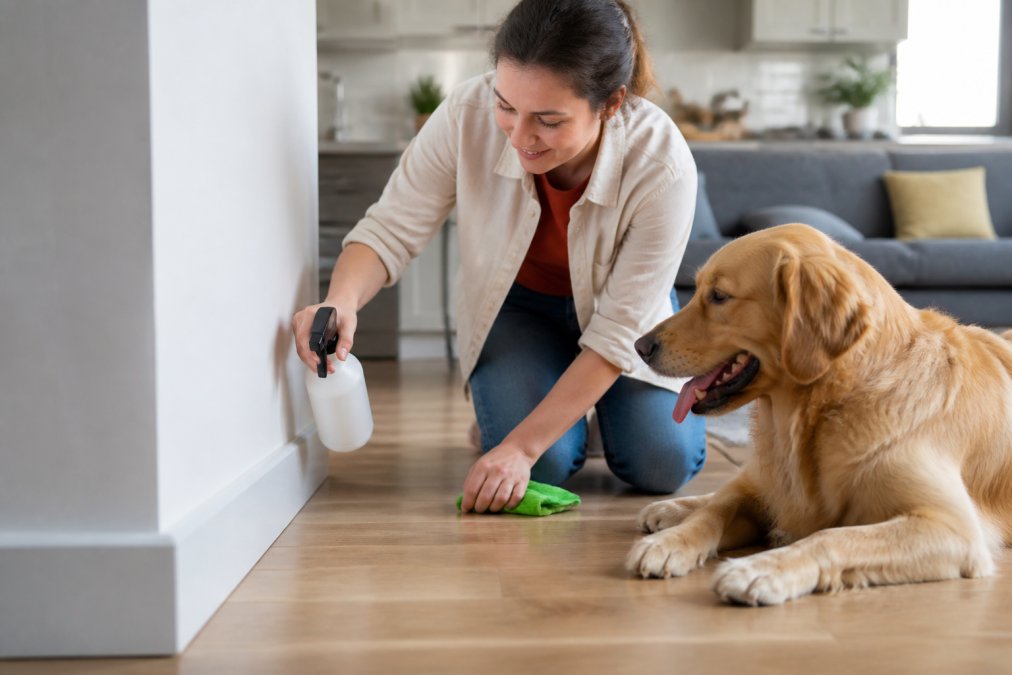
 how-to
Safe Pest Control for Pets: A Step-by-Step Guide
Table of Contents
- Step 1: Understand Pet-Safe Pest Control Methods
- Step 2: Identify Toxic Ingredients to Avoid
- Step 3: Choose Non-Toxic Pest Control for Dogs and Cats
- Step 4: Build an Integrated Pest Management for Pet Owners Plan
- Step 5: How Long to Keep Pets Away After Pest Control
- Step 6: Create a Post-Treatment Monitoring Checklist
- Step 7: Know What to Do If Your Pet Is Exposed to Pesticides
- Frequently Asked Questions
Last Updated: September 17, 2026
Step 1: Understand Pet-Safe Pest Control Methods
Safe pest control for pets starts with one rule: kill the pest, not the curiosity of the animal sniffing around it. Pet-safe pest control means removing pests with methods and products that pose low risk to dogs, cats, and other animals when used exactly as directed.
Species-Specific Toxicity: Dogs vs. Cats
Dogs and cats do not process chemicals the same way, and cats are the more fragile species.
Step 2: Identify Toxic Ingredients to Avoid
The fastest way to protect your pet is to know which active ingredients cause the most trouble and how they harm an animal. Read the label's active ingredients list before anything enters your home, the mechanism tells you what symptoms to expect and how fast to act.
Watch for these:
- Organophosphates and carbamates: These inhibit cholinesterase, an enzyme that regulates nerve signaling. When it's blocked, acetylcholine builds up and nerves fire uncontrollably, causing muscle twitching, drooling, vomiting, diarrhea, and in severe cases seizures and respiratory failure. Heavily restricted for residential use but still found in some older or agricultural products. High risk to both dogs and cats.
- Pyrethroids and pyrethrins: These act on sodium channels in nerve cells, prolonging nerve signals. Dogs usually tolerate them because their liver enzymes break them down efficiently; cats often do not, because their livers lack a key glucuronidation pathway, so the compound lingers. A cat that walks on a recently treated surface and then grooms can absorb enough through mouth and paws to cause tremors, hypersalivation, and hyperexcitability. Common in flea and tick prevention and yard sprays.
- Rodenticides (anticoagulants): These block vitamin K recycling, which the liver needs to produce clotting factors. Without those factors, the animal bleeds internally, a pet that eats a poisoned rodent faces the same fate (secondary poisoning). Signs can take 3 to 5 days to appear, so a pet that ate a rodent needs veterinary evaluation even if it looks fine. Other rodenticides use bromethalin (brain swelling) or cholecalciferol (calcium imbalance and kidney failure), each with different treatment protocols.
- Metaldehyde: The active ingredient in many slug and snail baits. It crosses into the brain and causes uncontrolled muscle activity. Dogs are highly attracted to the bait's cereal base. Tremors, seizures, and hyperthermia can start within 30 minutes to 3 hours of ingestion. Highly toxic to dogs and cats.
- Borate and boric acid: Lower risk when dry and contained, but can cause vomiting and drooling if ingested in quantity. Chronic exposure can affect the kidneys and nervous system. Keep it out of reach and avoid applying it where pets groom or eat.
- Imidacloprid and fipronil: Common in topical flea products. Species-specific formulations matter, a dog product applied to a cat can cause tremors, seizures, and death. Never share a flea product between species unless the label explicitly lists both.
Signs of Pesticide Poisoning in Pets
Know the poisoning symptoms before you need them. Early recognition is the difference between a vet visit and a crisis.
- Drooling or excessive salivation
- Vomiting or diarrhea
- Tremors, twitching, or seizures
- Lethargy or weakness
- Difficulty breathing
- Dilated pupils or unusual eye movements
- Loss of coordination
- Excessive grooming or pawing at the mouth (common in cats)
- Hyperexcitability or unusual vocalization
Step 3: Choose Non-Toxic Pest Control for Dogs and Cats
Non-toxic pest control for dogs and cats means picking methods that work without leaving a toxic residue behind, combining physical barriers, targeted products, and prevention.
Start with the least invasive tools:
Schedule a Free In-Home Estimate →
- Diatomaceous earth (food grade): a fine powder that damages insects' outer shells. Low risk when dry and used away from pets' faces, since inhaled dust irritates lungs.
- Traps and glue boards: effective for rodents and scorpions, but place them where pets can't reach. Glue traps are dangerous for curious noses and paws.
- Sealing entry points: caulk cracks, screen vents, and repair door sweeps. No pest, no pesticide.
- Habitat reduction: clear leaf litter, move firewood away from the house, and fix leaky irrigation. Pests move in when shelter and water are easy.
- Targeted baits in tamper-resistant stations: keep bait enclosed and anchored so pets can't access the active ingredients.
Step 4: Build an Integrated Pest Management for Pet Owners Plan
Integrated pest management for pet owners is a layered plan, not a single spray, prevention, monitoring, and treatment so you're not reaching for chemicals every time a scorpion shows up.
Build your plan in this order:
- Inspect monthly. Walk the perimeter, check garage corners, and look under sinks. Catch activity early.
- Seal and repair. Fix gaps, cracks, and worn weatherstripping. This is the highest-value step and costs the least.
- Reduce attractions. Trim plants away from the house, clear debris, and control moisture.
- Monitor with traps. Sticky traps near entry points tell you what's getting in and how.
- Treat selectively. Use the least-toxic effective option for the specific pest, applied in the right place.
- Reassess. If a pest keeps returning, the fix is usually environmental, not more chemical.
Step 5: How Long to Keep Pets Away After Pest Control
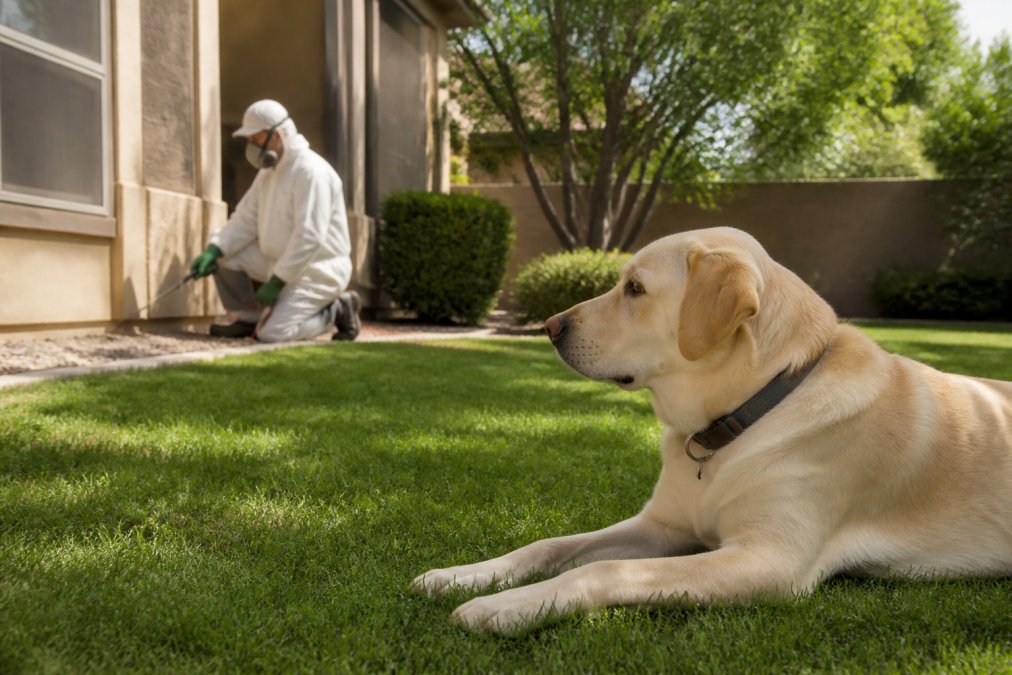
Most indoor treatments require keeping pets away until surfaces are completely dry, typically 2 to 4 hours; outdoor perimeter treatments usually need 1 to 2 hours. Always follow the product label, since drying time varies by product, humidity, and temperature.
Plan for these minimums:
| Treatment Type | Keep Pets Away | Why |
|---|---|---|
| Indoor surface spray | 2-4 hours | Until fully dry |
| Outdoor perimeter spray | 1-2 hours | Drying time varies |
| Granular yard treatment | 24 hours or until watered in | Granules look like food |
| Bait stations | No wait if sealed | Tamper-resistant only |
| Diatomaceous earth | No wait when settled | Avoid inhaling dust |
Step 6: Create a Post-Treatment Monitoring Checklist
A monitoring checklist turns a one-time treatment into real protection. This one breaks the 48 hours after treatment into species-specific windows so you know what to look for and when.
The 24-48 Hour Post-Treatment Checklist
Immediately after treatment (0-2 hours):
- Confirm all treated surfaces are dry before pets return
- Check that bait stations are sealed, anchored, and out of reach
- Verify pets are in a separate, ventilated, untreated room during application
- Store all products in a locked, pet-proof cabinet
First 24 hours:
- Watch pets for drooling, vomiting, diarrhea, or lethargy
- Check for tremors, twitching, or unusual eye movements
- Note any new pest activity near entry points
- Re-seal any gaps you find during the walkthrough
- Keep your vet's number and a pet poison hotline posted
24-48 hours:
Schedule a Free In-Home Estimate →
- Confirm no delayed symptoms have appeared (anticoagulant rodenticides can take 3-5 days)
- Check paws, belly, and face for residue or irritation
- Observe eating, drinking, and bathroom habits for changes
- Schedule the next inspection before the season shifts
Species-Specific Monitoring Windows
Cats and dogs show exposure differently, and the timing differs too.
Why This Window Matters
Most exposure emergencies happen in the first 48 hours after treatment, when residue is still present and pets are curious. A structured checklist catches problems early, when a vet visit is simple rather than a crisis. Print it, tape it to the fridge, and run through it after every application.
Step 7: Know What to Do If Your Pet Is Exposed to Pesticides
Act immediately. Minutes matter in pesticide exposure, and hesitation is the most common mistake.
- Move your pet away from the treated area and into fresh air.
- Call your vet or a pet poison hotline before doing anything else. Describe the product and the active ingredients.
- Do not induce vomiting unless a vet tells you to. Some products cause more damage coming back up.
- Save the label or container. The active ingredients list guides treatment.
- If the product is on the skin, wash with mild soap and lukewarm water. If it's in the eyes, flush with water.
- Watch for symptoms for at least 24 hours, even if your pet seems fine.
Frequently Asked Questions
How long should pets stay away after pest control?
Most pest control treatments require pets to stay away until all treated surfaces are completely dry, typically 30 minutes to 2 hours for indoor applications and up to 24 hours for outdoor treatments. Always follow the label instructions and ask your pest control provider for a specific re-entry time based on the active ingredients used. If your pet has chemical sensitivity, extend the wait time and ventilate the area thoroughly before letting them return.
Are there bug sprays that are safe for pets?
Yes, several non-toxic options exist. Diatomaceous earth, certain plant-based repellents, and insecticidal soaps are commonly used around pets. Always check the label for pet-safe wording and active ingredients. Even natural products can cause reactions, so keep pets away until dry. For heavy infestations, professional integrated pest management for pet owners is the safest route.
What are the signs of pesticide poisoning in pets?
Watch for drooling, vomiting, lethargy, tremors, difficulty breathing, or excessive salivation. These poisoning symptoms can appear within minutes to hours after exposure. If you notice any of these signs, call your veterinarian or a pet poison control hotline immediately. Bring the pesticide label or safety data sheet with you so the vet knows exactly what active ingredients were involved. Early treatment greatly improves outcomes.
Can I use diatomaceous earth around my dog and cat?
Food-grade diatomaceous earth is generally considered safe for pets when used correctly. It works by drying out insects' exoskeletons rather than using chemical toxins. Apply a thin layer in cracks and crevices, let it sit for a few days, then vacuum. Avoid letting pets inhale the dust, as it can irritate lungs. Keep the area ventilated and store the product away from pet food and water bowls.