 how-to
How to Get Rid of Scorpions Naturally in 2026
Table of Contents
- Why Natural Scorpion Control Fails (And How to Fix It)
- Step 1: Identify Signs of a Scorpion Infestation
- Step 2: Remove What Attracts Scorpions to Your Yard
- Step 3: How to Keep Scorpions Out of the House
- Step 4: Apply Natural Scorpion Repellent Barriers
- Step 5: Use Traps and UV Light for Monitoring
- When Natural Methods Aren't Enough
- Frequently Asked Questions
Last Updated: September 7, 2026
Scorpions are nocturnal arachnids that thrive in warm, dry climates, making them a persistent challenge for homeowners across the desert Southwest. A natural scorpion control plan combines habitat modification, exclusion methods, and botanical repellents to reduce activity around your property without relying on harsh chemicals. This guide from Local Choice Pest &Landscape Nutrition walks through a proven, step-by-step approach to get rid of scorpions naturally while keeping your family and pets safe.
Most DIY guides fail because they focus on killing individual scorpions rather than addressing why they are there. Scorpions enter yards for shelter and food. Remove those attractants, seal entry points, and apply consistent repellent barriers to dramatically reduce encounters. Below, we break the process into five actionable steps, then explain when professional help becomes the smarter call.
Why Natural Scorpion Control Fails (And How to Fix It)
The biggest mistake homeowners make is expecting a single spray or one-time cleanup to solve the problem. Scorpions are resilient, and a natural approach requires ongoing effort across multiple fronts.
Natural methods fail when applied inconsistently or when the habitat remains inviting. A few drops of essential oil along a baseboard will not deter scorpions if your yard is piled with rock debris and door sweeps have half-inch gaps underneath.
The fix is a layered strategy pairing habitat modification with botanical barriers. You are making your entire property less hospitable to scorpions and their insect prey. Consistency matters more than intensity, and seasonal timing plays a major role.
Step 1: Identify Signs of a Scorpion Infestation
Before you can get rid of scorpions naturally, confirm they are present and understand where they hide. Scorpions are nocturnal and secretive, so you will rarely see them during the day.
The most reliable sign is finding them at night. A handheld UV light makes scorpions glow bright blue-green, easy to spot on patios, walls, and walkways after dark (peer-reviewed research). Conduct a perimeter sweep 30 to 60 minutes after sunset during warmer months.
Other signs include shed exoskeletons near baseboards, in closets, or under appliances, and small piles of insect remains indicating feeding. Pay special attention to moist areas like bathrooms, kitchens, and laundry rooms, since scorpions are drawn to water.
Step 2: Remove What Attracts Scorpions to Your Yard
Scorpions do not wander into your yard by accident. They are following food and finding shelter, and your landscaping likely provides both.
Start by reducing moisture. Fix leaking faucets, irrigation heads, and hose bibs. A dripping pipe can sustain a population through the driest months.
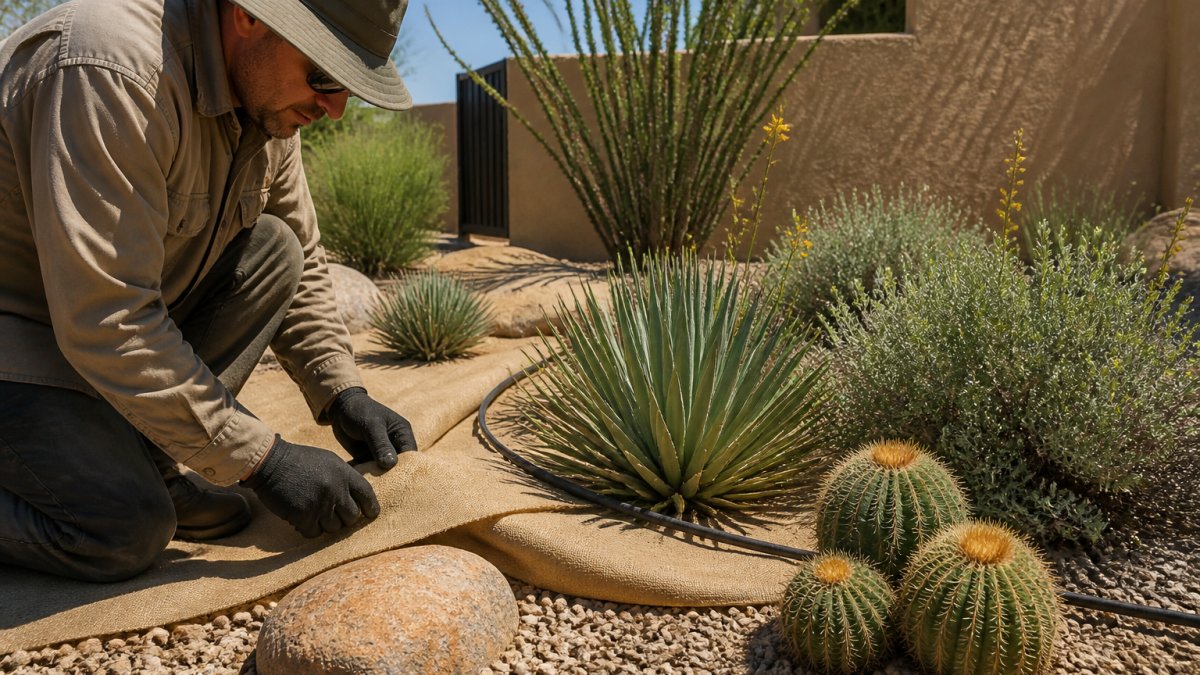
Next, remove harborage sites. Rock piles, woodpiles, leaf litter, and yard debris are prime hiding spots. Keep firewood elevated and away from the house. Replace loose landscape rock with tighter ground cover or gravel that does not retain moisture.
Step 3: How to Keep Scorpions Out of the House
Exclusion is the single most effective step. A scorpion can flatten its body to slip through gaps as thin as a credit card, so sealing entry points requires attention to detail (the CDC).
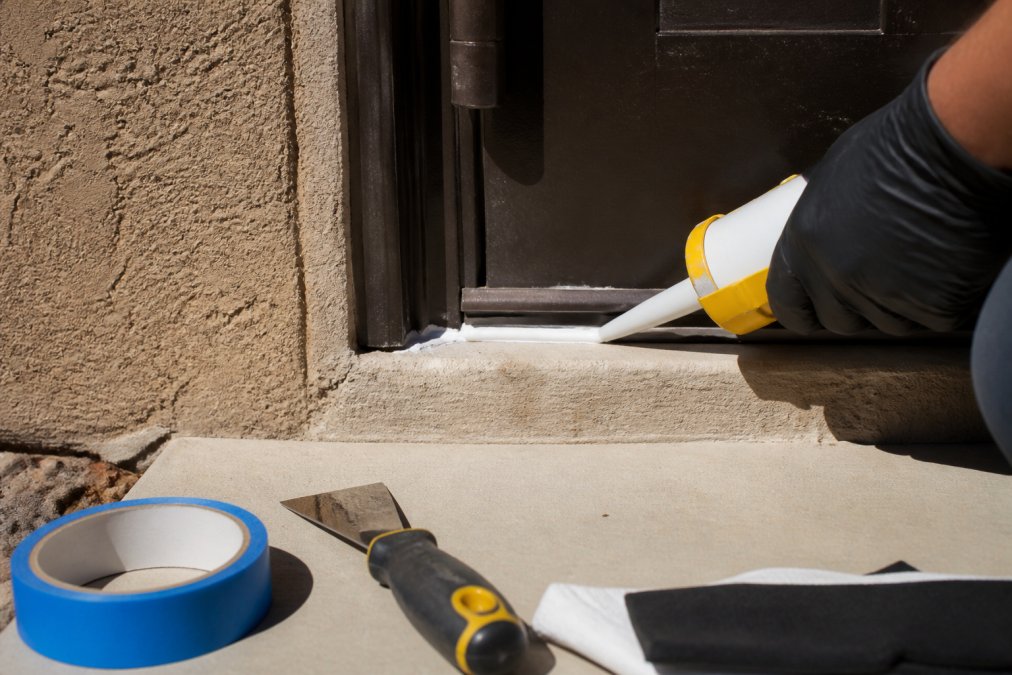
Walk the exterior and inspect the foundation, utility penetrations, and gaps around windows and doors. Use high-quality silicone caulk to fill cracks and crevices. Pay particular attention to where pipes and wires enter the home.
Install door sweeps on all exterior doors, including the garage. Replace worn weather stripping. Check attic vents, weep screeds, and the gap under garage doors, sealing any opening you find.
Step 4: Apply Natural Scorpion Repellent Barriers
Once your home is sealed, create a chemical-free perimeter scorpions avoid crossing. Not all natural repellents are created equal; the most effective approach depends on the species and time of year. A bark scorpion (common in Arizona and parts of the Southwest) behaves very differently from a ground-dwelling species like the striped bark scorpion or the Florida bark scorpion.
Species-Specific Deterrents
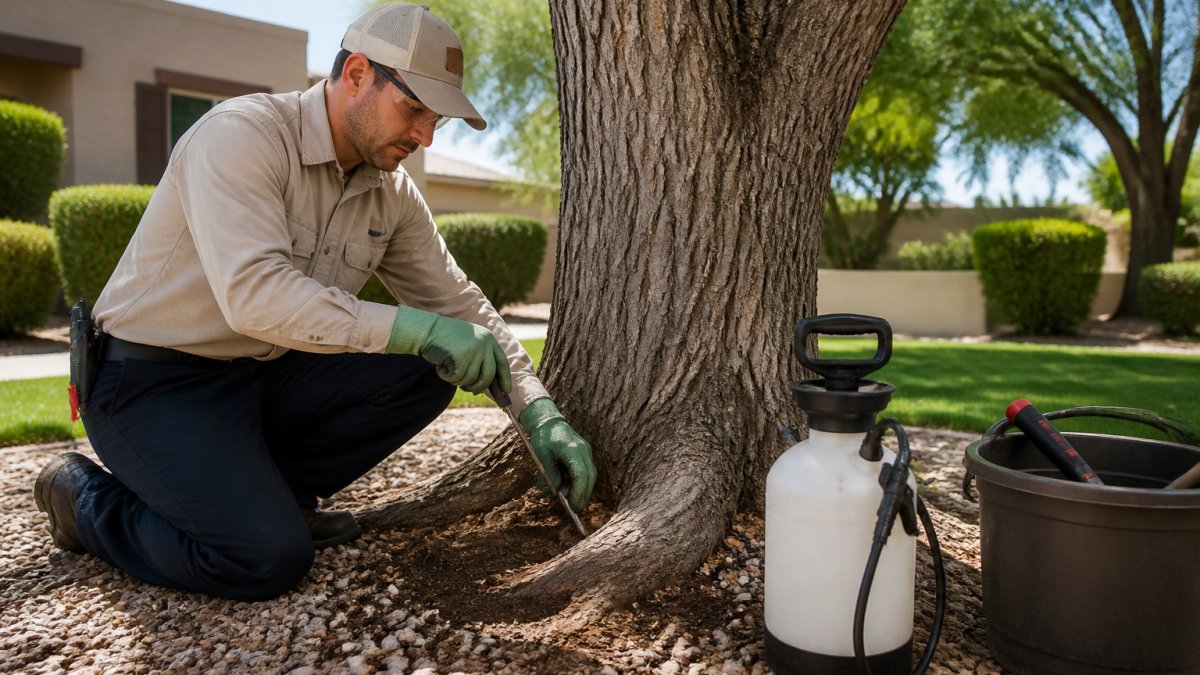
Bark scorpions are exceptional climbers, often found on vertical surfaces like block walls, tree trunks, and exterior stucco. A barrier spray at the base of walls is less effective; instead, treat vertical surfaces. Spray 2 to 3 feet up the wall and along the top edge of block fences for a more effective deterrent.
Ground-dwelling scorpions travel along the soil surface and through leaf litter. For these, a granular or dust-based barrier applied in a 2-foot band around the foundation is more appropriate. Diatomaceous earth (DE) works well, but apply it as a light dusting, not a thick pile, a light, even layer damages their exoskeleton. Use a hand duster to apply DE into cracks, along baseboards, and in the gap between soil and foundation. Reapply after any rain or heavy dew, as moisture renders it useless.
Seasonal Timing for Applications
Timing is just as important as the product. In the desert Southwest, scorpion activity peaks from April through October. A calendar-based approach yields the best results:
- Late Winter (February-March): Apply a heavy-duty barrier of DE or a botanical dust along the foundation and in weep screeds before the breeding season begins. This is also the best time to seal cracks, as scorpions are less active and less likely to get trapped inside your walls.
- Spring (April-May): Begin your essential oil spray regimen. As temperatures rise, scorpions become more active. Apply a cedarwood or citrus-based spray every two weeks to establish a consistent barrier.
- Summer (June-August): This is peak scorpion season. Increase your spray frequency to every 7-10 days, as intense heat and monsoon rains break down essential oils quickly. Pay special attention to entry points near doors and windows, and reapply after any significant rainfall.
- Fall (September-October): As temperatures cool, scorpions may seek warmth and move toward structures. Continue your spray regimen but shift focus to interior baseboards and cracks, especially in garages and utility rooms.
The Mechanics of Essential Oil Barriers
Essential oils work by overwhelming the scorpion's sensory organs, not by creating a toxic barrier. Scorpions use chemoreceptors on their legs and pedipalps to detect prey and navigate. A concentrated oil barrier confuses these senses, making the area feel inhospitable. The carrier matters, a simple water-and-soap mixture evaporates quickly. Mix your oils with a small amount of horticultural oil or a spreader-sticker adjuvant to help the mixture adhere to porous surfaces like stucco and concrete. A common recipe is 20 drops of cedarwood oil, 10 drops of lavender oil, and 5 drops of dish soap in a 32-ounce spray bottle filled with water. Shake well before each use. organic pest control.
Schedule a Free In-Home Estimate →
A Note on Citrus Oils
Citrus oils, particularly orange and lemon, are often cited as repellents, but their effectiveness is short-lived and degrades rapidly in UV light. They can be used as a quick knockdown spray for patios, but are not a substitute for cedarwood or a dedicated arachnid repellent for long-term perimeter control.
Step 5: Use Traps and UV Light for Monitoring
Natural control is not a one-time event. You need a way to measure whether your efforts are working and to catch stragglers. Monitoring is not just about counting dead scorpions, it is about collecting data that tells you where your strategy is failing and what to adjust next.
Setting Up a Monitoring Grid
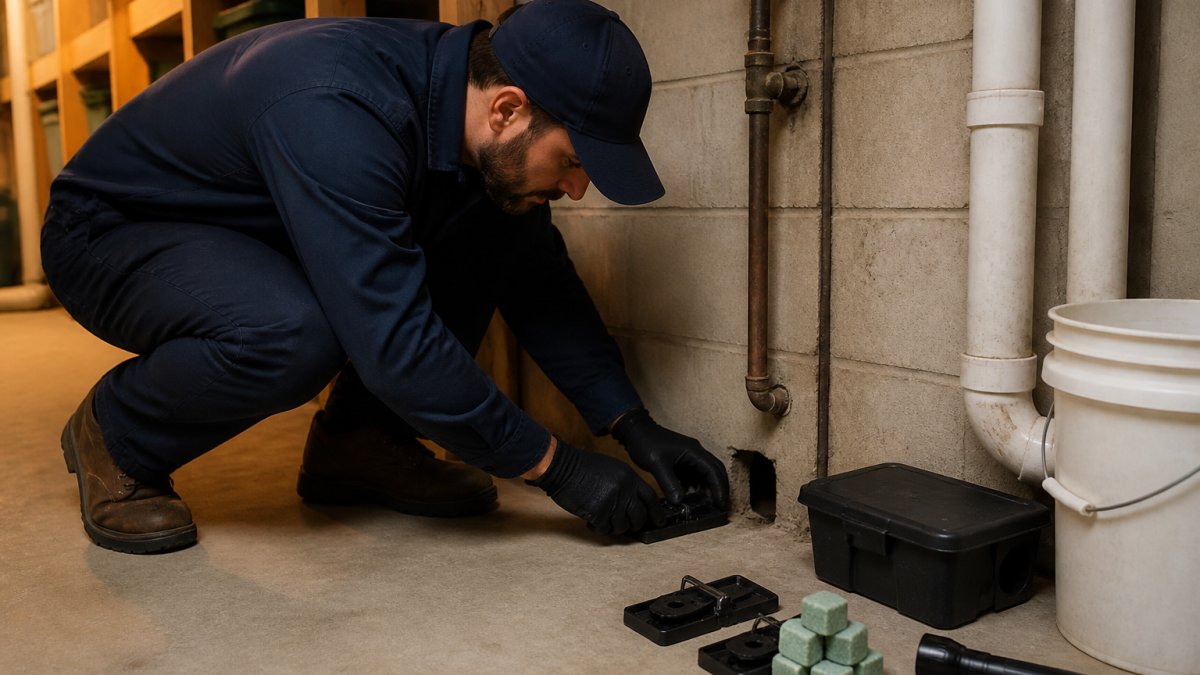
Do not place traps randomly. Set up a systematic grid. Place sticky glue traps (often called monitor traps) along the interior of exterior walls, in corners of each room, and inside garage and utility spaces. Place them flush against the wall, as scorpions travel along the edge where the wall meets the floor. Use a minimum of 6 to 8 traps for a standard 2,000-square-foot home, with a heavier concentration in rooms facing the yard or desert landscape.
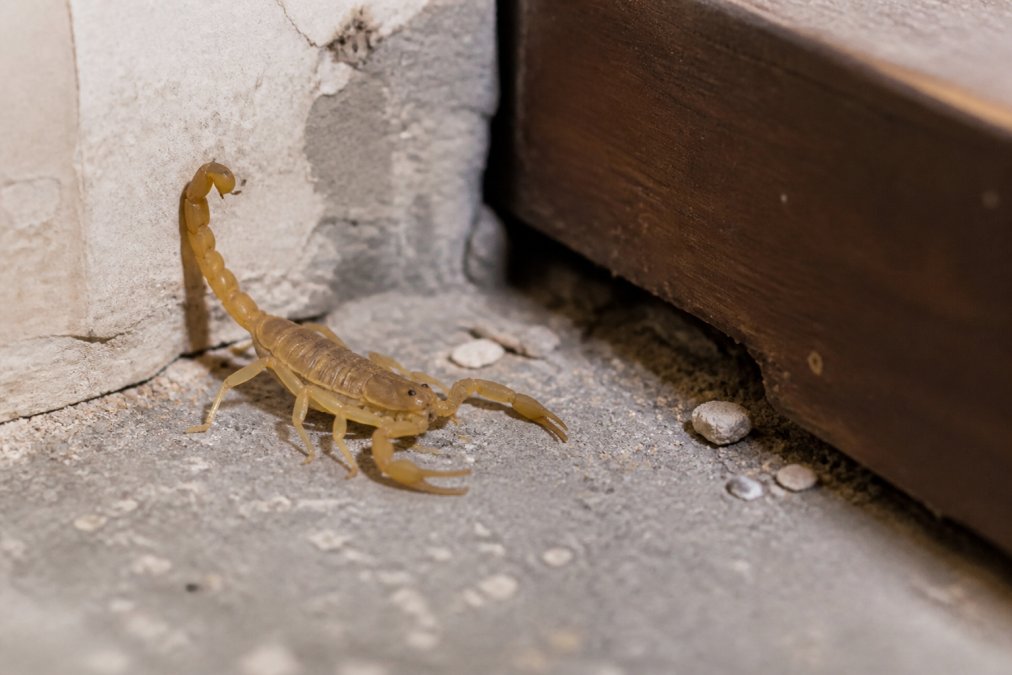
Outdoors, place traps in sheltered spots: under eaves, inside weep screeds (the small holes at the bottom of stucco walls), and near the base of block fences. Check traps weekly, noting the species if you can identify them. Bark scorpions are slender and pale yellow-tan, while ground-dwelling species are often darker and more robust. A trap full of bark scorpions on a fence line suggests a climbing problem, meaning your vertical surface treatments need reinforcement.
Using UV Light for Identification and Verification
A handheld UV flashlight is your best verification tool. Scorpions fluoresce bright blue-green under UV light due to a substance in their exoskeleton. This is a practical way to conduct a perimeter audit. Walk your property line 30 to 60 minutes after sunset, shining the UV light along the base of walls, edges of patios, and trunks of trees. If you see a scorpion glowing on a vertical surface, you have confirmed bark scorpion presence. If you only find them on the ground near rock edges, you are dealing with a ground-dwelling species.
This distinction directly informs your next move. If finding scorpions on walls, apply your essential oil spray higher and more frequently. If finding them on the ground, your DE barrier may have been washed away or is too thin. The UV light also verifies your exclusion work. After a rainstorm, walk the perimeter and look for scorpions attempting to enter through weep screeds or under door gaps. If they congregate at a specific spot, you have found a gap you missed.
Interpreting the Data and Adjusting Your Plan
A sudden increase in trap captures near a specific wall indicates an unsealed gap or active harborage site nearby. Do not just replace the trap; investigate. Look for cracks in the foundation, gaps around pipes, or debris on the other side of that wall. If finding scorpions in the same room week after week, your interior spray is not effective enough, or there is a harborage inside the wall void.
Track your findings in a notebook or notes app. Record the date, location of the trap or UV sighting, and species. Over a few weeks, a pattern will emerge. This data-driven approach separates a successful natural control program from a haphazard one, telling you not just that you have scorpions, but why they are there and what specific barrier is failing.
When Monitoring Reveals a Larger Problem
If your weekly trap count exceeds five scorpions, or if you find juveniles (very small and pale), this indicates an active breeding population. At this point, natural methods alone are unlikely to provide adequate control. This is the threshold where professional intervention becomes the safer and more effective choice, especially with small children or pets. A professional can perform more thorough exclusion and apply targeted treatments in wall voids and under slabs not reachable with DIY methods.
When Natural Methods Aren't Enough
Natural methods work best as prevention and for light infestations. If you find multiple scorpions per week, or have small children and pets, the risk of a painful sting may outweigh the appeal of a fully DIY approach.
A severe infestation often means scorpions are breeding inside the walls or under the slab, beyond the reach of sprays and powders. At Local Choice Pest &Landscape Nutrition, we combine habitat modification guidance with targeted treatments safe for kids, pets, and desert wildlife. Our guaranteed approach means that if pests return, so do we.
Getting rid of scorpions naturally requires patience, consistency, and a willingness to address root causes. Start with exclusion and habitat cleanup, maintain botanical barriers through the season, and monitor your progress. If the task feels overwhelming or the risk is too high, professional help provides peace of mind with a guaranteed solution. Schedule a free in-home estimate with Local Choice Pest &Landscape Nutrition and take the first step toward a scorpion-free property.
Frequently Asked Questions
What smells do scorpions hate the most?
Scorpions strongly dislike concentrated essential oils like lavender, cedarwood, citrus, and cinnamon. These scents disrupt their sensory receptors, making treated areas unappealing. Mix 15-20 drops of essential oil with water in a spray bottle and apply along baseboards, door thresholds, and window frames. Reapply every two weeks and after rain. While these natural scorpion repellent scents help deter scorpions, they work best when combined with sealing entry points and removing hiding spots. For heavy infestations, professional treatment remains the most reliable option.
Will rubbing alcohol kill a scorpion?
Yes, rubbing alcohol (isopropyl alcohol) can kill a scorpion on contact. It dissolves the waxy layer of their exoskeleton, causing dehydration and death. However, this only works if you directly spray the scorpion, which makes it a poor prevention strategy. It does nothing to deter other scorpions from entering your home. Use rubbing alcohol as a spot treatment for visible scorpions, but focus your main effort on exclusion methods like sealing cracks and applying natural deterrent barriers to prevent future entry.
How do I find where scorpions are getting in?
Conduct a nighttime inspection with a black light (UV light). Scorpions glow blue-green under UV light, making them easier to spot. Check common entry points: gaps under doors, torn window screens, utility line penetrations, and cracks in the foundation. Look for droppings near baseboards and in corners. Apply a thin line of baby powder or flour along suspected entry areas; scorpion tracks will reveal their path. Focus your sealing efforts on the perimeter of your home, paying special attention to areas where pipes and wires enter the structure.
Is diatomaceous earth safe for pets and kids?
Food-grade diatomaceous earth is generally recognized as safe for pets and children when used as directed. The sharp microscopic particles damage a scorpion's exoskeleton, causing dehydration, but they don't harm mammals in the same way. However, the fine dust can irritate lungs if inhaled in large amounts. Wear a mask during application and use a light dusting in cracks, crevices, and behind appliances where pets and kids won't easily reach. Keep the application dry; moisture destroys its effectiveness. It is a valuable tool for getting rid of scorpions naturally, but it is not an instant kill.